









The CPD Blog is intended to stimulate dialog among scholars and practitioners from around the world in the public diplomacy sphere. The opinions represented here are the authors' own and do not necessarily reflect CPD's views. For blogger guidelines, click here.
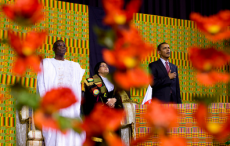
On Sunday, September 22, 2013, al-Shabab, a Somali-based al Qaeda cell unleashed gunfire on a Kenyan shopping mall, murdering 72 people and injuring over 200 others. The deadliest terrorist attack in Kenya since the 1998 bombing of the U.S. Embassy in Nairobi, the Kenyan mall shooting temporarily brought Africa to the forefront of U.S. news organizations like CNN, MSNBC, and Fox, who typically ignore the continent.

Should public diplomacy policy-makers turn to digital diplomacy tools for the future of practice? I ask this question to provoke some reflection among public diplomacy watchers beyond the quick criticism of tweeting ambassadors and social media campaigns. There seems to be some debate over whether or not digital media practices represent the future of US public diplomacy.
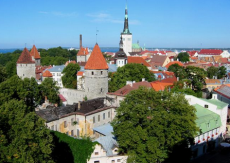
TALLINN --- Estonia’s capital seems a peaceful place. Tallinn’s cobblestoned streets are lined by medieval walls and towers, and tourists stroll amid churches and coffee shops. But Estonians live in a rough neighborhood; their eastern neighbor is Russia, which has never fully accepted that Estonia prefers the company of EU and NATO countries.
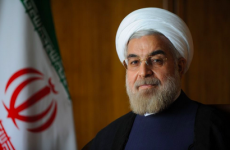
It is only in working democracies that an election would mean a real fresh start for the citizens of a country. This seems to be true about Iran. Since the election of the moderate Hassan Rouhani in June 2013, the voters inside the country and statesmen across the world have expected a relatively new Iran.
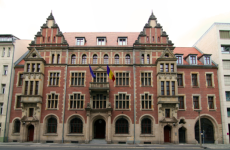
BUCHAREST --- When public diplomacy issues are discussed, focus tends to be on major powers that are particularly active in this field – the United States, China, Israel, the United Kingdom, Russia, and a few others. But Romania has now announced that it wants to join the big guys’ club, and it is taking purposeful steps toward doing so.
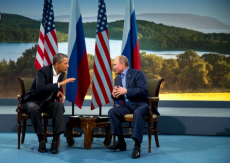
Russia’s diplomatic intervention in the Syria crisis has received much praise from politicians and media outlets around the world. In a sense, the praise is deserved: by finally pushing the Assad regime into negotiations, Russia has halted – at least for the time being – a universally undesired military action.
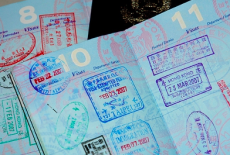
In June of 2013, reports revealed contemplation by the United Kingdom to impose a £3000 (US $4,715.4) bond on visa applicants from some five countries; India, Nigeria, Pakistan, Ghana, Sri Lanka, and Bangladesh. According to the plan, this bond program and the visa applicants from the target countries will participate in a pilot scheme of a broad plan aimed at checking illegal immigration into the UK.
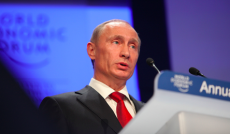
Putin is known for the love of strong language and a questionable, if not inappropriate, sense of humor. This has not changed over his nearly 15 years in power. Russia’s head of state ascended to the presidency in 1999-2000 famously promising to “waste terrorists in the out house, ” and most recently dismissed Assad’s chemical attack claims as “utter nonsense,” raising some eyebrows in the West.
Pages
Visit CPD's Online Library
Explore CPD's vast online database featuring the latest books, articles, speeches and information on international organizations dedicated to public diplomacy.
POPULAR ARTICLES
-
September 22
-
October 5
-
October 13
-
October 5
-
October 15
Featured Blogger
Join the Conversation
Interested in contributing to the CPD Blog? We welcome your posts. Read our guidelines and find out how you can submit blogs and photo essays >.