







MPD Alumni Spotlight: Henrietta Levin
To commemorate the 20th anniversary of the USC Master of Public Diplomacy program, housed at the USC Annenberg School for Communication and Journalism, the USC Center on Public Diplomacy interviewed distinguished alumni for a special series reflecting on their time at USC, their professional achievements, and the paths their careers have taken since graduation. View the complete list of alumni interviews.
Could you introduce yourself and explain what you are currently doing and have done since graduating?
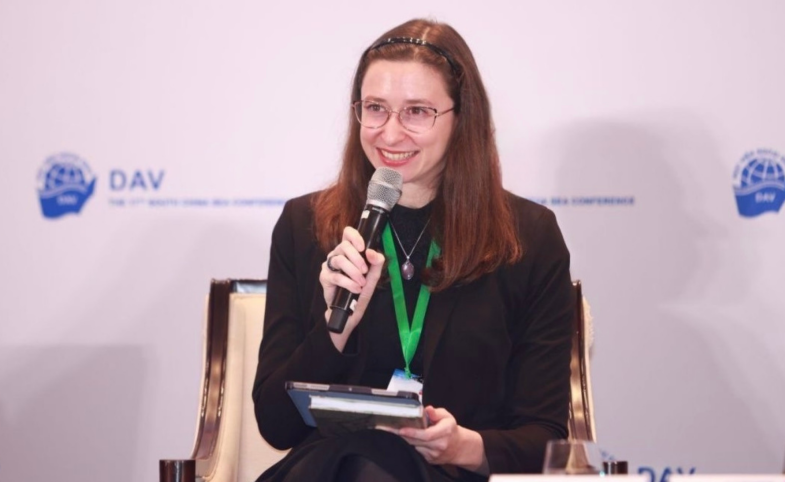
My name is Henrietta Levin, and I am currently a Senior Fellow with the Center for Strategic and International Studies, a bipartisan independent research institution in Washington, DC. I am also teaching at the Johns Hopkins University School of Advanced International Studies. Previously, I served as Deputy China Coordinator at the U.S. Department of State, Director for China at the White House National Security Council, and Director for Southeast Asia, also at the National Security Council. I entered government as a Presidential Management Fellow and Pentagon spokesperson in the Office of the Secretary of Defense.
How has the program, broadly helped you in your career?
The Master of Public Diplomacy program helps students develop a robust understanding of how soft power and the information domain will shape the future of international order and geopolitical contestation, and these factors are only growing more important with time. By applying a public diplomacy lens, national security practitioners can develop more effective policies and messaging strategies that account for the many different types of national power.
Was there one particular class in the program which helped prepare you for the workplace?
Over the course of the MPD program, I wrote a master’s thesis evaluating the nexus of European integration, democratic accountability, and public diplomacy. As part of my research for this project, I interviewed dozens of politicians and senior officials in Brussels and EU member-states. These engagements provided invaluable data for my thesis, but more broadly, they helped me develop a better understanding of how international affairs really works, and the many ways in which domestic, regional, and global issues are interconnected.
What is your favorite non-academic memory of your days as an MPD Trojan?
Playing bass drum in the Trojan Marching Band. Fight on!
How do you feel the world of public diplomacy and public engagement has changed during your time?
Since I graduated from the MPD program, the United States has placed progressively greater emphasis on the U.S.-China relationship and strategic competition. In this context, public diplomacy and soft power have never been more important. The public diplomacy toolkit allows the United States to draw on its asymmetric strengths, including its open society, to gain an advantage in the global competition now underway. Yet in many ways, China has invested far more deeply in its own public diplomacy efforts, offering an incredible number of scholarships and exchange opportunities to students and professionals around the world, fostering global media partnerships, and shaping online conversations. It will be critical for the United States to step up its own public diplomacy efforts in the coming years – or at a minimum, reverse the recent dismantlement of existing public diplomacy initiatives.
What would your advice be to today’s students?
For students who may be interested in public service at the federal level, I would recommend seeking out opportunities to spend time and gain work experience in Washington, DC. There is no replacement for first-hand exposure to the institutions of American governance, and the Trojan network can be an exceptional resource in helping students find their footing here.
Tags
Visit CPD's Online Library
Explore CPD's vast online database featuring the latest books, articles, speeches and information on international organizations dedicated to public diplomacy.
Popular Blogs
-
September 22
-
October 5
-
October 5
-
September 9
-
September 22