









The CPD Blog is intended to stimulate dialog among scholars and practitioners from around the world in the public diplomacy sphere. The opinions represented here are the authors' own and do not necessarily reflect CPD's views. For blogger guidelines, click here.
Los Angeles Has No Foreign Ministry—Yet It Practices Diplomacy Every Day
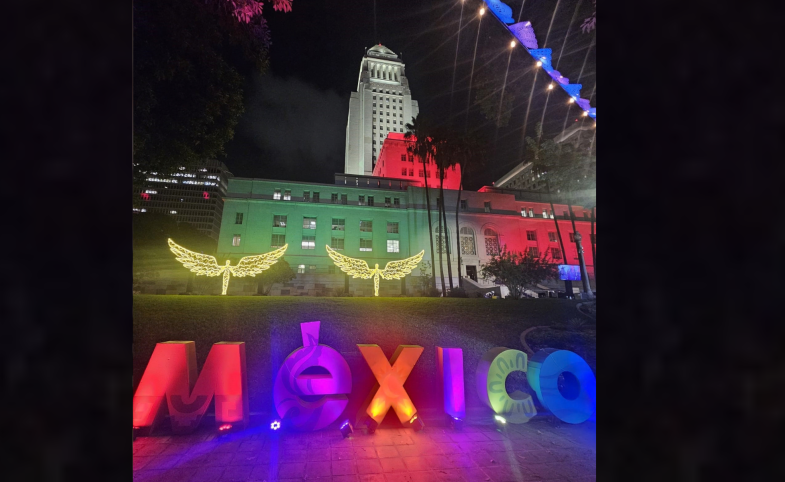
On September 15, the steps of Los Angeles City Hall no longer felt like the administrative entrance to an American metropolis. Thousands gathered for El Grito Los Angeles 2026, and when Los Ángeles Azules took the stage, the distance between Iztapalapa and downtown Los Angeles seemed to disappear. I participated in the celebration and watched families sing the same cumbias across generations. Mexico was not being presented to Los Angeles from the outside. It was being expressed from within the city itself.

The ceremonial call made that relationship especially visible. When Ambassador Carlos González Gutiérrez, Mexico’s Consul General in Los Angeles, voiced the Grito, the ritual connected a foundational moment in Mexican history to a contemporary community living across the border. His words came from a Mexican representative, but the response came from Los Angeles. That exchange captured the central argument of the evening: diplomacy can occur wherever institutions, memory and publics meet.
Los Angeles has no foreign ministry because it is not a sovereign state. It cannot recognize governments, negotiate security guarantees or sign treaties in the name of the United States. Those powers remain federal. Yet diplomacy is broader than formal negotiation between capitals. Cities cultivate international partnerships, welcome consular communities, attract investment, respond to migration, host global events and communicate identities to audiences beyond their borders. Los Angeles therefore lacks a foreign ministry, but it performs many diplomatic functions every day.
This is what Rogier van der Pluijm and Jan Melissen call city diplomacy: the involvement of local governments and urban actors in international politics. Michele Acuto’s work on global cities similarly explains that cities connect local governance to global networks. The point is not that Los Angeles substitutes for Washington. It is that international relations are also produced locally, where global forces become questions of neighborhood life, belonging and public policy.
El Grito made this theory tangible. Councilmember Imelda Padilla, the 2026 madrina of Latino/Hispanic Heritage Month, described the celebration as recognition of Latino cultural, social and artistic contributions. She selected Los Ángeles Azules because their music connects culture, family, tradition and generations. The celebration drew thousands to City Hall and Grand Park. Cumbia became more than entertainment: it became a shared civic language among immigrants, Mexican Americans and other Angelenos.
A day earlier, the city had inscribed that transnational connection onto its geography by naming the intersection of Van Nuys Boulevard and Chase Street “Los Ángeles Azules Square.” Padilla, Mayor Karen Bass and González Gutiérrez joined the dedication. Bass celebrated the city’s many nationalities and ethnicities, while Padilla emphasized a community that remained culturally resilient despite fear. A street name turned musical memory into public memory. Mexican culture was not treated as a visiting attraction; it was recognized as part of Los Angeles itself.
"Cities cultivate international partnerships, welcome consular communities, attract investment, respond to migration, host global events and communicate identities to audiences beyond their borders."
This is also public diplomacy. Nicholas J. Cull places listening, advocacy, cultural diplomacy and exchange among its central practices. El Grito included cultural attraction, but its credibility depended on more than spectacle. It came from the presence of elected officials, community organizations and a consulate expected to protect and listen to the people it represents. The public was not merely receiving a message about Mexico; it was participating in the meaning of Mexico in Los Angeles.
The distinction matters in a period marked by fear surrounding federal immigration enforcement. Geraldo Cadava’s reporting for The New Yorker recounts how González Gutiérrez opened the consulate’s doors to community members during a federal operation in MacArthur Park while Bass demanded that federal agents leave. The episode revealed two diplomatic practices operating together: consular protection by Mexico and political advocacy by the city. Celebration and protection were not separate messages. Together, they communicated presence.

The case also complicates Joseph Nye’s concept of soft power as influence generated through attraction. Los Ángeles Azules can create affinity, but music alone cannot sustain trust. For communities facing uncertainty, diplomatic legitimacy also depends on documentation, legal orientation, institutional access and the assurance that someone will answer in a moment of need. Culture opens the relationship; service and listening give it durability.
Art has long played this dual role in the city. In 1932, Mexican muralist David Alfaro Siqueiros painted América Tropical on Olvera Street. Its criticism of imperialism and Indigenous oppression led to its whitewashing. Decades later, the Getty Conservation Institute and the City of Los Angeles conserved and reopened the mural. Its history reminds us that cultural diplomacy is not always comfortable or celebratory. Art can attract audiences, but it can also confront power and preserve memories that institutions once attempted to erase.
That conversation continues through Los Angeles’s 2026 Latino Heritage Month programming: Guadalupe Rosales discussing East of the River at LACMA, Alexander Apóstol examining political regimes at MOCA, a bilingual books festival at the Central Library and an Autry Museum workshop on protest and visual storytelling. None is labeled a diplomatic summit. Yet each creates encounters through which international histories and cultural identities enter civic discussion.
Los Angeles already possesses the foundations of a diplomatic ecosystem: a vast consular community, globally connected universities, cultural industries, diasporas from around the world and the 2028 Olympic and Paralympic Games. Its challenge is coordination. Memorable events create visibility, but without continuity they do not necessarily create lasting relationships. A stronger city diplomacy strategy would connect cultural programming to education, youth participation, consular services and community protection.
When Los Ángeles Azules played before City Hall and the crowd answered the Grito, I did not experience a performance exported from Mexico to the United States. I experienced Los Angeles speaking in one of its own languages. Its diplomacy is sung, painted, read, protected and negotiated in public space. The city does not need a foreign ministry to participate in international relations. It needs to recognize the diplomatic work it already performs—and connect those many expressions into a strategy worthy of the global city that produces them.

Visit CPD's Online Library
Explore CPD's vast online database featuring the latest books, articles, speeches and information on international organizations dedicated to public diplomacy.
POPULAR ARTICLES
-
September 22
-
September 9
-
October 5
-
September 22
-
September 3
MORE FROM THIS AUTHOR
Join the Conversation
Interested in contributing to the CPD Blog? We welcome your posts. Read our guidelines and find out how you can submit blogs and photo essays >.