







The CPD Blog is intended to stimulate dialog among scholars and practitioners from around the world in the public diplomacy sphere. The opinions represented here are the authors' own and do not necessarily reflect CPD's views. For blogger guidelines, click here.
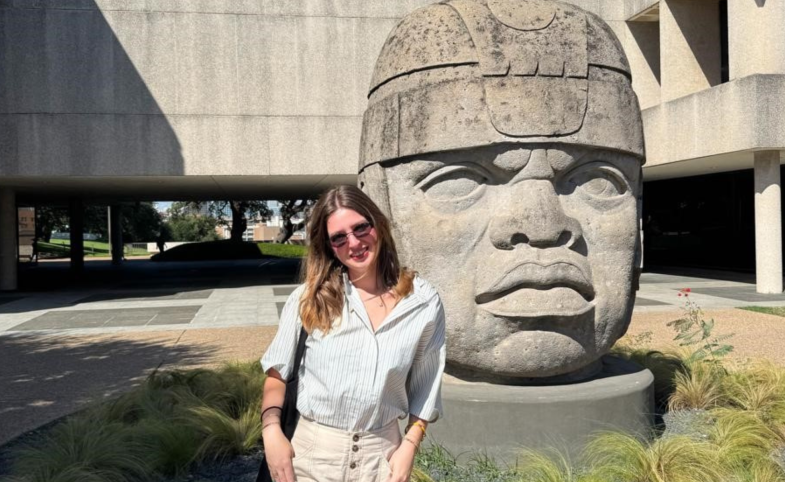
What an Archive Can Do for Diplomacy: A Mexican Perspective from the USA
In October 2026, I encountered Mexico’s diplomatic history in a reading room in the United States. At the Benson Latin American Collection at the University of Texas at Austin, I consulted historical issues of Excélsior and held a printed edition of the Charter of Economic Rights and Duties of States. My research concerned Mexican diplomatic autonomy between 1970 and 1982. The experience also raised a public diplomacy question: What happens when a country’s memory becomes accessible through another country’s institutions?
I undertook this research stay with support from Mexico’s Ministry of Foreign Affairs. Sitting with these materials in Texas made the cooperation tangible. Mexican institutions had helped me reach a U.S. university where I could investigate Mexico’s international history. Preservation, access and researcher mobility came together in the same encounter.
The Charter made that connection particularly striking. Mexico’s President Luis Echeverría proposed a charter in 1972; the United Nations General Assembly adopted it on Dec. 12, 1974. Reading an edition in Austin connected my research to Mexico’s effort to shape international economic rules. It offered a historically grounded image of Mexico as a participant in debates about sovereignty and development.

The Benson holds more than a million volumes, alongside manuscripts, photographs and other media. My research drew on the Rodman C. Rockefeller Records of the Mexico-U.S. Business Committee. The collection includes committee records, press clippings and materials concerning bilateral trade. Alongside the Mexican newspaper and the Charter, it opened different perspectives on the relationship. The archive gave me a way to examine national aspirations and cross-border exchanges together.
That variety matters. A country’s international image gains depth when people can investigate its arguments, disagreements and institutions. An archive can make such inquiry possible across borders. Its public diplomacy potential depends on what institutions do with that opportunity: invite participation, enable research and share knowledge with wider audiences.
"My experience suggests a reciprocal opportunity: Mexico can be encountered through its historical debates, and a U.S. university through its willingness to make those debates available for independent inquiry."
Mexican historian Eugenia Allier Montaño’s research on public memories of 1968 shows how interpretations of the past change with the political present. Her work helps me frame a question for public diplomacy: Which Mexico becomes visible through an archive? Meaningful access should allow readers to encounter competing voices and examine how national narratives are constructed. That openness can make the encounter more credible.
Geoffrey Cowan and Amelia Arsenault’s account of collaboration provides a sharper explanation. They describe joint projects with cross-national participation and a defined goal as a layer of public diplomacy. Applied to archives, that framework directs attention to shared work: preserving collections, creating catalogs, supporting research and producing accessible scholarship. Cooperation acquires meaning through what participants accomplish together.
This also helps explain what archives can represent for a city or state. A collection can give a place a continuing role in international intellectual life. For me, Austin became somewhere I could study Mexico’s diplomatic ambitions and encounter institutions supporting that work. Such encounters can help a university and its host community become associated with intellectual openness and sustained cooperation.
Jian “Jay” Wang’s argument for local public diplomacy capabilities is useful here. He emphasizes cultural competencies, global networks and sustained relationships. My interpretation is that libraries can support those capacities when they connect local expertise with international researchers and publics. Professional care and meaningful access give visitors concrete experiences on which to base their impressions.
International examples show different ways to share documentary heritage. The Qatar Digital Library, launched in 2014 through a partnership among Qatar Foundation, Qatar National Library and the British Library, provides free access to historical materials about the Gulf and wider Middle East, with contextual content in Arabic and English. Its India Office Records and Arabic scientific manuscripts illustrate how cooperation can widen access to important collections held abroad.
The British Library’s Endangered Archives Programme offers another model. Original materials remain in the countries where they are located. Digital copies are preserved locally and at the British Library, and projects must involve a local archival partner. This makes a valuable distinction: international cooperation can expand access while supporting preservation capacity where the materials already belong.

These projects are not identical to my Benson experience. Together, they suggest that the diplomatic value of archives rests partly on the terms of participation. Who can travel? Who can read the catalog? Who helps interpret the documents? Digitization, bilingual descriptions and research support can broaden participation, provided rights and community interests are respected.
Another question concerns who decides what survives and how it is described. A collection’s international reach should invite scrutiny of its selections and omissions. The Rockefeller records, for example, offer an entry into business perspectives; they cannot stand for every Mexican or American experience. For public diplomacy, I would argue, acknowledging such limits is part of earning trust. Researchers need room to question the narratives that institutions make available, including accounts that complicate a country’s preferred image.
The reputational relationship can also run both ways. Mexican history becomes available to readers abroad, while the host institution becomes visible through the quality of the access it provides. My experience suggests a reciprocal opportunity: Mexico can be encountered through its historical debates, and a U.S. university through its willingness to make those debates available for independent inquiry.
For Mexico-U.S. cooperation, I would build on that principle through joint seminars, accessible digital resources and opportunities for researchers to share findings with audiences in both countries. These steps would help connect the work of the reading room with the public purposes that make such exchanges valuable.
What stayed with me was the possibility of studying Mexico’s history through cooperation across its border. The materials I consulted helped me ask better questions about Mexico; the institutions enabling my visit became part of that experience. That is what an archive can do for public diplomacy: give people the means to understand one another more carefully, and a reason to continue working together.
Disclosure: The author’s research stay at the Benson Latin American Collection was supported by Mexico’s Ministry of Foreign Affairs. The views expressed are her own.

Visit CPD's Online Library
Explore CPD's vast online database featuring the latest books, articles, speeches and information on international organizations dedicated to public diplomacy.
POPULAR ARTICLES
-
September 22
-
October 5
-
October 5
-
October 13
-
October 15
MORE FROM THIS AUTHOR
Join the Conversation
Interested in contributing to the CPD Blog? We welcome your posts. Read our guidelines and find out how you can submit blogs and photo essays >.