









The CPD Blog is intended to stimulate dialog among scholars and practitioners from around the world in the public diplomacy sphere. The opinions represented here are the authors' own and do not necessarily reflect CPD's views. For blogger guidelines, click here.
More Than a Celebration: Day of the Dead and Mexico’s Global Image
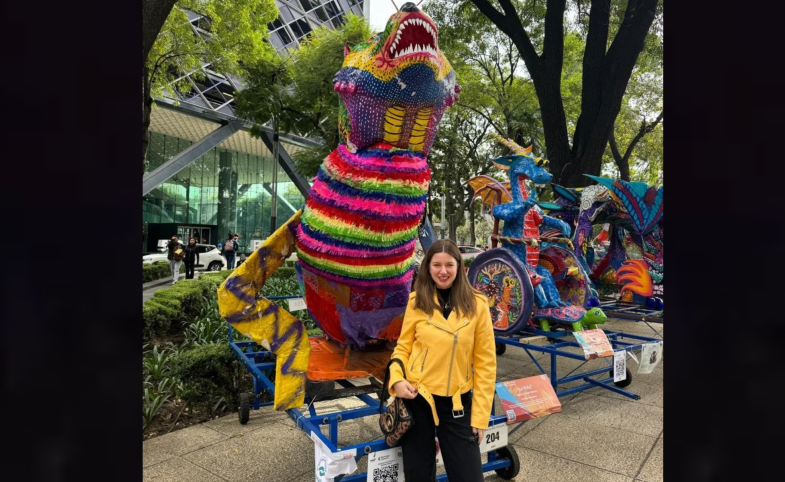
Walking along Mexico City’s Paseo de la Reforma in October, I found the avenue transformed into an open-air gallery. Giant alebrijes—fantastical creatures assembled from animal forms—stood where commuters normally hurry past. Nearby, the season’s catrinas, painted faces and marigolds brought remembrance into public view. I had come to experience the celebrations, but I left thinking about how an encounter on a city sidewalk can communicate Mexico to the world.
The setting is deliberate. The Museum of Popular Art’s 2026 parade took place October 17, with the creatures later displayed along Reforma through November 8. Free access matters: a visitor needs neither a museum ticket nor an invitation to approach an enormous handmade figure. Artisans become part of the city’s visual identity, while photographs carry the encounter across borders.

Still, a parade is not the whole of Day of the Dead. UNESCO recognizes Indigenous festivities dedicated to the dead as intangible cultural heritage, describing offerings, flowers and pathways welcoming deceased relatives for a temporary return. Family altars, food, candles and visits to graves are practices of intimacy and continuity. They differ across communities, and the festival cannot be reduced to a single national costume or a tourism campaign.
Its history is also more layered than popular shorthand suggests. The National Institute of Anthropology and History traces the November commemorations through medieval Catholic observances and changing Mexican practices, while other INAH interpretations emphasize Indigenous-European encounters. These differing historical emphases matter: the celebration is neither a timeless, unchanged pre-Hispanic ritual nor a recent invention for foreign audiences. It is a living practice, repeatedly adapted by families, religious communities, artists and institutions.

Nor is Day of the Dead the origin of Halloween. As the Library of Congress explains, Halloween developed through Irish and wider European traditions associated with Samhain and Christian observances around All Saints’ Day. Mexico’s commemorations took shape through a different historical process, though the calendar and some symbols overlap. Equating them obscures what people are doing when they welcome ancestors rather than merely dress for fright.
La Catrina offers another lesson in cultural change. José Guadalupe Posada’s Calavera Garbancera satirized social pretension; Diego Rivera later dressed the skeleton in the elegant form that became so recognizable. The figure now appears in parades, makeup and international exhibitions. Yet the Catrina’s visual appeal carries an older question about class and imitation. Without that context, an internationally familiar icon risks becoming only a decorative skull.
"The challenge for hosts is therefore to move from visibility to relationship: offer accessible interpretation, credit local creators, provide multilingual context and invite visitors to ask questions rather than consume a polished national image."
Alebrijes have a separate genealogy. Pedro Linares López, a Mexico City cartonero, is credited with creating the vividly colored hybrid creatures after a fever dream. They are 20th-century popular art, not ancient guardians originally designed for Day of the Dead. Their seasonal presence illustrates how traditions evolve: new artistic forms can join public celebrations without sharing their original ritual purpose. Naming the maker and the technique restores craft labor to the story.
Paseo de la Reforma is especially powerful because it functions simultaneously as an everyday road, a civic stage and an internationally recognizable image of Mexico City. Displaying handmade art there interrupts a landscape otherwise dominated by traffic, monuments and commercial advertising. Visitors encounter cultural production before an institution explains what to think about it. The question becomes who gets to narrate what they have seen: a city agency, a travel influencer, or the artisan who built the work.
Tourism undoubtedly amplifies the encounter, but economic figures require care. For the 2025 holiday period, Mexico’s Tourism Ministry forecast more than 1.6 million hotel guests nationwide, including domestic and international travelers. That projection is neither an attendance count for Reforma nor proof that this year’s parades changed foreign perceptions. The public diplomacy value of a visit cannot be inferred from hotel occupancy alone; tourists may photograph a spectacle without learning its meaning.
Joseph Nye’s idea of soft power is useful here, but attraction is only a starting point. Nicholas J. Cull’s taxonomy places listening alongside cultural diplomacy, exchange and other forms of international communication. The challenge for hosts is therefore to move from visibility to relationship: offer accessible interpretation, credit local creators, provide multilingual context and invite visitors to ask questions rather than consume a polished national image.
There is also a transnational public beyond tourists. The Smithsonian’s National Museum of the American Latino documents how Day of the Dead is practiced among Mexican American communities. Families living across borders reshape remembrance through neighborhood altars, schools and community art. That is cultural diplomacy without a single author. Consulates, universities and museums may facilitate it, but they should not mistake community ownership for government messaging.
For institutions such as museums and consulates, this approach could be practical: publish short bilingual explanations of the figures, invite artisans to speak at public events, and connect foreign visitors with workshops rather than only monuments. Universities could contribute research and oral histories. None of these activities requires turning a family tradition into a state slogan; each makes cultural contact more reciprocal.

A risk accompanies every successful festival: commercialization can flatten diversity, divert attention from artisans or turn mourning into a backdrop for selfies. A more responsible cultural strategy would pair parades with fair compensation, community-led explanations and opportunities to discover regional practices beyond the capital. It would also measure whether encounters lead to return visits, partnerships and better understanding, instead of counting images posted online as diplomatic success.
What stayed with me on Reforma was not simply the spectacle of the alebrijes. It was the coexistence of creativity and remembrance, private loss and shared public space. Mexico’s global image becomes richer when the world is invited not only to admire the colors but also to hear the histories behind them. That is the diplomatic possibility of Day of the Dead: a celebration that opens a conversation, rather than closing it with a postcard.

Visit CPD's Online Library
Explore CPD's vast online database featuring the latest books, articles, speeches and information on international organizations dedicated to public diplomacy.
POPULAR ARTICLES
-
September 22
-
October 5
-
October 13
-
October 5
-
October 15
MORE FROM THIS AUTHOR
Join the Conversation
Interested in contributing to the CPD Blog? We welcome your posts. Read our guidelines and find out how you can submit blogs and photo essays >.