






MPD Alumni Spotlight: Jillian Hegedus
To commemorate the 20th anniversary of the USC Master of Public Diplomacy program, housed at the USC Annenberg School for Communication and Journalism, the USC Center on Public Diplomacy interviewed distinguished alumni for a special series reflecting on their time at USC, their professional achievements, and the paths their careers have taken since graduation. View the complete list of alumni interviews.
Could you introduce yourself, your class of MPD, and explain what you are currently doing and have done since graduating?
My name is Jillian Hegedus, Public Diplomacy Class of 2017. After graduating, I joined the USC Shoah Foundation as an Assistant Program Manager for the Dimensions in Testimony Program. During my last year of grad school, I was an intern for the foundation, a connection made possible because of the PD program, and I was asked to stay on for a full-time role after graduation. In 2019, I shifted careers to go back to my roots in local politics and public affairs. I joined an agency called JCI Public Affairs and served as Vice President of Client Services for three years before moving to another public affairs agency, Elevate. Last summer, I joined Bryson Gillette, a progressive public affairs firm that launches and runs political campaigns in addition to traditional public relations and public affairs work.
I also served as a hyperlocal elected official on the Del Rey Neighborhood Council from 2021 to 2025, where I held the role of Outreach Officer. My job was to build more awareness about the neighborhood council and plan community events that brought our neighborhood together and celebrated what made us distinct from the other 98 neighborhoods in Los Angeles.
How has the program, broadly helped you in your career?
After I graduated and pivoted to working in nonprofits and then public affairs, I worried that my degree wouldn't be relevant since I wasn't headed to the State Department. Looking back now, I can say with confidence that this degree is the reason I'm where I am today. Public diplomacy taught me so many soft skills that most people never acquire, and I use them daily. I know how to tailor messaging and narratives based on audience, and I know who to tap to deliver that narrative. I know how to build strong relationships with my clients and with the audiences my clients are trying to reach. I know how to deal with difficult politicians and how to navigate different levels of government on their behalf. And I know how to build campaigns and measure them for success. The experts who taught me these skills shaped where I am today.
Was there one particular class in the program which helped prepare you for the workplace?
504. When you're in it, it can feel exhausting, frustrating, and sometimes a little demoralizing. But I've never taken a class quite like it. Working alongside a team with very different schedules and ideas to solve a problem mirrors the work I do today. Public affairs work tends to be more local, statewide, or national in scope, but I'm still creating plans to build relationships with specific audiences.
What is your favorite non-academic memory of your days as an MPD Trojan?
I met some of my best friends in my public diplomacy program, friends I still have almost ten years later. In 2016, a woman in our cohort got married and invited all of us to attend. On a Friday in October, a group of us went down to the Santa Ana Courthouse in Orange County to watch her and her wife get married. It was such a special day, and the fact that so many in our cohort showed up was a testament to the strong relationships we had built with each other.
How do you feel the world of public diplomacy and public engagement has changed during your time?
I feel like during my time at USC, we were witnessing the tail end of the United States' diplomacy "golden era." The Obama Administration had prioritized public diplomacy, allocated funding to it, and welcomed an active State Department. Since 2017, though, it feels like there's an even greater need for public diplomacy. That need now exists alongside a lack of prioritization and a growing number of people in the United States endorsing an isolationist, America-first mentality. We've watched the State Department shrink significantly under administrations that show little interest in maintaining or building relationships with other countries, unless a country's leader shares their taste for authoritarianism. Despite this, I think the Public Diplomacy degree is more important than ever. Those of us in this field will be critical to rebuilding relationships and cultivating new ones in the coming years, once this national moment passes.
What would your advice be to today’s students?
Take advantage of the fact that you go to school in one of the best cities for Public Diplomacy. I don't think that gets said enough. There's a lot of emphasis on places like Washington D.C., but Los Angeles is a microcosm of the world. So many diasporic communities in our city show up through food, events, and more. You can practice the relationship-building skills you're learning, like Exchange Diplomacy, by visiting different neighborhoods, cultural centers, and museums. Build and maintain relationships with your cohort and your professors. The friends I made at USC are lifelong friends I still see regularly. Going to USC for Public Diplomacy gave me a foundation for my career, and also a foundation for the life I built in Los Angeles.
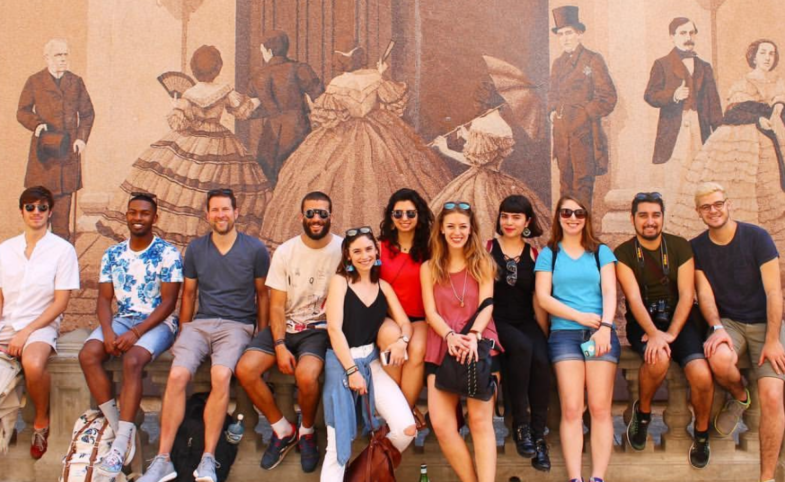
Featured photo: Jillian (fifth from left) with an MPD group in Havana, Cuba.
Tags
Visit CPD's Online Library
Explore CPD's vast online database featuring the latest books, articles, speeches and information on international organizations dedicated to public diplomacy.
Popular Blogs
-
September 22
-
October 5
-
October 5
-
September 9
-
September 22