







MPD Alumni Spotlight: Nora AlZahid
To commemorate the 20th anniversary of the USC Master of Public Diplomacy program, housed at the USC Annenberg School for Communication and Journalism, the USC Center on Public Diplomacy interviewed distinguished alumni for a special series reflecting on their time at USC, their professional achievements, and the paths their careers have taken since graduation. View the complete list of alumni interviews.
Could you introduce yourself, your class of MPD, and explain what you are currently doing and have done since graduating?
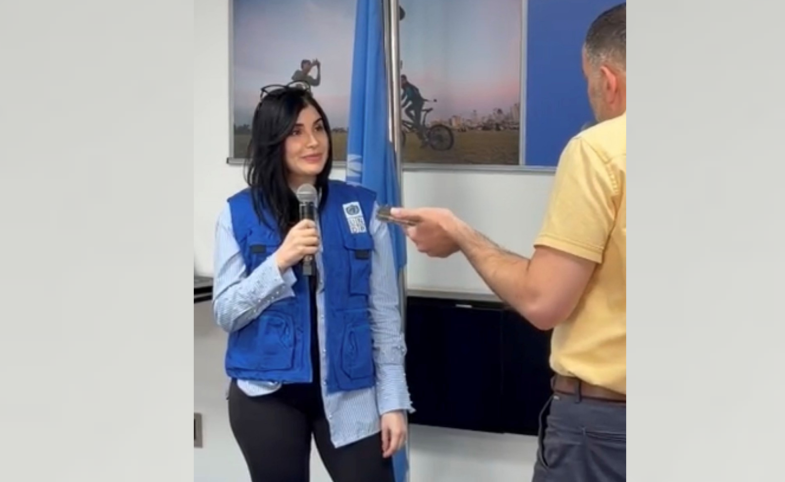
I am from Saudi Arabia and graduated from USC’s Master of Public Diplomacy (MPD) program, Class of 2024. I currently work with the United Nations (UNDP), where I lead the Governance and Policy Engagement portfolio in Saudi Arabia.
I joined UNDP before pursuing my MPD and have continued to grow within the organization since graduation. Over the years, I have progressed from supporting the projects within the pillar to leading the Governance and Policy Engagement pillar, overseeing a portfolio of eight major projects implemented in partnership with various Saudi government entities.
How has the program, broadly, helped you in your career?
The MPD program has been directly relevant to my work. Through my role at UNDP, I contribute to initiatives that bring together diplomacy, development, and public policy, supporting collaboration between Saudi government entities, the United Nations, and international partners to address shared global challenges.
As Saudi Arabia advances its Vision 2030 ambitions and expands its role as a global leader, public diplomacy has become an increasingly important tool for fostering partnerships and shaping international engagement. The MPD program equipped me with practical skills in strategic communication and public diplomacy that I continue to apply throughout my work.
I have been fortunate to contribute to initiatives that demonstrate the evolving role of public diplomacy, including discussions on water diplomacy, urban diplomacy through city-level development initiatives, international development cooperation, and efforts to position Islamic philanthropy including Awqaf as innovative mechanisms that support sustainable development and strengthen the Kingdom’s global leadership. I am also involved in initiatives supporting UNDP’s engagement in the lead-up to Expo 2030 Riyadh.
The MPD program gave me both the theoretical foundation and the practical perspective to apply public diplomacy in ways that create tangible development impact.
Was there one particular class in the program which helped prepare you for the workplace?
One course that particularly prepared me for my career was Public Diplomacy and Global Issues. The course successfully bridged theory and practice by using real-world case studies and practical assignments that challenged us to think strategically about global challenges and using Public Diplomacy as an instrument.
What I found most valuable was learning how to translate ideas into actionable programs and initiatives which mirrors my current work.
What is your favorite non-academic memory of your days as an MPD Trojan?
One of my favorite aspects of the MPD experience was being part of the Society of Public Diplomats and participating in the many events and activities offered through USC. These experiences provided opportunities to connect with practitioners, alumni, and students from around the world.
A particular highlight was the Maymester program in Washington, D.C., where we visited government institutions and engaged with professionals working in diplomacy and public affairs. Beyond that, living in Los Angeles and being part of such a diverse and globally minded community made my time at USC both professionally enriching and personally memorable.
How do you feel the world of public diplomacy and public engagement has changed during your time?
I believe public diplomacy has become both more important and more challenging than ever before. We are living through a period marked by geopolitical tensions, rapid technological change, and increasingly fragmented information environments. These developments have changed not only how countries communicate with one another, but also how they build trust and engage with global audiences.
Living and working in the Middle East has reinforced for me that, while hard power continues to shape international relations, it cannot by itself create lasting peace or sustainable cooperation. Public diplomacy has an increasingly important role to play in fostering dialogue, building mutual understanding, and creating the relationships that help prevent conflict and support long-term stability. Development cooperation, cultural exchange, and people-to-people engagement are becoming essential complements to traditional diplomacy.
At the same time, the rapid advancement of AI is transforming the practice of public diplomacy. AI is creating new opportunities to communicate more effectively, analyze public sentiment, and engage diverse audiences, but it also raises challenges related to misinformation, disinformation, and public trust. As technology continues to evolve, I believe the future of public diplomacy will depend not only on innovation but also on credibility, authenticity, and responsible engagement.
Ultimately, I see public diplomacy becoming more interdisciplinary than ever before, bringing together diplomacy, development, technology, and communication to address increasingly complex global challenges.
What would your advice be to today’s students?
Take full advantage of everything USC has to offer, both inside and outside the classroom. Some of the most valuable learning experiences come through internships, student organizations, volunteer opportunities, and hands-on experiences that complement academic learning.
I would also encourage students to think about which area of public diplomacy interests them most and develop deeper expertise in that space. Public diplomacy is a broad field that includes strategic communication, digital diplomacy, cultural diplomacy, humanitarian diplomacy, and many other areas. Exploring broadly is important, but developing a specialization can help you build a distinctive professional profile and maximize the value of the program.
One of the greatest strengths of the MPD program is its faculty. Learn from your professors beyond the classroom, they are not only outstanding academics and practitioners but can also become invaluable mentors throughout your career. Take the initiative to engage with them, seek their advice, and maintain those relationships even after graduation.
Most importantly, stay curious, embrace opportunities outside your comfort zone, engage with people from different backgrounds, and make the most of the diverse experiences available through USC and the broader Los Angeles community.
Tags
Visit CPD's Online Library
Explore CPD's vast online database featuring the latest books, articles, speeches and information on international organizations dedicated to public diplomacy.
Popular Blogs
-
September 22
-
October 5
-
October 5
-
October 13
-
October 15