







MPD Alumni Spotlight: Laila Mickelwait
To commemorate the 20th anniversary of the USC Master of Public Diplomacy program, housed at the USC Annenberg School for Communication and Journalism, the USC Center on Public Diplomacy interviewed distinguished alumni for a special series reflecting on their time at USC, their professional achievements, and the paths their careers have taken since graduation. View the complete list of alumni interviews.
Please introduce yourself, your class of MPD, and explain what you are currently doing and have done since graduating.
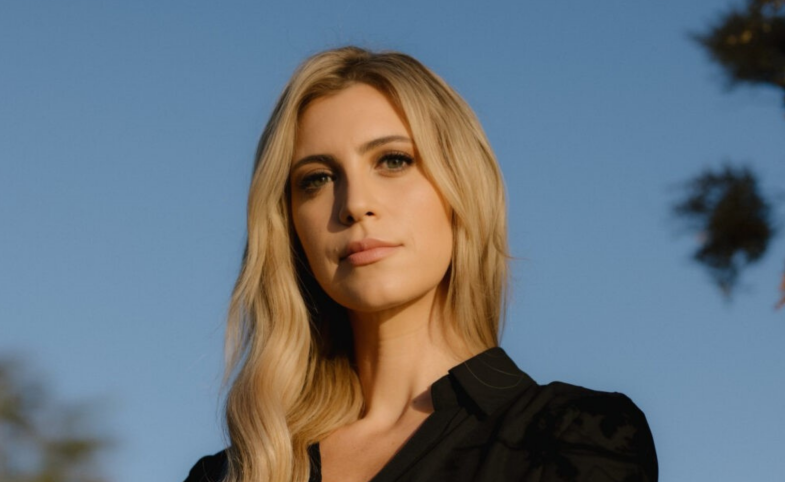
My name is Laila Mickelwait, and I graduated from USC’s Master of Public Diplomacy program in 2008.
Today, I am the co-founder and CEO of the Justice Defense Fund, a nonprofit organization working to address online sexual crime and the role that powerful corporations and online platforms can play in enabling or monetizing it. Our work operates through two complementary programs: public pressure campaigns that mobilize people and influence institutional behavior, and support for strategic impact litigation designed to advance accountability.
These programs work together. Public engagement creates awareness, urgency, and reputational incentives for change, while litigation can create legal and financial accountability. Together, they support the development and implementation of preventative corporate practices and governmental policies aimed at reducing online sexual crime upstream, before further harm occurs.
Before co-founding JDF, and after more than a decade of working to combat sex trafficking, I launched the Traffickinghub movement, a global campaign focused on holding Pornhub and its parent company accountable for enabling and profiting from videos and images of sexual crime. The campaign grew into an international movement involving survivors, advocates, organizations, and more than two million people raising their voices together. By the end of 2020, Pornhub was the fifth most visited website in the world. But as public scrutiny and litigation intensified, Visa and Mastercard cut off the platform, and Pornhub was forced to remove 91 percent of its content—more than 50 million videos and images—in what the Financial Times called “probably the biggest takedown of content in internet history.” I later chronicled that effort in my book, Takedown: Inside the Fight to Shut Down Pornhub for Child Abuse, Rape, and Sex Trafficking.
Although the issues I work on today may be different from those traditionally associated with diplomacy, the principles I learned at USC remain central to my work: understanding audiences, building coalitions, shaping public opinion, creating public and reputational pressure, and using influence to change institutional behavior.
How has the program broadly helped you in your career?
The program fundamentally shaped the way I understand power.
Before studying public diplomacy, I tended to think of power primarily in governmental, political, or economic terms. The MPD program taught me that public opinion is itself a powerful force. Governments, corporations, and institutions may have significant formal authority, but they also depend upon public trust, legitimacy, and reputation. When people are informed, organized, and mobilized around a clear shared objective, they can influence institutions that might otherwise appear difficult to change.
I learned about soft power not simply as a tool used by governments, but as the ability to shape preferences, values, and behavior through credibility, persuasion, relationships, and public trust. That understanding has informed much of my work.
At the Justice Defense Fund, we apply those principles through both of our programs. Our public pressure work brings overlooked problems into the public consciousness, builds informed constituencies, and creates reputational and economic incentives for change. Our litigation program supports carefully selected cases that may help establish accountability, clarify standards of conduct, and alter the incentives of corporations and industries. Together, these efforts are designed to encourage preventative corporate practices and governmental policies that address online sexual crime upstream.
The program also taught me that communication cannot be separated from strategy. It is not enough simply to possess the facts. Meaningful change requires understanding how different audiences receive information, what motivates them, whom they trust, and what may move them from passive concern to constructive action.
What classes helped prepare you for the workplace?
The courses focused on global issues and public diplomacy helped me understand how governments, nonprofit organizations, corporations, the media, and the public interact to address complex international challenges and influence institutional behavior.
That framework has remained highly relevant throughout my career. Many of today’s most serious problems cannot be addressed by governments alone. Corporations operate across borders, technology platforms affect people in almost every country, and public campaigns can become global almost instantaneously. Effective advocacy therefore requires an understanding of how public opinion, institutional power, media attention, civil society, and public policy work together to influence behavior.
I also greatly appreciated coursework related to nonprofit leadership and organizational management. Advocacy requires much more than raising awareness. It requires building a sustainable organization, developing a strategy, managing people and resources, forming coalitions, and translating a mission into measurable action.
Equally valuable was the opportunity to learn from and be mentored by experienced public diplomats and U.S. State Department officials. Their practical insight helped bridge the gap between theory and real-world decision-making. They demonstrated that effective public engagement depends on listening, cultural understanding, credibility, and sustained relationships, not simply broadcasting a message.
What is your favorite non-academic memory of your days as an MPD Trojan?
My favorite memories are of the community surrounding the program. Because the MPD brought together people interested in international affairs, communication, government, culture, and social change, conversations rarely ended when class was over.
I remember the informal discussions with classmates, professors, and visiting diplomats about what was happening in the world, what influence really meant, and how each of us hoped to contribute. There was a sense that we were part of a new and evolving field and that public diplomacy could be practiced not only by governments, but also by citizens, nonprofit leaders, journalists, advocates, and other non-state actors.
Some of the relationships I built during my time at USC have endured well beyond graduation, and I remain connected with people from the program today.
How do you feel the world of public diplomacy and public engagement has changed during your time?
The most dramatic change has been the redistribution of influence.
When I graduated, traditional media organizations, governments, and major institutions exercised much greater control over the information people received. Today, individuals and decentralized movements can communicate directly with global audiences, challenge institutional narratives, and organize large numbers of people without first obtaining permission from traditional gatekeepers.
That democratization has created extraordinary possibilities. Survivors who were once ignored can speak directly to the public. Citizens can document wrongdoing, build international coalitions, and call upon powerful institutions to respond. A campaign that begins with one person can cross borders almost immediately.
Public engagement can also do more than generate awareness. It can influence corporate decision-making, accelerate legislative action, shape regulatory priorities, and create public expectations that encourage institutions to adopt preventative safeguards. In that sense, modern public diplomacy can play an important role in changing the policies and systems that permit harm to occur.
At the same time, the information environment has become more fragmented, polarized, and vulnerable to manipulation. Digital platforms can elevate truth and accountability, but they can also amplify misinformation, outrage, and dehumanization. Attention is abundant, but trust is increasingly scarce.
As a result, effective public diplomacy today requires establishing credibility, listening carefully, communicating with clarity and integrity, and building relationships strong enough to withstand attempts to distort or discredit the message.
The tools have changed dramatically, but the central principles remain remarkably consistent: understand your audience, tell the truth, build trust, create meaningful relationships, and give people a constructive way to participate.
What would your advice be to today’s students?
Do not limit your understanding of public diplomacy to work conducted by governments or traditional diplomatic institutions. The skills you are developing can be applied anywhere people are trying to shape public understanding, build coalitions, or change institutional behavior.
Seek out mentors who have done difficult work in the world. Listen to people with different experiences and perspectives. Learn to communicate across political, cultural, and ideological boundaries. Invest in your relationships with classmates and mentors. The people you meet during the program may remain friends, colleagues, and sources of support long after graduation.
Remain open to where your education may lead you. Careers rarely unfold exactly as planned, and the principles you learn may become relevant in ways you cannot anticipate.
In answering these questions, I dug up the application essay I submitted when I first applied to the program. It ended with these words: “At the USC Center on Public Diplomacy I know I can develop and share what Eleanor Roosevelt called the ‘vision of a world made new.’”
My advice to today’s students is to hold on to that kind of vision. Learn the practical skills, study how influence works, and build relationships that will sustain you—but do not lose sight of the larger purpose that brought you to the program. The world will give you many reasons to become cynical. Resist that. Keep believing that thoughtful engagement, collective action, and principled leadership can help bring a better world into view.
Tags
Visit CPD's Online Library
Explore CPD's vast online database featuring the latest books, articles, speeches and information on international organizations dedicated to public diplomacy.
Popular Blogs
-
September 22
-
September 9
-
September 22
-
August 17
-
August 17