









The CPD Blog is intended to stimulate dialog among scholars and practitioners from around the world in the public diplomacy sphere. The opinions represented here are the authors' own and do not necessarily reflect CPD's views. For blogger guidelines, click here.
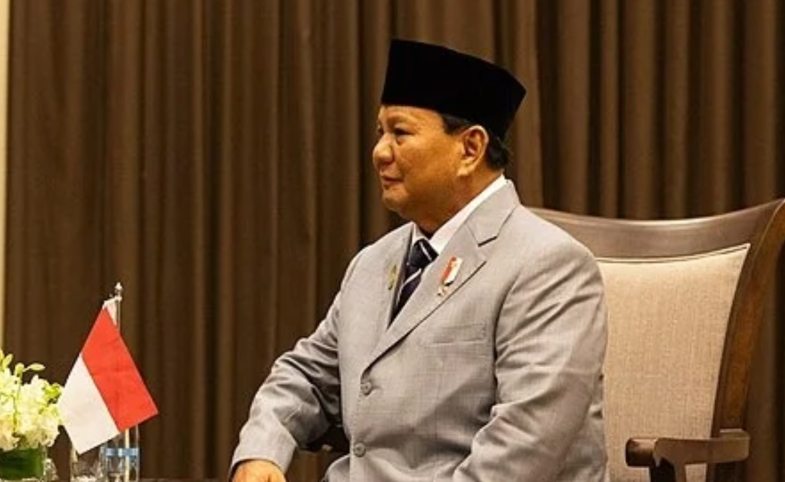
A Cabinet Secretary's Pen, a President's Speech: What Indonesia's Vladivostok Moment Reveals About Managing National Image Abroad
On Sept. 3, at the Eastern Economic Forum in Vladivostok, a brief video clip did more to shape online conversation about an Indonesia-Russia summit than any of the substantive agreements reached there. As President Vladimir Putin addressed the Indonesian delegation during the visit of President Prabowo Subianto (pictured above), Cabinet Secretary Teddy Indra Wijaya was filmed absentmindedly twirling a pen. Within a day, the clip had spread widely across Indonesian social media, drawing sharp commentary from figures such as former State-Owned Enterprises Ministry official Said Didu, who summarized his reaction in a single word: “rusak” (“broken” or “ruined”).
The episode is, on its face, trivial. But it offers a useful case study in how public diplomacy is practiced — and sometimes undermined — not only through formal statements and summit outcomes, but through the accumulated visual signals a delegation sends without ever intending to send them.
Public diplomacy scholarship has long emphasized that a nation's international image is shaped as much by perception management and consistent behavioral signaling as by formal messaging campaigns. Officials representing a country abroad function, whether they recognize it or not, as an extension of that country's brand. Every gesture captured on camera during a state visit becomes part of the visual record other publics use to form judgments about a nation's seriousness, discipline and readiness to be treated as a peer among great powers.
"For public diplomacy practitioners, the lesson is less about assigning blame to one official and more about institutional preparation: briefing delegation staff not only on substantive talking points but on the behavioral expectations of an environment where every gesture is potentially public."
This is precisely why protocol offices exist within foreign ministries and heads-of-state delegations: not merely to manage seating charts and gift exchanges, but to instill the kind of practiced composure that keeps unscripted, humanizing habits — a fidgeting hand, a wandering gaze, a checked phone — from being read as signals of inattention or disrespect. Mr. Teddy, a former special forces officer with a public profile built substantially around discipline, is an unlikely candidate for this kind of lapse. That the moment still occurred says less about him individually and more about how easily any official, however well-trained, can be caught by a camera at exactly the wrong second in an always-recording media environment.
It is worth being precise about what the evidence does and does not support. Several social media accounts speculated that Putin's expression visibly soured in response to the gesture — a claim that cannot be verified from a few seconds of footage and has no confirmation from either delegation. There is no official indication that Russian officials registered any offense. The bilateral meeting proceeded as planned, with both sides announcing continued cooperation across energy, fisheries, agriculture, higher education, and even space and technology exchange, building on an earlier meeting at the Kremlin.
This distinction matters for how public diplomacy practitioners and scholars should read episodes like this one. The temptation, in an era of virality, is to inflate a minor lapse in visual discipline into a full diplomatic incident, complete with inferred emotional reactions from foreign leaders that the available evidence simply does not support. Overreading such moments can manufacture friction where none exists, and risks training officials to see every camera as adversarial rather than simply omnipresent.
At the same time, dismissing the episode entirely would miss its real significance. Indonesia has been actively cultivating a self-image as a serious, non-aligned middle power capable of engaging Moscow, Washington, and Beijing on its own terms, while hosting and participating in major multilateral forums. That kind of positioning is built cumulatively, through hundreds of small visual impressions as much as through formal statements of policy. A distracted aide during a foreign leader's remarks does not derail that project on its own, but it is precisely the kind of small signal that, repeated or amplified, can chip away at the broader image a country is trying to project.
For public diplomacy practitioners, the lesson is less about assigning blame to one official and more about institutional preparation: briefing delegation staff not only on substantive talking points but on the behavioral expectations of an environment where every gesture is potentially public. The Indonesian Cabinet Secretariat would be well served by treating this moment as a quiet opportunity to reinforce protocol training, rather than either ignoring it as irrelevant noise or overcorrecting into public censure that the incident does not warrant.
Indonesia's diplomats secured tangible outcomes from the Vladivostok meeting. It would be a missed lesson in public diplomacy management if the lasting popular memory of that visit turns out to be a pen spinning in an aide's fingers rather than the substance of what was agreed. As state visits increasingly unfold in front of an omnipresent, always-recording public, the management of unscripted visual behavior deserves the same deliberate attention diplomats already give to the words spoken in the room.

Visit CPD's Online Library
Explore CPD's vast online database featuring the latest books, articles, speeches and information on international organizations dedicated to public diplomacy.
POPULAR ARTICLES
-
September 22
-
October 13
-
October 5
-
October 5
-
October 26
MORE FROM THIS AUTHOR
Join the Conversation
Interested in contributing to the CPD Blog? We welcome your posts. Read our guidelines and find out how you can submit blogs and photo essays >.