







MPD Alumni Spotlight: Dr. Neftalie Williams
To commemorate the 20th anniversary of the USC Master of Public Diplomacy program, housed at the USC Annenberg School for Communication and Journalism, the USC Center on Public Diplomacy interviewed distinguished alumni for a special series reflecting on their time at USC, their professional achievements, and the paths their careers have taken since graduation. View the complete list of alumni interviews.
Could you introduce yourself, your class of MPD, and explain what you are currently doing and have done since graduating?
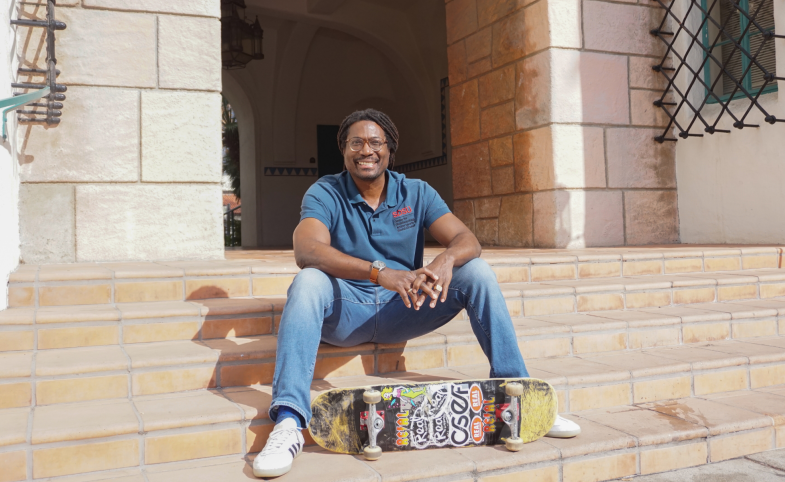
I’m Dr. Neftalie Williams and I graduated from the USC Master of Public Diplomacy program in 2014. I went on to earn my PhD at the University of Waikato in New Zealand, and I’m also the director of the Center for Skateboarding, Action Sports, and Social Change.
I have been involved in skateboard diplomacy since its early days, which means I’ve had the privilege of watching its explosive growth. The rest of the world has caught on to what I’ve believed all along: skateboarding is much more than a sport—it’s a global culture. During the Tokyo Olympics, people weren’t just watching the skaters. They were seeing athletes from different countries, backgrounds, and genders cheering each other on and genuinely wanting each other to succeed. That’s exactly the kind of mutual respect and shared purpose that public diplomacy is all about.
As skateboarding has become more mainstream, I’ve seen those same values resonate everywhere. Whether it’s young people finding a sense of community, older adults embracing skateboarding for mental health, or new skate communities emerging around the world, the culture continues to bring people together.
Our Center continues to use skateboarding as a tool for cultural diplomacy, and our partnership with the U.S. Department of State has continued to expand. It’s been incredibly rewarding to see these ideas—which are rooted in public diplomacy—gain broader recognition and have such a positive impact wherever we go.
How has the program broadly helped you in your career?
The program gave me the theoretical framework to understand how to gauge and build relationships with like-minded people around the world. It also helped me think about a common humanity and the importance of setting common goals for creating change, regardless of where on the planet we are located.
Was there one particular class in the program which helped prepare you for the workplace?
“504” is our main class together as a public diplomacy cohort, taught by Professor Nicholas Cull. It was the most influential because not only did it prepare us for being out in the field, but it gave us a real understanding about the types of incidents that might occur in public diplomacy—the kind of stresses we might have, the kind of real tensions that might come up out of nowhere. Through the class, Professor Cull fully prepared us to be able to handle anything in that regard. We learned that there are no easy days. You’re always on call, and you should always be prepared for anything.
What is your favorite non-academic memory of your days as an MPD Trojan?
Our public diplomacy tailgate was always a lot of fun. It helped build a real camaraderie outside the class. Another highlight was our second-year trip to Brazil.
How do you feel the world of public diplomacy and public engagement has changed during your time?
The biggest change is that the information environment has become far more fragmented. People’s attention is pulled in countless directions, and there are fewer shared voices or platforms that bring everyone together. That makes public diplomacy more challenging than it once was.
At the same time, the fundamentals haven’t changed. Professor Cull prepared us for exactly this kind of environment by emphasizing the importance of understanding people, meeting them where they are, and building trust one relationship at a time. Public diplomacy has always been person-to-person at its core, and those skills are even more valuable today.
In many ways, public diplomacy is more important now than ever. A quick look at the headlines shows how much the world is struggling with polarization, misunderstanding, and a lack of mutually beneficial engagement. The world has become less cohesive, but the principles we learned are exactly the ones needed to help rebuild that understanding.
What would your advice be to today’s students?
Don’t get discouraged. The skills you’re developing are more valuable than ever, and they’re transferable to almost any career. Public diplomacy teaches you to understand how people think, what motivates them, and what they hope to achieve. That perspective builds empathy, strengthens your judgment, and helps you develop more effective strategies—no matter where your career takes you.
Tags
Visit CPD's Online Library
Explore CPD's vast online database featuring the latest books, articles, speeches and information on international organizations dedicated to public diplomacy.
Popular Blogs
-
September 22
-
September 9
-
September 22
-
August 17
-
August 17