







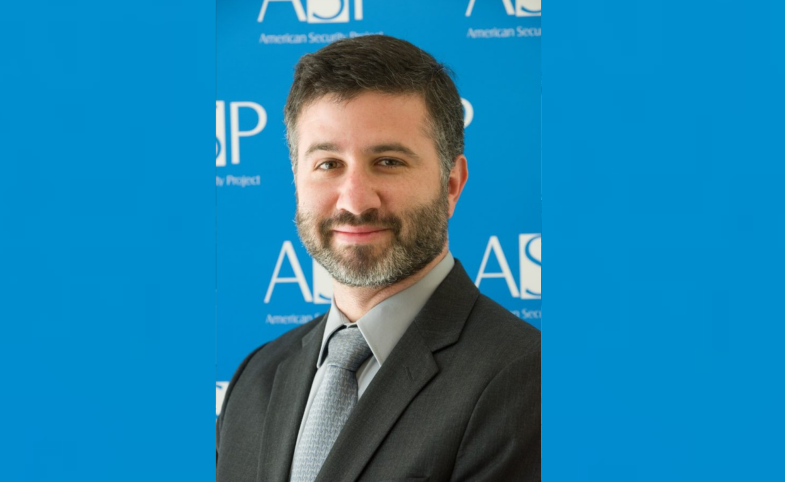
MPD Alumni Spotlight: Matthew Wallin
To commemorate the 20th anniversary of the USC Master of Public Diplomacy program, housed at the USC Annenberg School for Communication and Journalism, the USC Center on Public Diplomacy interviewed distinguished alumni for a special series reflecting on their time at USC, their professional achievements, and the paths their careers have taken since graduation. View the complete list of alumni interviews.
Could you introduce yourself, your class of MPD, and explain what you are currently doing and have done since graduating?
I am currently the CEO of the American Security Project (ASP), a non-partisan national security think tank in Washington, DC. I completed the MPD program in 2010 as part of the third class through. My path since grad school was pretty straightforward, but not without some difficulties. I realized that continuing to live in LA was not realistic given my particular interests in foreign policy. I moved to the DC area six months after graduating, worked as part-time job to pay the bills, and applied for relevant positions. Eventually I found an internship at ASP in 2011 in their nuclear security program, which eventually turned into a full time job managing the office and working on policy issues where possible. I made myself indispensable to the organization and eventually took over as CEO.
How has the program, broadly helped you in your career?
Without a doubt, the MPD program made my career possible. It gave me the practical/relevant experience through the internship requirement, provided me with relevant education, and set me up to speak on issues like public diplomacy in a professional setting with credibility. My work on science diplomacy at the Center on Public Diplomacy ultimately led to participating in a conference in Russia many years later.
Was there one particular class in the program which helped prepare you for the workplace?
Different courses provided different skills. A class on transnational actors with Dr. Geoffrey Wiseman provided important short-form writing skills. 504 famously built resilience to criticism, encouraged out-of-the-box thinking, and prepared me to think through ideas fully.
What is your favorite non-academic memory of your days as an MPD Trojan?
Honestly, most of my time as a Trojan was focused on academics, but I made some life-long friendships in the program.
How do you feel the world of public diplomacy and public engagement has changed during your time?
I think the field has been fundamentally challenged by the prevalence of disinformation and the traditional understanding of it was unprepared to address the realities we are facing today. I do not think the standard PD toolkit works the same way it used to, especially as skepticism has grown on a variety of fronts. I think there are important lessons in influence, listening, and target audience understanding that are still very relevant today, but the field requires some significant reassessment of its ability to influence incredibly distracted and resistant societies. There are many issues in this field for which I have yet to develop answers, and I genuinely fear for the future of PD as a tool to be used for measurable good as AI and disinformation become the rule rather than the exception.
What would your advice be to today’s students?
Hone your practical and technical skills, they will improve your ability to implement PD ideas and to make yourself valuable beyond a niche field. Understand that facts do not seem to matter anymore and this is the reality of the information and political environment you are entering. Be careful about entering jobs where you may be asked to compromise your principles, or may find it tempting to use unethical practices to achieve an objective—draw a line for yourself in different scenarios and stick to it. Have a backup plan. Use your education in PD to have a historical understanding of what works, and design new ideas that will work in the challenging times we face today.
Tags
Visit CPD's Online Library
Explore CPD's vast online database featuring the latest books, articles, speeches and information on international organizations dedicated to public diplomacy.
Popular Blogs
-
September 22
-
October 5
-
October 5
-
September 9
-
September 22