







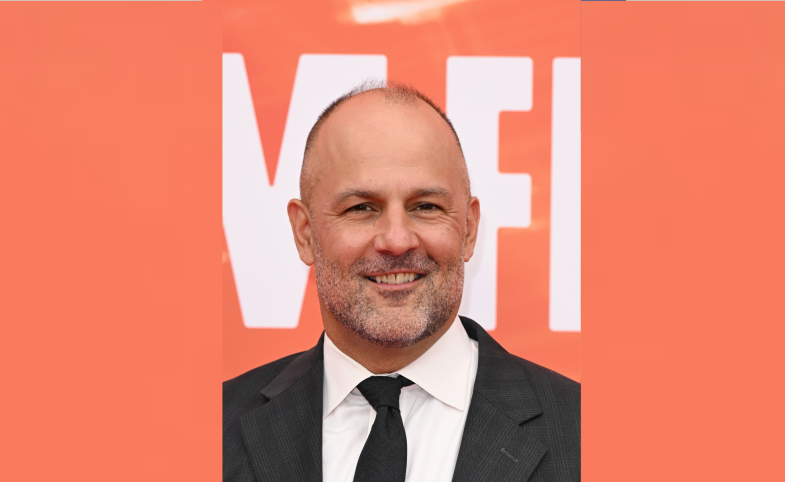
MPD Alumni Spotlight: Ted Richane
To commemorate the 20th anniversary of the USC Master of Public Diplomacy program, housed at the USC Annenberg School for Communication and Journalism, the USC Center on Public Diplomacy interviewed distinguished alumni for a special series reflecting on their time at USC, their professional achievements, and the paths their careers have taken since graduation. View the complete list of alumni interviews.
Could you introduce yourself, your class of MPD, and explain what you are currently doing and have done since graduating?
I’m Ted Richane, and I was in the very first graduating class of USC’s Master of Public Diplomacy program. Since that time, I've been working mostly in the documentary film industry. I had originally planned to return to Washington, D.C, after the program, but I wound up staying in Los Angeles and working in film, where I'm applying a lot of what I learned in the MPD program.
My team recently premiered The Endless Frontier, a documentary film whose title pays tribute to Vannevar Bush's landmark 1945 report, Science—The Endless Frontier. The report was written for President Harry Truman and laid the foundation for the next eight decades of U.S. science policy, helping establish the National Science Foundation and expand the National Institutes of Health. The film follows three scientists—from Princeton, UCLA, and the University of Utah—as they navigate a moment when bipartisan federal support for basic research, long taken for granted, is no longer assured. We trace the history of America's investment in scientific discovery alongside today's rapidly shifting policy landscape, with the goal being to explore the far-reaching consequences these changes could have for human health, innovation, and the future of our planet.
How has the program broadly helped you in your career?
Almost immediately, the research, study, and work that I did as part of the program—in and around international relations—immediately connected me to related opportunities. Soon after I graduated, I started working on film projects that focused on diplomacy, human rights, and other foreign policy topics.
And that's only grown. I've done extensive work around international climate policy and other topics that I focused on during the program. Also, the relationships that I created at USC have been important in my life. I've stayed in touch with a lot of people from the program, both professors and my fellow students. In some cases, over the years, that's led to work, or it's led to collaboration, or simply to interesting conversations.
Was there one particular class in the program which helped prepare you for the workplace?
I took a practicum on presentation and public speaking. It involved putting together presentations, usually through groups, and delivering speeches. I learned a lot about the writing and creation of presentations that I use to this day.
What is your favorite non-academic memory of your days as an MPD Trojan?
I was new to Los Angeles when I moved to Southern California to attend USC, which meant the university’s football program was completely new to me. I took advantage of the discounted student tickets, and that was back when USC was winning national championships and the Coliseum was just spectacular. There was an international relations PhD candidate who hosted amazing tailgates on the quad for the football games. We would all tailgate, then go to the games—a fun and fond memory!
How do you feel the world of public diplomacy and public engagement has changed during your time?
I have friends who took the more traditional track after we graduated, and they went to the State Department as diplomats. Obviously, the world has changed quite a lot. Especially through the Obama years, you saw public diplomacy being used offensively—meaning looking at how American culture, business and the arts could be a force for explaining what America is, and the good that America can do. I feel now we're in this place where we have, for reasons that are obvious without me explaining them, a situation where America's reputation in the world has changed, to put it lightly. That has very immediate effects, but it also has long-term effects for American business, for those of us who travel abroad, etc.
I think there’s a real challenge ahead of us, when it comes to public diplomacy from an American perspective; and I think there's going to be a lot of work ahead. Now is the time for the MPD program to grow, because there will be this huge need in the years to come, to do some of that work and perhaps right some of the wrongs.
What would your advice be to today's students?
Gone are the days of a unipolar world in which American public diplomacy is the leading voice around the world. And that may not be a bad thing. There are others out there who are using the arts, using culture, using business and technology and other sub-government channels to communicate.
So, I think it's very important for public diplomacy students to gain a strong understanding of what the world is, not through an American lens, but through a more global lens. That comes through travel; it comes through study; it comes through exchange. To build skills in diplomacy and public diplomacy are, of course, important, but I think developing an understanding about the world will become critical. And gaining that understanding can be difficult because we all live our own very busy, often insular lives.
Tags
Visit CPD's Online Library
Explore CPD's vast online database featuring the latest books, articles, speeches and information on international organizations dedicated to public diplomacy.
Popular Blogs
-
September 22
-
October 5
-
October 5
-
October 13
-
October 15