









The CPD Blog is intended to stimulate dialog among scholars and practitioners from around the world in the public diplomacy sphere. The opinions represented here are the authors' own and do not necessarily reflect CPD's views. For blogger guidelines, click here.
Disruptive Cultural Diplomacy
Cultural diplomacy has traditionally served as a state-centered tool to promote national image and influence. Yet in societies marked by war, authoritarianism, or stigmatization, conventional models often fall short. In such contexts, disruptive cultural diplomacy—community-based, issue-oriented, and transnational—offers a powerful alternative.
Disruptive cultural diplomacy isn’t about branding. It’s about dialogue, memory, and transformation. Artists, educators, intellectuals, diplomats, public servants, and diaspora communities use culture not to sell a polished national image, but to confront trauma, resist stereotypes, and open new paths for mutual understanding (Montoya, 2025).
Unlike conventional “soft power” models outlined by Joseph Nye or traditional constructivist approaches to identity formation in international relations (Wendt, 1999), this approach treats culture as an end in itself, not merely a means to political influence. Disruptive cultural diplomacy works to reclaim agency from silences, address stereotypes, and reshape international perceptions.
While there's growing acknowledgment of cultural diplomacy’s peacebuilding potential, significant gaps remain:
- Non-State Actors: From writers to filmmakers, artists often act as informal diplomats—yet their impact is underexplored.
- Grassroots Engagement: Cultural diplomacy tends to focus on elite exchange. But peacebuilding requires everyday participation at the community level, including their experiences, feelings, and worries.
- Trauma and Reconciliation: How cultural initiatives heal collective memory remains an open research frontier.
- Shifting Global Narratives: Can disruptive cultural diplomacy redefine how the world sees war-torn societies?
Colombia, Chile, and Cuba offer notable case studies of disruptive cultural diplomacy in action.
Violence, drugs, and impunity defined Colombia’s international image in the late 1980s and early 1990s. But cultural diplomacy offered tools to complicate and humanize that narrative. In Washington, for example, a bold art exhibition on Medellín’s urban violence drew huge crowds. “We wanted to provoke conversations showing that Colombian identity could not be reduced to violence and drugs,” one Colombian attaché said about the joint initiative with the Colombo Americano Center in Medellín. Art and film forums at U.S. universities reinforced this message while fostering dialogues on Colombian complexities.
Meanwhile, "(bi)national" cultural meetings among Wayuu Indigenous communities in Colombia and Venezuela, promoted by a Colombian attaché in Caracas, helped spark new forms of cross-border cooperation and peacebuilding. This deployed diplomacy as a dialogue platform among nations within nations, rooted in memory and mutual recognition.
"As conflicts grow more complex and identities more fragmented, traditional diplomacy alone is no longer enough. Disruptive cultural diplomacy offers a flexible, bottom-up approach that connects local realities with global conversations, creating spaces for dialogue, empathy, and critical reflection."
Chile, following Pinochet’s fall, faced the task of restoring global trust and promoting democratic values. Under President Eduardo Frei Ruiz-Tagle (1994-2000), cultural diplomacy was not only a soft power tool, but also a platform for dialogues among diverse sectors, experiences, and ideologies in action.
Chile promoted peace in Israel by building ties with both Israeli and Palestinian institutions, fostering cultural bridges with artists, scholars, and writers, and engaging with people-to-people exchanges in Spanish and Hebrew. In South Africa, Chilean diplomats helped establish links between Chilean and South African truth commissions, bridging shared experiences of state violence and democratic transition. Ariel Dorfman’s Death and the Maiden—a play about torture and accountability—was staged in South Africa, resonating with a society grappling with its past.
Chile’s approaches went beyond diplomacy—it became a spontaneous civic practice, engaging artists, students, and civil society in both countries.
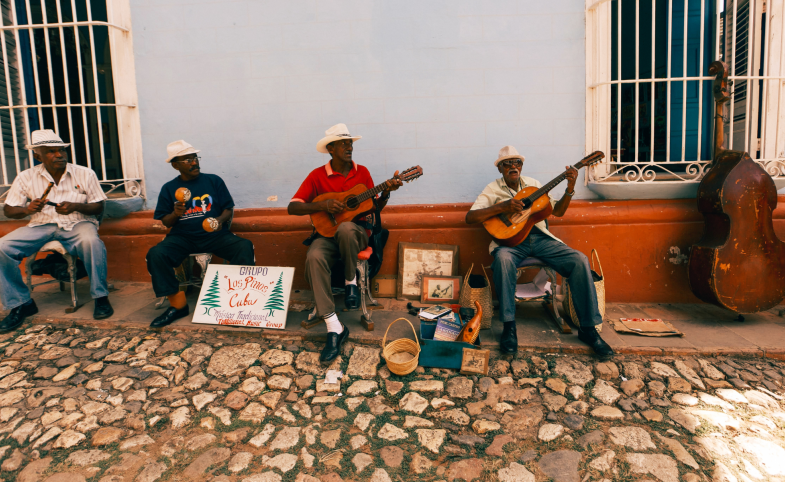
Finally, Cuba provides an example of cultural diplomacy's power and potential. At the onset of the Cold War, as Cuba faced extreme hardship and global isolation, cultural diplomacy became a lifeline to the world. One milestone was the 1989 Smithsonian Folklife Festival, which brought music icons like Eliades Ochoa and Compay Segundo to Washington, D.C. Cuban diplomats later recalled how the music “reconnected diaspora with their roots” and softened U.S.-Cuban people-to-people encounters.
Meanwhile in Japan, cultural outreach via academic forums and cultural diaspora-led initiatives helped Cuba sustain dialogue with one of its key capitalist creditors. As one diplomat shared, “We didn’t have money, but we had culture and creativity.” These grassroots efforts created alternative diplomatic channels that traditional foreign policy couldn’t reach, while fostering mutual understanding.
As conflicts grow more complex and identities more fragmented, traditional diplomacy alone is no longer enough. Disruptive cultural diplomacy offers a flexible, bottom-up approach that connects local realities with global conversations, creating spaces for dialogue, empathy, and critical reflection. In divided and polarized contexts, culture does more than represent reality — it helps transform it by fostering recognition, dignity, and shared human connection.
While Colombia continues to navigate an unfinished post-conflict amid new waves of violence, Cuba faces persistent everyday hardships, and Chile remains deeply polarized decades after its return to democracy, the cultural responses emerging from these societies are nonetheless inspiring. Through memory, artistic resilience, and creative storytelling, communities are shaping new narratives of coexistence and hope, demonstrating that even in fractured contexts, cultural diplomacy can open pathways toward a more peaceful and humane future.

Visit CPD's Online Library
Explore CPD's vast online database featuring the latest books, articles, speeches and information on international organizations dedicated to public diplomacy.
POPULAR ARTICLES
-
September 22
-
October 5
-
October 5
-
October 13
-
October 15
MORE FROM THIS AUTHOR
Join the Conversation
Interested in contributing to the CPD Blog? We welcome your posts. Read our guidelines and find out how you can submit blogs and photo essays >.