









The CPD Blog is intended to stimulate dialog among scholars and practitioners from around the world in the public diplomacy sphere. The opinions represented here are the authors' own and do not necessarily reflect CPD's views. For blogger guidelines, click here.
From World Wars to the Digital Age: Professor Nicholas Cull Explains How Propaganda Evolved
Note from the CPD Blog Manager: This post was adapted from a real conversation between CPD Faculty Fellow Nicholas J. Cull and a high school student interested in the historical practice and impact of propaganda. The text has been edited for brevity. Read other Q&As about propaganda between students and Professor Cull here, here and here.
1. How did propaganda strategies evolve between the two world wars? What specific lessons from WWI shaped how governments approached propaganda in WWII, and were there particular techniques developed during the interwar period (1920s-30s) that became especially important?
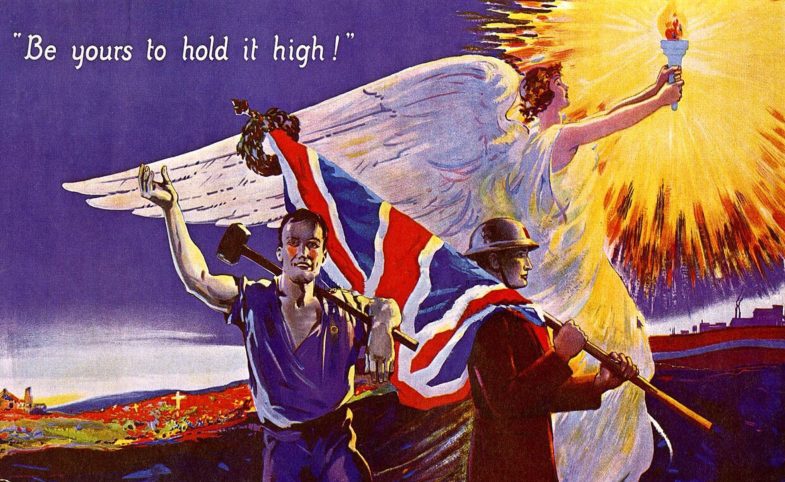
The first thing to say is that the First World War (WWI) put propaganda on the map as a major factor in modern war. Allies claimed it was part of why they won, and the Central Powers certainly felt thst it was part of why they lost.
For Britain, the lesson of WWI was to avoid the hard sell abroad and work through facts and empowering others. This strategy emerged in the 1930s. British propaganda in the U.S. before Pearl Harbor is the classic case -- the first step was to declare that the UK would do no propaganda in America. The second was to ensure that American journalists had privileged access to the war news and would report British experiences sympathetically just by standing in British shoes.
For Germany, the lesson of WWI was to put everything into distortion and the big lie: more of the same not different. This helped build the image of the strength and capability of the Nazi regime but didn't work so well in the long haul for global opinion.
For the U.S., the experience of being exposed to propaganda in WWI created a determination not to be caught a second time. But the methods changed. Radio hit audiences and, similar to AI deepfakes today, they had no internal defense against it. Demagogic speakers like Father Coughlin prospered at home. The U.S. was unusual in not launching government radio until 1942. Most other major powers initiated international radio in the late 20s or early 30s. Even the Vatican had a station! It was a revolution in international communication. Borders could be transcended. Enemies were speaking directly to public's and seeking to break their confidence. This said, I think the most important impact of the new interwar propaganda technologies of radio, talking movies and photo magazines was to supercharge internal national politics so regimes like those in the USSR, Italy, Japan and Germany could create a sealed off artificial reality around their leaders and ideologies. The levels of confidence in dictatorships and their worldviews required new forms of media which populations could not readily dilute with learned strategies of skepticism.
2. Were there cases where opposing nations used surprisingly similar propaganda techniques? For example, did the Allies and Axis powers sometimes employ comparable visual styles or emotional/moral appeals despite their fundamental ideological differences?
I see the Nazi big lie as not like anything the U.S. or UK tried. The Soviets had big lies, like the claim that they did not murder 20,000 poles at Katyn. Parallelism is clearer in the Cold War. One important divergence is that the Fascists treated war as normal and reported it at the end of newsreels like sports or weather on TV news. The U.S. and UK saw war as an aberration. That said, British intelligence did create some astonishing fake stories during the war, including entire commando raids that never happened but made for spectacular stories in the American papers. Even if they kept these stories off the BBC, the government in Britain bought a news agency just to be a pipeline for discreetly passing manipulated news out to the world. Both the UK and Germany used humor to mock each others' leaders over the radio.
3. How did differences in propaganda organization affect outcomes? Specifically, how did the more decentralized, collaborative models in the UK and U.S. compare with the centralized, state-controlled systems in Germany and Japan in terms of reach and effectiveness?
The German system started strongly because they had a visually spectacular story to tell. They were efficient in getting pictures from the front to front page. Later in the war, the vertical integration of Nazi propaganda was a liability. Joseph Goebbels' voice and views were counterproductive. Parallelism is easier to find in the Cold War than in WWII.
One exception is the mutual demonization. This was especially a feature of the Pacific War with both the U.S. and Japan painting each other as ethnically inferior.
4. Why did U.S. and UK propaganda frequently incorporate entertainment, humor, and popular culture, while German, Japanese, and Soviet propaganda tended toward more serious, direct messaging? What cultural or political factors drove these different approaches?
I doubt this neat dichotomy. Germany also learned the value of distraction and escapism in propaganda to its own people. The most successful Nazi-era films were musicals or escapist, not by Leni Riefenstahl. I think all players knew they needed to entertain in some way.
5. Effective propaganda had to portray enemies as genuinely threatening yet ultimately defeatable. How did different nations—for example, the UK, US, Germany, Japan, and USSR—manage this? Were some countries more successful at striking this balance, or did any push too far in either direction?
Britain put a break on demonization. Some British wartime films, like The Life and Death of Colonel Blimp, had sympathetic German characters. Britain had public performances of German culture, including Beethoven piano concertos performed by Myra Hess.
6. Do you see any clear continuities between WWII propaganda techniques and modern persuasion methods? What specific elements have persisted, and how have they been adapted for contemporary media and technology?
Some institutions and techniques from war have endured as components of peacetime public diplomacy. Voice of America is the most obvious. (How sad that it is under threat today.) Many techniques date from the post-war reconstruction of Germany and Japan (leader visits, for instance). Of darker approaches, propaganda through circulating rumors (a method used by Britain’s Political Warfare Executive) anticipates today’s use of disinformation on social media.
The bottom line is that while there are new initiatives in the history of propaganda, it is most important to understand that propaganda is not a moment in history but a dimension of politics; and an element in the structure of international life. It has been and always will be with us, and a wise government plans accordingly. We should be ready to communicate effectively and know how we are being criticized. To me the best form of counter propaganda in to work openly and honestly, not to fulfill your detractor’s stereotype of you.

Visit CPD's Online Library
Explore CPD's vast online database featuring the latest books, articles, speeches and information on international organizations dedicated to public diplomacy.
POPULAR ARTICLES
-
September 22
-
October 5
-
October 13
-
October 5
-
October 15
MORE FROM THIS AUTHOR
Join the Conversation
Interested in contributing to the CPD Blog? We welcome your posts. Read our guidelines and find out how you can submit blogs and photo essays >.