







Q&A with CPD: Nicholas Cull
Feb 11, 2026
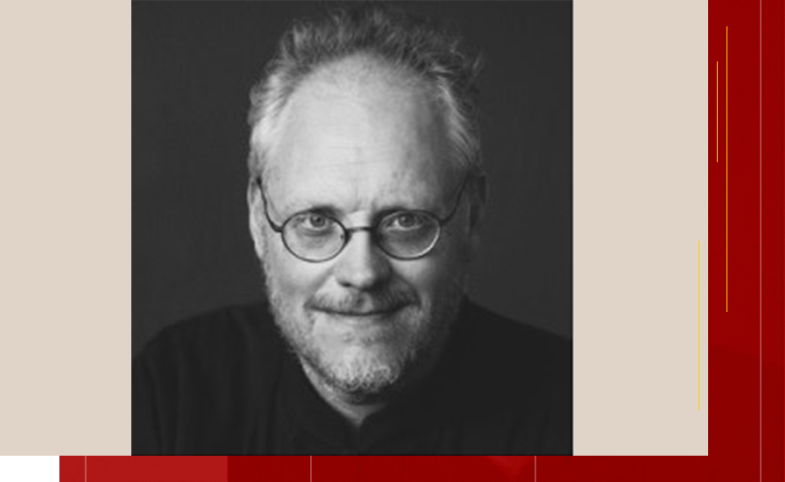
In this series, CPD interviews international thought-leaders and key practitioners of public diplomacy. Here, CPD's Juliana Maitenaz speaks with Professor Nicholas Cull, CPD Faculty Fellow and Founding Director of the Master of Public Diplomacy Program at the USC Annenberg School for Communication and Journalism.
What first drew you to public diplomacy? How did you end up at USC? How did you first enter this field?
Public diplomacy is the perfect field for me as a person who was interested in foreign policy and was also interested in media. Public diplomacy is the point at which media and foreign policy come together. My interest in that convergence goes back to childhood experiences, and the impact of meeting people from other places, especially if those were places with whom we had a conflict.
I remember having Russian visitors come to my high school, and realizing that they were more similar to us than they were different. But, equally, the experience of traveling to other countries, meeting people my age and realizing we had much more in common, despite national differences, than we had dividing us. Those powerful experiences of making friends across international frontiers convinced me of the importance of a person to person experience and made the idea of bringing the world together through communication a very real thing for me and something that I wanted to work towards.
In my intellectual life, I was so interested in questions of communication, in part, because I could see the power of propaganda around me. As a child, it was a very strong experience to hear my parents and grandparents describe the world, and then realize the difference between what they saw and what they'd experienced, and the world constructed in British and U.S. media. You feel the gap and you think, "Well, why is the story told one way at home and another way nationally and internationally?" That got me interested in the question: "How am I being sold a bill of goods by national and international media?" I was, of course, more trusting of my parents' version than the version that was being offered by mainstream media.
In talking about the experiences of my family, I'm talking about people with particular interests in the world. For instance, my mother's father had family from Ireland and always felt a special connection to Ireland. That's a major issue. That was, I think, where you didn't get both sides of the story in the British media. During the 1970s, Ireland was talked about in a politically charged way that would make anyone aware that there was a point of view being put across.
I had the good fortune as an undergraduate to go to the University of Leeds, which had an undergraduate program focused on international history and politics. It was similar to a joint degree, but we were all one group of twenty people who were really interested in those subjects, and some of the professors at Leeds were committed to the historical study of media.
So, they were not only interested in international relations, they were studying propaganda. A number of other scholars of public diplomacy and propaganda came out of that same program and we were actually all at school together at the same time. So, it's an interesting example of how a group of people interested in the same thing can help each other and how a kind of a school of thought comes out of a particular place. I definitely come out of the tradition at Leeds, where I also did my PhD with Philip M. Taylor. There's no accident that his books are still on the reading list for public diplomacy 502, a foundational course in the Master of Public Diplomacy class.
As a founding director of the MPD program, how have you seen the program shift through different presidential administrations and advances in technology?
During the 1990s, public diplomacy was something that non-Americans were more interested in. The history of public diplomacy was a bigger field, outside of the U.S. So, if there'd been Americans who studied public diplomacy, I don't think I would've been able to get a job at USC. The fact that the field hadn't really developed in the U.S. made it possible for me to get the job. The reason the job existed was because of the post 9/11 concern over how America was seen in the world. There was sort of a panic in the United States about the country having backed away from its Cold War communication tools and suddenly having a big communication job to do and not having a depth of expertise.
Most American scholarship of public diplomacy was done by retirees who were writing the history as a way of saying, "I told you so," or arguing "yes, this is really important." The three very important books that came out of that time are Hans N. Tuch’s Communicating with the World: U. S. Public Diplomacy Overseas; Richard T. Arndt’s book on cultural diplomacy, The First Resort of Kings: American Cultural Diplomacy in the Twentieth Century; and Alan Heil Jr.’s book, Voice of America - A History. All are books very clearly written by people who were part of the system and were describing it at the end of their careers. Wilson Dard also wrote from that perspective. So, as an archive-based scholar, looking at it from the point of view of an outsider, but also from the archival record, that was something unusual at the time. Now, it's more common. But it made me I suppose distinctive at that point.
When I came to USC, it had already been decided that the Master of Public Diplomacy program would come into existence. Core classes had been outlined, and I was able to make them my own, add the readings that I thought were important. It had already been decided that there was going to be some kind of global issues class and a kind of history class. Making the global issues class a practical class was an important early change and one which really helped to give the degree its unique perspective. One of the things I realized, partially from having taught Master's programs in the UK, was that Master's programs are designed to develop excellence and insight within an individual. But a public diplomacy career is always going to be about working with other people. So, we were in danger of creating a degree that rewarded skills of working by yourself, which is unhelpful and irrelevant in the public diplomacy workplace.
Instead, we decided to have classroom experiences within the degree that were collective, as well as assessments within the degree that were based on the public diplomacy workplace. This meant directing students to do policy designs, to create case studies, and to develop skills that would translate swiftly into the real-world public diplomacy workspace.
For me, the moments of greatest pride are probably when a student comes back from working in public diplomacy and says that real life is like 504, the program’s global issues course that simulates public diplomacy scenarios and case studies. Meaning: having to think on their feet to create policy designs quickly and to get involved in a back and forth about why a particular policy is appropriate, and then, the next week, thinking about a completely different topic, all with other people. That's the experience that you get in 504, and it seems to be same in the public diplomacy workplace.
The other thing that really was very important that we didn't expect was that the State Department decided that we could have a public diplomat in residence. So, whereas initially I thought that I would be delivering classes by myself from the beginning, I had somebody else in the room with me. It is tremendously helpful to have a diplomat talking about his or her own experience. It has been fantastically beneficial and has shaped the particular exercises.
The basic skills of public diplomacy haven't changed all that much. A lot of the classroom scenarios today are the same that we had twenty years ago when the degree began. That's rather nice because you can see how different generations of students cope with the same challenge, and it’s rewarding to be able to remember multiple generations tackling the same issue.
The degree was initially designed for people who wanted to go into the State Department, but we realized as soon as we had actual students in the room, that the State Department does not take that many people every year, and most students don't want to work for the State Department. Even if they care about issues of public diplomacy and foreign policy, working for the State Department might not be right for them.
Many students wanted to work for non-governmental organizations, so almost immediately, the degree had to be open to NGOs and became about communicating and empowering others to speak for themselves. The degree, in a sense, became like a fantastic medicine. You get to know what it does to the body and then people seeking that effect start taking it "off-label," in a sense. So, our USC Master of Public Diplomacy Program became a sort-of off-label medicine for people who wanted to work for NGOs, people who wanted to work commercially in Silicon Valley, or within cities. A number of city communicators came to study public diplomacy and then went on to have hugely successful careers as communicators in municipalities, which nobody had predicted at the outset of the program. In short, what we teaching sufficiently tied into the world as to be relevant.
Technologies have changed. Sometimes, it can be a bit embarrassing looking back through my research work and seeing that I'm excited about the massive multiplayer games coming online. But as a historian, my work, even the future-oriented work, is still grounded in what happened in the past.
Another change has been in the geography of public diplomacy. When we started out, everything was very much oriented toward the Middle East, but that has changed since 2015. Suddenly Russia, which is so central in the historical discussion of public diplomacy, returned as an issue, and as a major player. Interest in China has been fairly consistent. Interest in Latin America comes and goes. There were some periods where we were more interested in partnering, especially with Mexico, than is currently the case. I'm very glad that we have the North American Cultural Diplomacy Initiative (NACDI). USC has been involved in convening interest in the field from other countries. Sometimes, Canadian and Mexican practitioners are more interested in public diplomacy than mainstream international relations specialists in the U.S.
Could you talk about your latest book Reputational Security, and how it pertains to the U.S. at this moment?
Reputational security is just that: the idea that your reputation is actually part of your security. If you are known as a place, when something bad happens, people will be more likely to defend you, to aid you, to care about you. And that applies whether you are a tiny country or a massive superpower. Part of my beef with "soft power" as a concept is that it was only really measurable among the top countries.
Famously, we had an index called the Soft Power 30. What I eventually got to thinking is: "Why is there no Power 170?" Soft power just can't work as an all-encompassing concept. We have to find a way of talking about reputation that works not only right now, or most of the time, but in all times and in all places.
So, my objective with reputational security was to have a concept that I could read in ancient text; that I could find in Shakespeare and in Machiavelli; something that made sense. In fact, once I started talking about the concept, I met scholars of other periods who would say, yeah, we too have this concept.
It existed, for example, as a concept in Golden Age Netherlands and its "diplomacy of honor," the advantages that come from being well respected in the world and what needs to be done to to maintain that respect. My short definition of reputational security the elements of security that come from being well known and well respected in the world.
But the thing about reputation is that it isn't a purely communicative concept. It doesn't just come from people saying good things about you. It comes from the existence of those good things. So, part of what I wanted to do is to disrupt the assumption that soft power was about communication and say, no, it's about reality.
A metaphor I often use is the goose that lays the golden egg. Having soft power is having a goose that has laid this golden egg of soft power, of being admirable. But you don't just polish the egg, or put the egg in a shop window. You have to also take care of the goose. To me, part of the challenge in contemporary public diplomacy is not only to talk about your good points, but eliminate your bad points and make sure your goose is healthy.
For the UK, that means taking care of the British legal sector. It means taking care of the British educational sector; and it means making sure that British broadcasting and British creativity can flourish. It's because of those things that people respect the UK right now. They're not going to respect the UK in 20 years if those things are allowed to wither and die.
Now, the big question is, what about the United States? Where does this leave the United States? Well, I think that we know the United States has a problem, in that its reputation is declining. We have now the results from Anholt’s 2025 Nation Brands Index, which shows the U.S. declining from number 7 to 14. The bad news is the U.S. has dropped out of the Top 10. I think it's the first time that a country has ever dropped out of the Top 10, a very stable group of countries.
The lucky country to move up is Spain. Numbers 1, 2, 3 are now Japan, followed by Germany, followed by Canada. So, you could say that President Trump is moving two countries. He's moving the U.S. down and he's moving Canada up. Because when you talk to people about why they like Canada, it's because they like the way that it stood up to the United States. Those two are directly linked. It's not that people have suddenly fallen in love with the music of Katie Lang or Leonard Cohen. They love Canada for reasons that are profoundly linked to its relationship right now with the United States.
We know that some sources of American soft power, if you like, some of America's geese, are in a really, really bad way. Personally, I thought of USAID as a hard power mechanism, but it certainly produced a soft power benefit. The withdrawal of American aid is causing damage to America's friends and creating opportunities for America's adversaries. The silencing of American International Broadcasting is another action that I'm very sad to see because I know how many people valued that. Their positive view of the United States came through exposure to U.S. international broadcasting.
But to be honest, when we look through the poll data and we ask people, "Why do you no longer like the United States as much?" They say it's because Americans don't like each other. Or that American politics doesn't work the way it once worked. So, the American people and American politics are the two things that are really damaging the world's perception of the U.S. It's not that the world was waiting for a handout from USAID.
The only good news is that nobody is saying, "I like the US less, so I like China more." China is still at number 29. Russia, since it began its war in Ukraine, has been hovering around number 50 as a toxic country that very few people are prepared to work with. Putin and Xi are not seen as alternatives, but countries like Japan, Germany, the European Union, and are looking to see if there is a way of working more with them. If Putin and Xi were more proactive and put themselves forward more, I think the U.S. would be in an even worse position than it it is right now.
Visit CPD's Online Library
Explore CPD's vast online database featuring the latest books, articles, speeches and information on international organizations dedicated to public diplomacy.
Popular Blogs
-
September 22
-
October 5
-
October 5
-
September 9
-
September 22