









The CPD Blog is intended to stimulate dialog among scholars and practitioners from around the world in the public diplomacy sphere. The opinions represented here are the authors' own and do not necessarily reflect CPD's views. For blogger guidelines, click here.
Educational Exchange as Public Diplomacy: What the History of the U.S.–China Relationship Can Teach Us
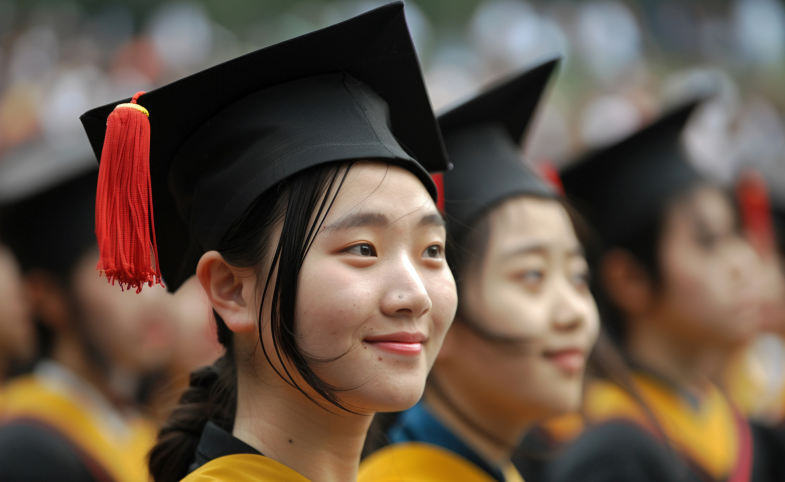
At its peak, there were 372,532 Chinese students enrolled in American colleges and universities. To this day, Chinese students still represent one of the largest international student populations in the United States. Education as a way to foster exchanges and shape China-U.S. relations cannot be overstated; it has served as a conduit for cultural exchange, mutual understanding, and collaboration between the two nations over the years. Today, however, this legacy faces unprecedented strain. President Donald Trump’s efforts to strip universities on its international students mark a sharp departure from a century-long tradition of educational influence. Recent policy shifts signal a willingness to forgo one of the United States’ most effective long-term soft-power tools. Taking a look in the rearview mirror at the Sino-American educational relationship helps to understand what is at stake and how the United States is now ceding ground to rivals like China.
Whether the United States wants it or not, China has been able to replicate and adapt a similar model abroad. America significantly influenced the Chinese educational system, and even helped lay the foundations for its subsequent development.
Historically, China’s higher education was rooted in the Humanities. The Confucius model is even acknowledged as the culmination of liberal arts education in Ancient China. With an emphasis on poetry, political wisdom, virtue, and the classics, China excelled in those domains in the 1800s. However, as American enlighteners brought Western ideas to China, the Qing Dynasty quickly realized its deficit in modern disciplines like Physics and the Sciences. The First Opium War in 1840 came as a rupture; encouraging practical knowledge and modern sciences was crucial for China to catch up on technological advancements.
Deprived of many resources, the Qing Dynasty turned to changing the educational system to better emphasize the rise of modern fields. Envious of Japan which was sending students to European countries to learn contemporary thoughts, China decided to leverage its relationship with the West, and most particularly with the United States – a country that excelled in the Scientific fields. This came as a win-win. Actively engaging with the diplomatic missionaries in China, the U.S. had already expressed its interest in exporting its educational model to gain influence. The need for Chinese educational reforms was in fact concurrent with the U.S. pursuing its policy of “larger America” to become a major world power. America’s interest in Chinese students reflected its growing economic and political position in the world.
"Taking a look in the rearview mirror at the Sino-American educational relationship helps to understand what is at stake and how the United States is now ceding ground to rivals like China."
How the two strategies were reconciled lies in the very presence of Yung Wing, the first Chinese person to have graduated from university in the United States. Matriculating at Yale and graduating in the spring of 1854, Yung Wing came to the U.S. to find the scientific insights that he was promised he would find across the Pacific. Despite finding in the United States—and at Yale particularly—a curriculum still dominated by classical liberal arts and moral philosophy, he was determined to bring back scientific methods, professional skills and sought a way to reform Chinese politics and society.
Committed to promoting mutual ties and understanding of the American educational model, especially in science-focused universities such as MIT, Yung Wing advised the governor of Jiangsu to replicate his own experience on a grander scale. The bold Chinese Educational Mission was thus created in 1872 by the Qing Dynasty under its “self-strengthening strategy” after Yung Wing presented his plan to Tseng Kuo-fan and other leaders in 1870. This was a government-funded program in which 120 young Chinese boys were sent to the U.S. to be educated and then returned to China to apply and pass on what they had learned abroad. It notably operated under the assumption that “Chinese learning is for the sake of the essence, Western learning is for the sake of utility” (中学为体,西学为用). The initiative encouraged the adoption of Western technology and modern thoughts and most of the boys served China’s modernization efforts and rose high in governmental professions. Meanwhile, the United States was able to expand its influence in East Asia and promote its public diplomacy by building relationships through its universities.
In addition, during the 1890s, modern institutions were established by provincial gentry and scholar-officials. Similarly, the subsequent creation of Tsinghua University in 1911 exemplifies this educational relationship between the U.S. and China. Originally named Tsinghua Imperial College (清华学堂) Tsinghua was established as a preparatory college for students to study in the United States. At the intersection of Chinese and Western cultures, Tsinghua embodies the newly developed dual model of the Chinese educational system focusing simultaneously on sciences and humanities. Having internalized the American model, Tsinghua developed over the years a strong science curriculum and is today recognized as the “MIT of China” by some. However, efforts to modernize the Chinese curriculum were not unilateral. The United States government repeatedly stated and showed their commitment to fostering educational exchanges with China. For instance, in 1908, the government initiated the Boxer Rebellion Indemnity Scholarship Program to support outstanding Chinese students to study in American universities. Fostering and developing educational exchanges was thus a win-win strategy for both China and the United States. For years, this functioned as an enduring diplomatic asset – quietly strengthening America’s soft power while accelerating China’s scientific capabilities.
Educational exchanges between China and the United States laid the groundwork for broader diplomatic and cultural ties between the two nations. By hosting Chinese students in the United States, American institutions showcased the diversity and excellence of their educational system, while also fostering critical thinking. Conversely, Chinese students brought back to China the knowledge and experiences gained abroad, contributing to the modernization and internationalization of Chinese society. But while Yung Wing naturalized as a U.S. citizen, not all Chinese students have, or will have, this opportunity. Today, measures including expanded online scrutiny of student visa applicants and attempts to restrict international students’ access to U.S. universities threaten to erode the very bridges he helped build. Ivy League universities like Harvard were quick to understand what losing foreign students would mean in terms of prestige, talent and diversity. But while Harvard filed a lawsuit against the Trump Administration, lawyers from the federal government are set on dismantling one of America’s most enduring tools of influence – education. And if history showed us anything, it is that educational exchange can serve as both a bridge between societies and an instrument of public diplomacy.

Visit CPD's Online Library
Explore CPD's vast online database featuring the latest books, articles, speeches and information on international organizations dedicated to public diplomacy.
POPULAR ARTICLES
-
September 22
-
October 5
-
September 9
-
October 5
-
September 22
MORE FROM THIS AUTHOR
Join the Conversation
Interested in contributing to the CPD Blog? We welcome your posts. Read our guidelines and find out how you can submit blogs and photo essays >.