








The CPD Blog is intended to stimulate dialog among scholars and practitioners from around the world in the public diplomacy sphere. The opinions represented here are the authors' own and do not necessarily reflect CPD's views. For blogger guidelines, click here.
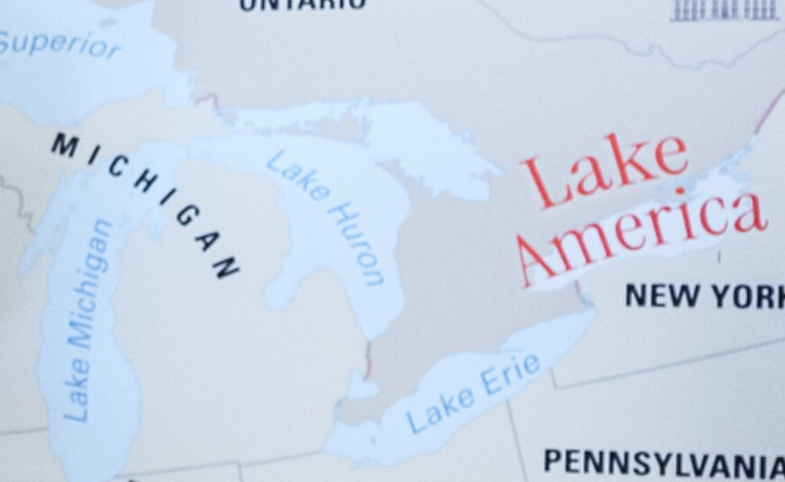
The Imperial Logic of “Lake America”
President Donald Trump’s decision to rename Lake Ontario “Lake America” in the middle of his trade confrontation with Canada has been widely dismissed and mocked as unserious. Nicholas Cull, a historian of propaganda and public diplomacy and Professor of Communication at the University of Southern California, described it as an “act of trolling” intended to elicit cheers from Trump’s base while irritating his adversary. There is certainly some truth to that. Renaming Lake Ontario does nothing to resolve a tariff dispute. But apparently arbitrary actions reflect the logic of a particular Trumpian style of foreign relations.
Lake Ontario had nothing to do with the trade talks until Trump decided that it did. It would appear counter-productive in negotiations to anger Canadians and reduce Canadian voters tolerance for any concessions to Trump’s demands. But if Trump is simply trolling for his base, the domestic political payoff is far from apparent. A recent Economist/YouGov poll found that 68 percent of Americans opposed the renaming of Lake Ontario, compared to 17 percent who approved. Even Republicans opposed the renaming by 41 to 37 percent, although MAGA Republicans were more receptive, still only 47 percent approved. Not exactly a crowd-pleaser for a president who is known to love positive coverage.
This all leads some to question Trump’s competence. Some analysts and politicians such as Rep. Chellie Pingree have argued that Trump simply “doesn’t understand” the consequences of snubbing a key ally of the United States. And Senior Fellow at UC San Diego David Lake has similarly commented on how Trump doesn’t understand how alliances work. But it may be that Trump’s intentions are not best understood through this conventional diplomatic frame.
I would argue that the apparent arbitrariness resembles the coercive logic of mafia tactics, where threat derives some of its force from creating uncertainty about where retaliation will fall. Trump does not reliably observe the institutional boundaries that other leaders use to anticipate American behavior. This forces foreign states, or even business leaders whose fortunes may rest on the President's good will, to consider how resistance to his demands may provoke unpredictable and perhaps disproportionate responses. Inserting uncertainty into the equation can strengthen coercion or decrease risk-taking in negotiations because leaders cannot calculate their risk exposure and potential consequences. In situations of uncertainty and irrational political behavior, it can seem prudent to "obey in advance" and avoid discovering the consequences.
This interpretation aligns with both Trump’s limited conventional foreign policy experience, disregard for its conventions, and the ruthless business style he brings to the presidency. In a key foreign policy speech in 2016 Trump himself declared, “We must as a nation be more unpredictable.” Signalling power is an authoritarian propaganda tactic used to discourage opposition. The United States is powerful enough for this to shape international relationships.
"Trump’s international power rests partly on making other states think the unthinkable could happen, and encouraging a belief that keeping Trump happy is safer than finding out."
The Canada example shows the cost of such tactics in negotiating with the immediate target. Trump imposed economic pressure expecting Canada to yield and repeatedly talked about making Canada the 51st state when Prime Minister Mark Carney refused to fold. The chances of a deal had become slim. Threatening Canadian sovereignty made concessions politically humiliating for Canadian leaders and eroded public support for negotiating further with Trump. It has strengthened Canadian incentives to reduce dependence on the United States.
While most Americans still regard Canada as friendly or an ally, negative attacks on a neighbor have accompanied increasing hostile U.S. attitudes to Canada in the U.S. YouGov polling found that 22 percent of Americans now see Canada as unfriendly or an enemy, the highest this figure has been in a decade. Among Republicans, this is 38 percent. It is an extraordinary deterioration in perceptions of one of America’s closest allies.
Trump’s conduct is signalling what he expects from negotiation. His approach assumes the position that American power should make prolonged bargaining or American concessions unnecessary. Unpredictability increases fear without needing to always use force. Other countries—including those with less bargaining power—will be watching.
Trump's failure in Canada also may itself make the signal more frightening elsewhere because his escalation does not cease after escalation failed to produce a deal. Other leaders watching Canada cannot therefore assume that Trump will stop when further escalation begins damaging his own negotiating interests or popularity. Rather than trying to reduce disagreement, Trump widened the emotional impact of the conflict into areas of Canadian national identity. His claims about Lake Ontario go further than his renaming of the Gulf of Mexico to Gulf of America because an international boundary runs directly through the lake. His Executive Order on August 27th called the United States the “greatest protector” of the Great Lakes and said “the United States claims most of the Lake’s volume.”
Trump asserts a ledger in alliances and trade, where another country’s dependence on American power becomes the reason it should defer to Washington. The Gulf of Mexico borders the United States, Mexico, and Cuba, who share jurisdiction over its waters. Applying an American national name there was extraordinary, but Lake Ontario goes further. The 1909 Boundary Waters Treaty ensures that navigation of the boundary waters between Canada and the United States remain free and open to both countries equally. The treaty recognizes both countries hold "equal and similar rights" in the use of boundary waters on their respective sides.
Other contemporary disputes over the names of shared waters have largely asserted an anti-colonial logic against a regionally-dominant state. For example, the Philippines designated waters over which it asserts maritime rights the West Philippine Sea but did not rename the entire South China Sea after itself in confronting a much stronger China. Similarly, Indonesia adopted North Natuna Sea to reject expansive Chinese claims over its waters. Trump’s imperial argument instead echoes 17th Century British arguments for the “British Seas” at a time before international agreements were settled. Material capacity became part of an argument for authority over shared space. Trump is replacing an Indigenous name and imposing that of the dominant regional power.
The authoritarianism of these actions is also reinforced by their enforcement, as the degree of coercion makes renaming bodies of water far from a joke. In the case of "Gulf of Mexico" there are real repercussions of restricted access for the Associated Press as its policy meant continued use of the internationally recognized name.
Trump’s tactics may be counter-productive in his negotiations with Canada, but they will keep leaders wondering what else could be drawn into question should they put a foot wrong. Trump’s international power rests partly on making other states think the unthinkable could happen, and encouraging a belief that keeping Trump happy is safer than finding out.
Featured photo: President Donald J. Trump signs an Executive Order renaming Lake Ontario to Lake America, Thursday, August 27, 2026, in the Oval Office. (Official White House Photo by Molly Riley)

Visit CPD's Online Library
Explore CPD's vast online database featuring the latest books, articles, speeches and information on international organizations dedicated to public diplomacy.
POPULAR ARTICLES
-
September 22
-
October 5
-
October 5
-
October 13
-
October 15
MORE FROM THIS AUTHOR
Join the Conversation
Interested in contributing to the CPD Blog? We welcome your posts. Read our guidelines and find out how you can submit blogs and photo essays >.