









The CPD Blog is intended to stimulate dialog among scholars and practitioners from around the world in the public diplomacy sphere. The opinions represented here are the authors' own and do not necessarily reflect CPD's views. For blogger guidelines, click here.
Museums and Soft Power: From Cultural Promotion to Partnership
The establishment of international branches by major museums combines the promotion of culture and nation branding with the pursuit of commercial profits through brand licensing, consulting, and the mobilization of massive global tourist flows. However, this model has revealed several shortcomings, and it appears that efforts to move beyond it have already begun.
The first museum to invest in an overseas outpost was the Guggenheim in New York in 1997, with its satellite branch in Bilbao, Spain, designed by Frank Gehry, which, over time, has become the iconic symbol of such a cultural promotion policy. The same year, Guggenheim opened another branch in Berlin. In 2009 in Incheon, South Korea, the Triennale di Milano inaugurated a satellite design museum which was meant to be the first step of a vast project called Incheon Milan Design City. In 2017 the Louvre Abu Dhabi was inaugurated, the result of a governmental partnership between France and the United Arab Emirates. Such a state-supported approach was replicated in 2019 with the opening of the Centre Pompidou x West Bund Museum Project in Shanghai. Since then, the Centre Pompidou has been expanding its international presence with new venues in Spain, Belgium, China, South Korea and the United Arab Emirates. Its first South American space is due to open in 2027, and in 2026 a new cooperation with the M+ museum in Hong Kong was announced. As this model progressed, Centre Pompidou launched the program "Constellation," designed to display its national collection across France and internationally. In 2025 MoMA in New York announced a partnership with Hong Kong’s M+ due to start in 2028 following the establishment of MoMA Design Store in 2019.
All of these cultural institutions - whether privately owned, like the Guggenheim, or state-owned or controlled, like the Louvre and the Centre Pompidou - receive substantial sums in licensing fees. These partnerships have certainly been a powerful instrument of soft power, strengthening their countries' global standing while enhancing the visibility and appeal of host cities as tourist destinations on regional and global scales. However, despite the overall success, some projects didn't work out. For example, the Guggenheim in Berlin and the Triennale Milan in Incheon closed their doors in 2015, and between 2009 and 2016, the Guggenheim canceled projects in Mexico, Lithuania, and Finland. In 2026, the Centre Pompidou abandoned plans to build a satellite museum in New Jersey.
Above all, the outpost model is becoming increasingly controversial. From an economic standpoint (ICoM 2025), many host cities resent the unsustainable costs that could divert public funds from social programs and smaller local museums. They are also concerned about excessive dependence on tourism, as it is vulnerable to geopolitical crises, pandemics, and declines in global travel.
From a social standpoint, the main objections, especially among Western artists, are artwashing and censorship. Locals, on the other hand, point out the risk of replicating the Western standardized model of art globally, which threatens to destroy the cultural uniqueness of different areas. Finally, licensing museums are often criticized for sending mostly minor works, or "storage items," to their outposts.
A new perspective is probably needed, and one has emerged in recent years by combining two lines of research that share the same approach.
Internationally, there is a trend toward shifting the focus from promoting the culture of a single country to co-creating with local institutions and artists. At national level, major museums are decentralizing within each country cooperating and highlighting small museums through co-creation processes involving also direct collaboration with the public. In both cases, this model does not involve the export of a pre-packaged culture, but rather the promotion of local cultures by providing expertise and experience.
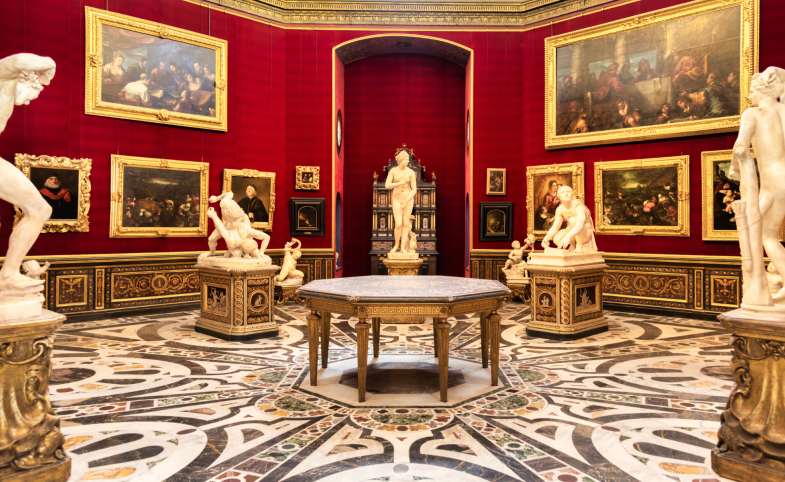
For several years now, Italy has been experimenting along these lines. The Uffizi Museum in Florence, for example, has not adopted the “outpost” policy and has turned down several extremely lucrative proposals. On the contrary, it has supported shared research and conservation programs, educational activities for diverse audiences, promoting mutual understanding of cultural heritage through agreements with foreign museums. At the same time, museums such as the Archaeological Museums of Naples, Florence, and Crotone; the Egyptian Museum of Turin; the Accademia Gallery and the Bargello National Museum in Florence, as well as Uffizi, the Royal Museums of Turin, and MAXXI of Rome have established secondary locations or branches spread across multiple Italian cities and regions.
Italy’s centuries-old polycentric model seems to facilitate this trend, and small and medium-sized towns, which in the past were excluded from the cultural tourism circuit in favor of the major art cities, are finding new sources of identity and well-being, including economic growth, without the problems and distortions of over-tourism that affect cultural capitals such as Rome, Naples, Florence, and Venice. As a result, more and more Italian and foreign visitors are inspired to discover the hidden heritage of local communities, places that are not yet part of the mainstream but are rich in character and authenticity.
"The Italian museum system is shifting from its traditional mission of preserving and passing on cultural heritage to a broader social role: spaces for experience, well-being, participation, and engagement with local communities."
In contemporary Italy, the museum ecosystem is one of the most effective tools for the country’s international positioning. In fact, cultural offerings serve as a guiding factor and a magnet for foreign visitors. This is all the truer given that in 2024, the largest contribution to tourism revenue from foreign travelers visiting the country came from stays for cultural reasons and in art cities (56.4%) (CENSIS Report 2026)
In 2022, a total of 107.9 million people visited Italy’s museums; of these, 42.2% were foreign visitors. In the same year, 46.1% of museums located in municipalities with fewer than 5,000 residents launched partnerships and collaboration with other local cultural organizations, such as schools, associations and libraries, as did 52.7% of those located in municipalities with between 5,000 and 10,000 residents. As a result, in 2024 the expenditure for museums increased by 7.1% compared with 2023, with the international public more drawn to the narrative of central and southern Italy as the cradle of the Mediterranean.
Following this trend, the Italian museum system is shifting from its traditional mission of preserving and passing on cultural heritage to a broader social role: spaces for experience, well-being, participation, and engagement with local communities. Italian and foreign visitors perceive and use museums, highlighting the transition toward a more experiential and inclusive role.
Interestingly, some features of this transition seem to contradict the common perception of technology's and media's function. It is the case with the “digital paradox”: despite complex, multisensory exhibits, the vast majority of visitors to Italian museums prefer an independent experience that provides them with personal cognitive space, seeking a place of silence and reflection within the museum. Only 10.6% of visitors seek out immersive tools such as interactive exhibits, virtual reconstructions, augmented reality, and gaming. For the public the real investment is in themselves: 89% of Italians believe that spending money on cultural experiences is more important than buying luxury goods. For 86.7%, enhancing one’s cultural level can increase job opportunities. 83.5% consider it crucial for building one’s identity: cultural experiences define social status at least as much as income levels.
Perhaps the key to strengthening the role of the global museum system as a soft power instrument lies in understanding that it is precisely at the intersection of well-being, investment in oneself, opportunity, and social recognition that cultural participation ceases to be a mere pastime and begins to take the form of a practice of personal and symbolic growth.
The shift is from a culture imposed from above ("for" the public) to a culture co-created "with" the public. This shift focuses on transforming passive consumption into cultural commitment, which turns visitors into conscious participants. Adopting this perspective when interacting with foreign audiences could be a substantial step forward, evolving from cultural self-promotion to more fruitful cultural partnerships.

Visit CPD's Online Library
Explore CPD's vast online database featuring the latest books, articles, speeches and information on international organizations dedicated to public diplomacy.
POPULAR ARTICLES
-
September 22
-
October 5
-
October 13
-
October 5
-
October 15
MORE FROM THIS AUTHOR
Join the Conversation
Interested in contributing to the CPD Blog? We welcome your posts. Read our guidelines and find out how you can submit blogs and photo essays >.