









The CPD Blog is intended to stimulate dialog among scholars and practitioners from around the world in the public diplomacy sphere. The opinions represented here are the authors' own and do not necessarily reflect CPD's views. For blogger guidelines, click here.
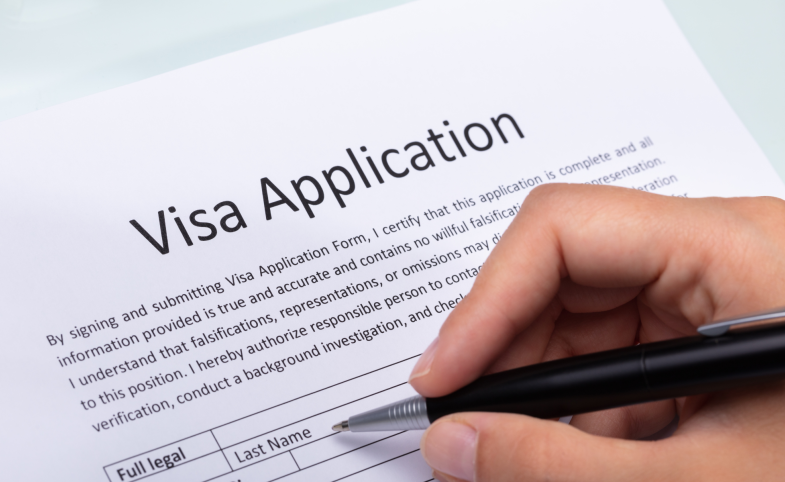
Ontological Security and Public Diplomacy at the Visa Desk
When international relations scholars debate what drives grand strategic shifts, the usual suspects appear: military balances, trade deficits, territorial disputes, alliances. Yet in much of the world, a more immediate force is reshaping foreign policy, and it works not in war rooms but at the crowded consular counters and biometric booths of Western embassies.
A passport is no longer just a travel document. It is a marker of rank. Citizens of wealthy Western democracies cross borders almost without noticing, while holders of passports from the Global South, Eurasia and the post-Soviet space face non-refundable fees, financial audits, biometric collection and refusal rates that in some countries approach one in two. This is more than an inconvenience. For entire societies it is a daily lesson in where they stand.
Physical survival alone is insufficient for a sovereign state; without a stable, continuous narrative about its place in the world, a nation is paralysed by existential anxiety.
Theorists call this ontological security: a state's need for a stable sense of who it is. In a 2006 article in the European Journal of International Relations, Jennifer Mitzen argued that states, like individuals, seek security of the self, and that they find it by routinising their relationships with significant others. Applied to the visa desk, the idea is easy to see. A government that presents itself as an equal member of the international community, and whose citizens are routinely turned away at a foreign counter, faces a gap between the story it tells and the treatment it receives.
"When Western governments use visa policy to police a global hierarchy, they erode their own soft power and the domestic consensus that stable partnerships depend on."
For business owners, academics, students and tourists, that gap is personal. Foreign policy stops being an elite game and becomes something they experience one refusal at a time. A citizen treated as a presumed migration risk because of the emblem on her passport is unlikely to go on believing in a national story of progress and integration.
At the visa desk, foreign policy stops being an abstract diplomatic game and becomes a personal encounter with global inequality.
For decades, many middle powers anchored their foreign policy in Western integration. Türkiye is the clearest case. Ankara's strategy was built around Europeanisation, and visa-free access to the Schengen area was meant to arrive as a natural milestone of that partnership. The EU and Türkiye began a visa liberalisation dialogue in December 2013. In the EU-Türkiye statement of March 2016, EU leaders pledged to lift visa requirements by the end of June 2016, provided all 72 benchmarks of the roadmap were met. Ankara says it has met 66 of the 72. Turkish citizens still need a Schengen visa.
The refusal rate itself is not extreme; in 2025 it sat close to the global average. The grievance lies in the unkept promise. A poll reported by the Center for American Progress found that only 20 percent of Turks thought European governments wanted Turkey in the Union. The visa issue did not break the pro-European consensus on its own: a spring 2025 survey for the EU delegation still found 58 percent of Turks ready to vote for membership. But it fed a wider estrangement, and it sits comfortably alongside Ankara's turn toward a more autonomous foreign policy built on civilisational pride, maritime power and ties beyond the West.
Across Africa, the indignity of the visa desk comes with a price tag. In 2024 nearly half of all Schengen applications in Nigeria were refused, according to European Commission data reported by CNN, against a global average of 14.8 percent. The fee is non-refundable, so refusal is expensive. The LAGO Collective estimates that African countries lost €60 million on refused applications in 2024, an outflow it calls “reverse remittances.”
When educated professionals are repeatedly denied travel to Western capitals, the appeal of alliances that promise partnership and deliver suspicion wears thin. African governments and publics are looking for relationships that offer more respect. Egypt and Ethiopia joined BRICS in 2024, and Nigeria became a BRICS partner country in 2025. At home, the African Continental Free Trade Area is moving ahead, but the African Union's free-movement protocol has been ratified by only four states, well short of the fifteen it needs. The passport hierarchy is not only a Western problem. Beijing, often cited as the alternative partner, has also not opened visa-free entry to major African countries.
Visa policy is one grievance among many, alongside trade, debt and security, and it is hard to isolate as the cause of any single realignment. It matters because it is the one that millions of people meet in person.
The border desk is more than an immigration tool. It is a place where a state's standing is either recognized or denied. When Western governments use visa policy to police a global hierarchy, they erode their own soft power and the domestic consensus that stable partnerships depend on.
As emerging economies look for other networks of trade, diplomacy and cooperation, the lesson is plain. States will not indefinitely cooperate with a system that asks for their strategic support while demeaning their citizens. The shift toward multipolarity is driven by changing material power, but also by a growing demand, from Ankara to Abuja, that respect at the border stop being a Western privilege.

Visit CPD's Online Library
Explore CPD's vast online database featuring the latest books, articles, speeches and information on international organizations dedicated to public diplomacy.
POPULAR ARTICLES
-
September 22
-
October 5
-
October 5
-
October 13
-
October 15
MORE FROM THIS AUTHOR
Join the Conversation
Interested in contributing to the CPD Blog? We welcome your posts. Read our guidelines and find out how you can submit blogs and photo essays >.