









The CPD Blog is intended to stimulate dialog among scholars and practitioners from around the world in the public diplomacy sphere. The opinions represented here are the authors' own and do not necessarily reflect CPD's views. For blogger guidelines, click here.
Public Diplomacy in the News: U.S. Advisory Commission on Public Diplomacy 2025 Report, Chip Power, & Sushi Solidarity
“Public Diplomacy in the News” is a CPD Blog series by Andrew Dubbins that spotlights noteworthy stories on public diplomacy topics such as cultural diplomacy, nation branding, exchange programs, international events and conferences, digital diplomacy, and strategic global communications.
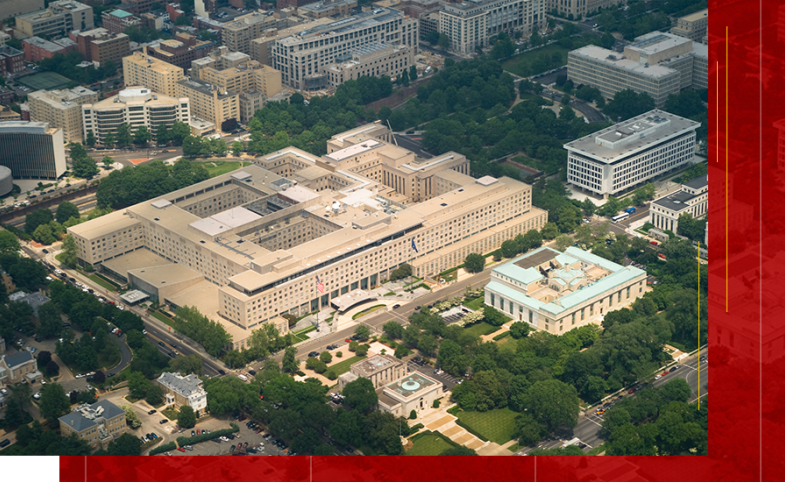
Reinvesting in U.S. Influence. The U.S. Advisory Commission on Public Diplomacy released its 2025 Comprehensive Annual Report on Public Diplomacy and International Broadcasting. The report underscores how public diplomacy—spanning exchanges, global media, cultural outreach, and strategic communications—remains an essential instrument of U.S. foreign policy even as funding declines and structural reforms reshape the landscape. Drawing on evidence, anecdotes, and budget analysis, the report argues that PD yields concrete strategic benefits, from shaping global narratives to cultivating long-term allies, and calls for stronger investment, better integration of PD professionals into policy processes, modernization of international broadcasting, expanded research and evaluation, and more flexible, streamlined programs across the State Department (pictured above). At a moment of major organizational change, including the dissolution of the Global Engagement Center and shifts at USAGM, the report urges the White House, Congress, and State Department leadership to treat public diplomacy not as a “soft” accessory but as a core capability vital to American security, prosperity, and global leadership.
Chip power as statecraft. U.S. approval of Nvidia chip exports to Armenia—part of a broader push by President Donald Trump to wield advanced AI technology as diplomatic leverage—highlights how access to semiconductors is reshaping geopolitics in the Caucasus and beyond. The deal supports Armenia’s planned AI supercomputer, strengthens U.S. influence in a region historically dominated by Russia, and follows similar approvals for the UAE and Saudi Arabia, all while the administration urges Congress to avoid restricting Nvidia’s global sales. Coupled with Trump’s earlier peace declaration between Armenia and Azerbaijan and Washington’s exclusive rights to a new trade corridor spanning the region, the strategy uses AI and chip access to realign partners, expand economic pathways bypassing Russia, and position the U.S. advantageously as semiconductor technology becomes central to global power competition.
Sushi solidarity. Taiwanese officials, businesses, and citizens are rallying behind Japan after Beijing threatened military and economic retaliation over Tokyo’s declaration that it could defend Taiwan in a conflict. In a surge of what many are calling sushi diplomacy, Taiwan lifted long-standing restrictions on Japanese food imports, and President Lai Ching-te publicly endorsed the gesture by eating sushi featuring seafood from Hokkaido and Kyushu. Politicians, shoppers, and companies have followed suit, posting photos of sushi meals, promoting “friendship” discounts at Japanese supermarkets, and even considering commemorative chocolate bars bearing Japan’s new prime minister, Sanae Takaichi. The outpouring reflects Taiwan’s gratitude for Japan’s past support, including its pineapple purchases during China’s 2021 ban, and underscores a deepening sense of shared democratic identity as both confront mounting pressure from Beijing.
Lily Kuo and Pei-Lin Wu / New York Times
This week in Olympic news. LA28 drew global attention as the organizing committee added a slate of board members closely tied to President Donald Trump, signaling a sharp political turn while the Games, World Cup, and America’s 250th anniversary all converge during his second term. New Trump-aligned figures—including Reince Priebus, Kevin McCarthy, and major GOP donors—now join an increasingly White House-friendly Olympic leadership, as Trump also chairs the federal task force overseeing the 2028 Games. Meanwhile, Los Angeles unveiled a pioneering revenue model by allowing companies to pay to retain or add venue naming rights during the Olympics, breaking from decades of IOC tradition. Intuit, Honda, and Comcast are early adopters as LA28 seeks to build on the profitable legacy of 1984 and secure funding for a projected $7 billion event. Together, the political recalibration and commercial innovation highlight how the 2028 Olympics are being reshaped by U.S. domestic politics and new financial strategies. Finally this week, the Olympic flame for the Milano Cortina 2026 Winter Games was lit in Ancient Olympia, launching its journey through Greece before heading to Italy for a 63-day relay across all 20 regions and 110 provinces. IOC President Kirsty Coventry and other leaders emphasized the flame’s symbolism of unity, peace, and tradition as the torchbearers began a route designed to showcase Italian culture, sustainability, and the values that will guide the Games when they open on February 6, 2026.
Melanie Mason and Sophia Cai / Politico; Jesus Jiménez / New York Times; International Olympic Committee
Moscow’s media offensive in Mexico. Russia has sharply expanded its Spanish-language disinformation campaign across Latin America, most aggressively in Mexico, using state-run outlets like RT and Sputnik to erode trust in the United States and cultivate pro-Kremlin sentiment. A U.S. diplomatic cable warned that RT’s audience in Mexico has exploded from thousands to hundreds of millions of views as the Kremlin exploits sympathetic figures in Mexico’s ruling Morena party and builds partnerships with local media groups, including the influential Journalists Club. Watchdog investigations and U.S. Justice Department findings link the effort to broader influence operations such as the “Doppelgänger” network, while Russian officials and media continue amplifying false stories, like accusations that the U.S. and Ukraine recruited Latin American cartels to fight Russia. With Washington scaling back some counter-disinformation tools, analysts fear the U.S. is being outmatched as Russia deepens its footprint in a region strategically vital to American interests.
Maria Abi-Habib / New York Times

Visit CPD's Online Library
Explore CPD's vast online database featuring the latest books, articles, speeches and information on international organizations dedicated to public diplomacy.
POPULAR ARTICLES
-
September 22
-
October 5
-
October 13
-
October 5
-
October 15
MORE FROM THIS AUTHOR
Join the Conversation
Interested in contributing to the CPD Blog? We welcome your posts. Read our guidelines and find out how you can submit blogs and photo essays >.