







The CPD Blog is intended to stimulate dialog among scholars and practitioners from around the world in the public diplomacy sphere. The opinions represented here are the authors' own and do not necessarily reflect CPD's views. For blogger guidelines, click here.
What Remains After the Exchange?
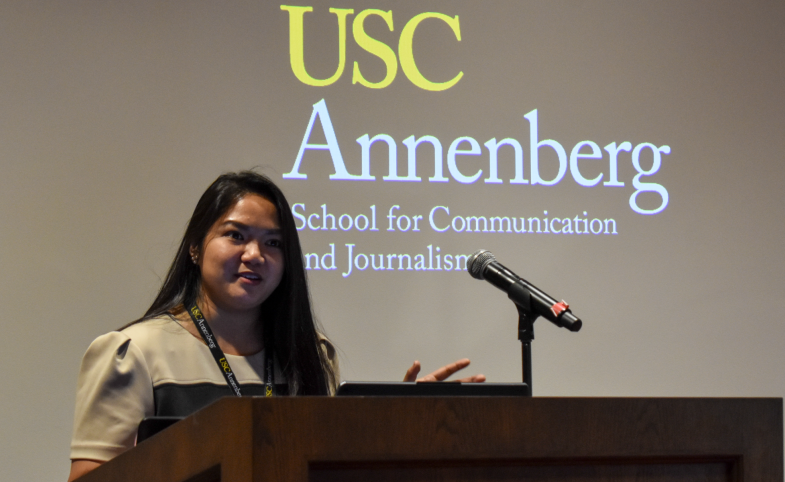
On my first day at the USC Center on Public Diplomacy Summer Institute, I entered the classroom carrying equal parts excitement and uncertainty.
Around me were diplomats, foreign service officers, military personnel, cultural practitioners, consultants, researchers and representatives from international institutions. Many had spent years designing exchange programs, advising governments or managing public diplomacy initiatives across borders. I was one of the youngest participants in the room and certainly among those with the least experience.
My first instinct was to prove that I belonged. I wondered whether I had enough experience to contribute to conversations with people who had spent decades working in diplomacy and international affairs. But as the days unfolded, I began to understand why such different people had been brought together.
Each participant brought a distinct perspective shaped by profession, institution, nationality and experience. A challenge viewed by one person as a foreign policy concern could be understood by another as a communications problem, a cultural issue or an opportunity for relationship-building. We had not been brought together because we already thought alike. We were there because each of us knew something the others did not.
Throughout the program, we were asked to examine problems collaboratively and offer insights from our own fields and cultures. Those exchanges gave me new ways of understanding my work and, more importantly, new ways of thinking about how I could represent my country more effectively overseas.
I realized that the value of being in the room was not determined by who had the longest résumé, the highest position or the most impressive title. It came from the willingness to listen, ask thoughtful questions and recognize the value of another person’s experience.
A Wider View of Public Diplomacy
Before attending the Institute, my understanding of public diplomacy was much narrower. In my work at the Philippine Consulate General in Los Angeles, I often viewed it primarily through the lens of engaging the Filipino diaspora through social media, the Consulate’s online presence and community activities.
The program showed me that these are only part of a much wider field. Our sessions explored the principles of public diplomacy, audience analysis, nation branding, sports diplomacy, technology diplomacy, design diplomacy, artificial intelligence, digital and audio storytelling, crisis communication and innovation. We examined how institutions understand their audiences, craft narratives and communicate in ways that build relationships rather than simply transmit information.
One line from the program stayed with me: "Facts inform, but framing moves people." For me, it captured something essential about public diplomacy. Facts and accuracy matter. But the way an idea is framed, narrated and connected to an audience’s experience can determine whether it is simply noticed or genuinely understood. I began to see public diplomacy not as a single platform or campaign, but as a deliberate combination of relationships, stories and strategies. Its purpose is not merely to attract attention, but to shape understanding and encourage meaningful engagement.
Looking Beyond the Activity
We often describe international exchange in terms of movement: people travel, institutions host, governments provide support and participants return home. Yet throughout the program, I found myself thinking less about the journey itself and more about what happens after it ends. What changes because people came together? Which relationships continue? What ideas return home with the participant? And most importantly, what long-term change was the exchange designed to create? That final question emerged during one of our discussions on Theory of Change: What is the long-term desired change?
A Theory of Change encourages us to identify the pathway between what we do and the change we hope to achieve. Resources support activities. Activities produce outputs. Outputs contribute to outcomes. Over time, those outcomes are expected to create impact. The framework appears straightforward on paper. In practice, it raises a difficult question: Are we simply organizing programs, or are we intentionally designing them to create meaningful change?
An exchange may be implemented successfully. Participants may attend lectures, visit institutions, join cultural activities and receive certificates of completion. These are valuable outputs of a well-managed program. But they do not automatically tell us whether the exchange built trust, strengthened professional relationships, influenced institutional practices or contributed to greater cooperation. Completing an activity is not the same as creating impact.
This distinction became clearer during our discussions about exchange in an increasingly transactional world. Governments and institutions understandably want to know what their investments produce. Public programs require accountability, particularly when funding is limited. However, some of the most meaningful outcomes of exchange do not appear immediately.
"The value of an exchange cannot be measured only by what a participant receives. It must also be measured by what the participant does afterward."
A relationship formed during a conversation may lead to collaboration years later. An idea introduced during a lecture may influence how a participant approaches a future policy challenge. A discussion over lunch may change how someone understands another country or institution. The effects of exchange are often gradual. They develop through continued relationships and the application of learning over time.
Beyond counting participants, activities and publications, we should ask whether participants changed how they approached their work, sustained the relationships they formed or brought new perspectives back to their institutions. Those questions led me to reconsider my own participation in the Institute.
Becoming Part of the Theory of Change
When I first submitted my application, I did not think too far ahead. I was curious whether there was even a possibility that I might be accepted. When the acceptance letter arrived, I decided to pursue the opportunity, even knowing that the program fee was significant and could understandably raise questions within the Department.
At first, as I looked forward to the program, I understood it mainly in terms of what it allowed me to receive: lectures, new ideas, professional connections and exposure to different approaches to public diplomacy. During the program, my perspective shifted. The more important question was not only what I would gain, but what I would bring back. How would I apply what I learned to work at the Philippine Consulate General in Los Angeles, where public diplomacy requires us to engage a diverse Filipino diaspora while also building connections with wider American audiences?
The knowledge gained by one officer should not end with that officer. It should be shared, adapted and used to strengthen the work of others. That realization was both humbling and motivating:
What I Bring Back
The value of an exchange cannot be measured only by what a participant receives. It must also be measured by what the participant does afterward. For me, this means approaching future public diplomacy programs with greater intention. It means thinking more carefully about how activities connect to the outcomes we seek and whether our work creates meaningful value for the communities we serve.
It also means preserving the humility to continue learning from perspectives different from my own. Throughout the program I learned from people whose professional lives differed greatly from mine. Yet beneath those differences, many of us were wrestling with the same challenges: how to build trust, engage audiences meaningfully, sustain relationships and demonstrate that public diplomacy matters.
I entered the classroom wondering whether I had enough to contribute. I leave understanding that contribution does not always begin with speaking. Sometimes it begins with listening carefully to recognize connections between different experiences and ideas, and then using those connections to offer something useful.
Perhaps that is what exchange offers at its best. It does not simply move people across borders. It creates a space where experiences can meet, assumptions can be challenged and institutions can view their work through another person’s perspective. The certificate will mark the completion of the program, but it will not define its success.
The real measure will come later - in how I approach future initiatives, how I share what I learned with colleagues, how I sustain the relationships formed during the program and how I apply these lessons in the service of public diplomacy. Because the most important question is not simply whether the exchange happened. It is what remains because it did.

Visit CPD's Online Library
Explore CPD's vast online database featuring the latest books, articles, speeches and information on international organizations dedicated to public diplomacy.
POPULAR ARTICLES
-
September 22
-
October 5
-
October 5
-
October 13
-
October 15
MORE FROM THIS AUTHOR
Join the Conversation
Interested in contributing to the CPD Blog? We welcome your posts. Read our guidelines and find out how you can submit blogs and photo essays >.