







Q&A with CPD: Frederic C. Hof
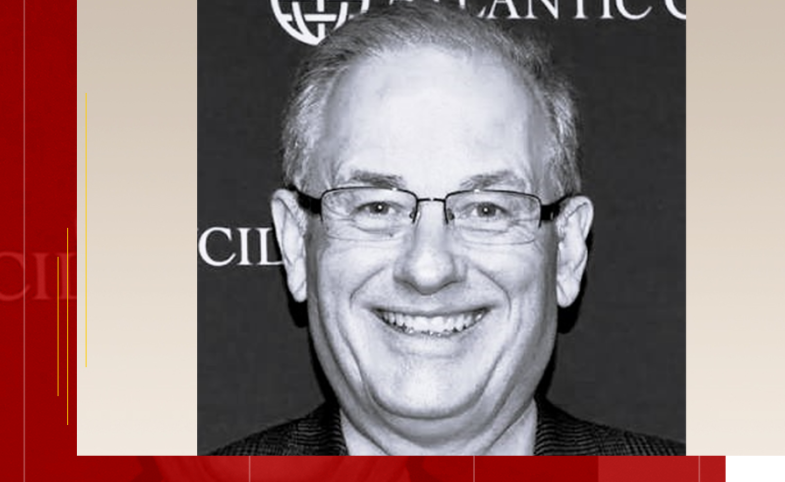
In this series, CPD interviews international thought-leaders and key practitioners of public diplomacy. Here, Juliana Maitenaz speaks with Frederic C. Hof, who has had a distinguished career with the U.S. Army, Department of State, and the international consulting firm AALC, specializing in the Middle East region. He served as ambassador and special adviser for transition in Syria under President Obama and as special coordinator for regional affairs in the U.S. Department of State's Office of the Special Envoy for Middle East Peace, where he conducted a back-channel peace mediation between Israel and Syria.
Can you tell me what drew you to a career of public service and diplomacy?
Thanks to my parents and an unbelievably superb third grade teacher named Hope Catalano, I acquired a strong interest in international affairs at an unusually early age. They all encouraged me to ask questions and to think about what was going on in the world. As a high school junior, I applied to the American Field Service exchange program, and was matched with a host family in Damascus, Syria, where I spent the summer before my senior year. After returning from Syria I knew that I wanted to be a diplomat, so I applied to and was accepted by Georgetown University's School of Foreign Service.
During my time at Georgetown, however, the Vietnam War was raging, and (despite my opposition to the war) I felt an obligation to serve. After all, I was lucky to be in college while others, including high school classmates, were being drafted. So, while studying at Georgetown, I also underwent military training and was commissioned a U.S. Army second lieutenant when I graduated. My "diplomatic career" was then deferred for twenty years, as I served as an Army officer in places like Vietnam, Tunisia, Lebanon, and ultimately the Pentagon. Still, even while in uniform, I got a taste of diplomacy while serving as the U.S. Army Military Attache at the American Embassy in Beirut, Lebanon.
As the former Ambassador and Special Adviser for Transition in Syria under President Obama, your work in Syria and the Middle East has had a remarkable impact on U.S. foreign policy. When you started your career, could you have predicted the trajectory it would take?
When my military career began at age 21, I had no way of predicting any kind of professional trajectory. I simply wanted to be a good officer, to earn the respect of superiors, peers, and subordinates. Still, the experience I had had living in Damascus as a teenager stayed with me. Living (post-Vietnam) in Augusta, GA while serving at Fort Gordon, I met two Lebanese Army officers residing in the same apartment complex as me. They rekindled my strong interest in the region and inspired me to apply to join the Army's Foreign Area Officer (FAO) Program, which trained a cadre of officers to focus on various parts of the world--in my case, the Middle East. Ultimately this program would enable me to get a master's degree (focusing on the Middle East) and learn Arabic. My thesis work would inspire my first book (Galilee Divided, Westview Press, 1985) which focused on how the boundary between Lebanon and Palestine/Israel came about.
As a result of becoming a Middle East FAO, I spent roughly the last two-thirds of my military career focused on the region, mainly Lebanon, Israel, and Syria. I had the opportunity to join the State Department as I was retiring from the Army and worked, from 1989 to 1993, on several projects, including a water-related mediation between Jordan and Israel. Then, for some 15 years, I was in the private sector. During that time I was recruited by former Senate Majority Leader George J. Mitchell to serve as Chief of Staff of the Sharm el-Sheikh Fact-Finding Committee. My work on the Committee (mostly in Jerusalem) would be the key to being invited back to the State Department in early 2009 to serve as one of the deputies to the new Special Envoy for Middle East Peace: George Mitchell. None of this - absolutely nothing - could have been predicted or planned by a young Army officer keeping his head down in Vietnam.
In the course you taught at Bard: Diplomacy in International Politics, we learned about Track 2 diplomacy, and different forms of diplomatic communication. What role did communication (public messaging versus private negotiation) play in your efforts regarding conflict resolution and treaty agreements?
Most of my diplomatic adventures have been back-channel (secret, official) and Track II (highly confidential, unofficial). Neither back-channel nor Track II diplomacy employs public diplomacy per se, as both rely on a high degree of confidentiality to achieve success. That said, solid public diplomacy as a background influencer can be enormously useful. When Special Envoy George Mitchell entrusted me with the back-channel task of trying to promote Israel-Syria peace, President Obama had already made it clear in public that his approach to countries he deemed problematic (including Syria) would be one of "engagement." Obama and his key foreign policy advisors (most notably Secretary of State Hillary Clinton) openly assured Syria that the U.S. was open for business in terms of dialogue and diplomacy. The administration stated openly that the long-vacant ambassadorial position in Damascus would be filled. Despite the continued existence of important disputes--such as Syria's role in shipping Iranian weapons to Hezbollah in Lebanon--Damascus accepted the offer of engagement at the official level and many important Syrian business people became strong proponents of Syrian-American cooperation.
Special Envoy Mitchell, though focusing nearly all his effort on Palestinian-Israeli matters, took the time to make highly publicized visits to Damascus to meet with President Bashar al-Assad and even answer questions from Syrian reporters. The net effect of strong, consistent background public diplomacy was to open for me the door to frank, productive, and secret discussions with Syria's Minister of Foreign Affairs and ultimately the President of Syria. When, in 2010, Israeli Prime Minister Benjamin Netanyahu was persuaded to cooperate with a backchannel mediation, a process was started that nearly resulted in an agreed text for a treaty of peace. As we all know, however, the decision of Bashar al-Assad to wage a war of terror against his own people killed a very promising diplomatic effort.
Were there moments where certain efforts in public diplomacy directly changed the trajectory of negotiations you were working on?
One of the projects in which I was involved during my first State Department tenure involved negotiations over U.S. military bases in the Philippines (1991-1992). The American negotiating team, led by Ambassador Richard L. Armitage entered the talks reasonably confident that long standing American facilities at Subic Naval Base and Clark Air Base could be preserved under mutually agreeable terms. But we also recognized there would be strong opposition to the continuation of U.S. military base rights from some influential Filipino legislators and from some of the 28 daily newspapers published in Manila. Public diplomacy would be essential if we were to neutralize the impact of nationalist sentiment that sometimes veered into anti-Americanism. Publicly, Armitage offered, as a gesture of respect, to hold the negotiations entirely within the Philippines, and publicly he acknowledged that there was a historical basis for grievances against the U.S. among Filipinos.
Armitage's consistently conciliatory public diplomacy may have surprised those opposed to the continuation of American base rights, but it did not deter or persuade them. Instead, they mounted an extraordinarily effective public diplomacy campaign of their own, one rooted in grievances over past American behavior, that succeeded in preventing President Cory Aquino from saying "Yes" to an extension of the bases in return for increased military and economic assistance. Seismic tremors from Mount Pinatubo--adjacent to Clark Air Base--would ultimately inspire renewed interest by the Philippines in accepting an offer, but an enormous eruption destroyed Clark Air Base and covered Subic Naval Base in volcanic ash. Presidents Bush and Aquino subsequently agreed that the U.S. military presence in the Philippines would end. Public diplomacy by the opponents of an agreement proved decisive in delaying matters long enough for Mount Pinatubo to make the ultimate decision.
You published Reaching for the Heights: The Inside Story of a Secret Attempt To Reach a Syrian-Israeli Peace (2022), a fantastic account of your efforts in negotiating peace between Syria and Israel. How did your experience as both a diplomat and a writer shape the way you told the story?
The book I wrote about my backchannel effort to mediate Syria-Israel peace was an attempt to do something rarely attempted by people in public life: to write a genuinely self-critical memoir, one from which other diplomatic practitioners might draw useful lessons. When I was a 16-year-old living with a Syrian family in Damascus, drinking from a firehose of information on a part of the world about which I knew nearly nothing, I hoped that someday I might play a role in improving relations between Washington and Damascus and in facilitating peace between Syria and Israel. From April 2009 through March 2011 I had the opportunity to live that dream and the chance to make it come true. Yes, I had no control over Bashar al-Assad's decision to open fire on his own people, and no control over President Obama's refusal to contact Assad and urge him to stop so that an important peace mediation could continue. But I fell short in those things over which I did have some control.
With a greater sense of urgency a peace treaty might have emerged, one that could have encouraged peaceful dispute resolution in Syria itself. Had I spent more time quietly developing support for Syria-Israel peace within the administration, President Obama might have been more inclined to reach out to Assad when it might have done some good. Writing the book was surprisingly easy. I would estimate that at least three-quarters of the first draft made it all the way to the printer. Getting the text approved by the State Department was a nightmare, even though no classified information was included. I must say, I envy officials more senior than me who get rubber-stamp treatment from an office that put me through purgatory. But what emerged in the end was an accurate, truthful account of the most productive effort ever made by the U.S. in trying to facilitate Israel-Syria peace. If the book had not been written an important chapter of diplomatic history would have remained veiled in secrecy, perhaps forever.
Visit CPD's Online Library
Explore CPD's vast online database featuring the latest books, articles, speeches and information on international organizations dedicated to public diplomacy.
Popular Blogs
-
September 22
-
October 5
-
October 13
-
October 5
-
October 15