








In the latest issue of CPD Perspectives on Public Diplomacy, Shearon Roberts, Associate Professor of Mass Communication and faculty member in African American and Diaspora Studies at Xavier University in New Orleans,...
KEEP READING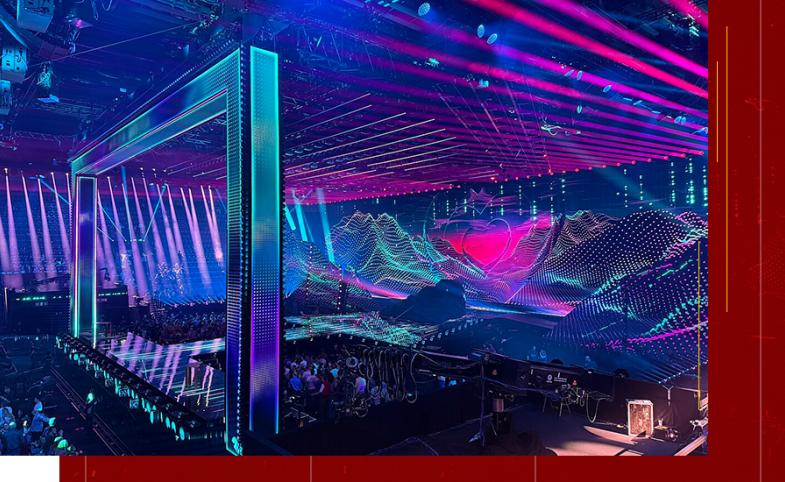
Can Fans Be Public Diplomats?
Feb 10, 2026
In the latest issue of CPD Perspectives on Public Diplomacy, CPD Research Fellow Jessica Carniel explores how the Eurovision Song Contest functions as a site of participatory diplomacy, demonstrating that fans and audiences act as political agents whose voting, discourse, and engagement transform a supposedly apolitical music competition into a meaningful arena for public opinion and geopolitical expression.
In Can Fans Be Public Diplomats? Participatory Diplomacy at the Eurovision Song Contest, Carniel argues that the Eurovision Song Contest has functioned as more than a musical competition, operating as a symbolic space where national identity, culture, and international politics intersect. While scholars have extensively examined Eurovision as a tool of state-led public diplomacy, this work shifts attention to fans and audiences as political actors in their own right. Drawing on the idea of Eurovision as a “symbolic contact zone,” Carniel shows how audiences, artists, and media actively participate in diplomatic processes through voting, online discourse, and fan practices.
Despite the European Broadcasting Union’s insistence that Eurovision is apolitical, the contest is routinely used by participants and audiences as a lens for engaging with global politics, with the popular vote increasingly read as a barometer of international public sentiment. Recent contests underscore this political significance. Ukraine’s 2022 victory, shortly after Russia’s invasion, was widely interpreted as a pop-cultural endorsement of solidarity with Ukraine, especially given Russia’s exclusion from the contest and Kalush Orchestra’s role in humanitarian advocacy. Media coverage across Europe and the United States framed the win less as a judgment of musical merit than as a wave of public goodwill expressed through televoting. This moment highlighted how Eurovision’s participatory mechanisms, amplified by digital engagement, can blur the line between cultural competition and geopolitical signaling.
A contrasting case emerged in 2024 with Israel’s participation following October 7. Eurovision fandom fractured over calls for boycotts and comparisons to Russia’s exclusion, while Israeli political leaders intervened directly to ensure Israel’s continued participation. After lyrics deemed too political were revised, Israel’s foreign ministry launched a diaspora-focused voting campaign, openly recognizing Eurovision’s value as a site of public diplomacy. Israeli media framed Eden Golan’s strong televote performance as evidence of global support for Israel, whereas much of the international press reported the result more cautiously, contextualizing it within protests and conflict without drawing the same political conclusions. The divergent interpretations reveal how Eurovision outcomes are selectively politicized, depending on national and media perspectives.
Together, these cases demonstrate that Eurovision results are almost inevitably read through a political lens, with audiences positioned—willingly or not—as participants in global diplomatic signaling. Using the concept of “participatory diplomacy,” the article explores how fans understand their engagement with Eurovision as a form of political agency. Based on a 2024 survey of 322 Eurovision fans and qualitative digital ethnography on X/Twitter, the study examines how audiences interpret voting, debate geopolitical issues, and experience the contest as a space for expressing cosmopolitan ethics and political views. Methodologically, it combines inductive thematic analysis with real-time, “vibes-based” digital observation to capture not just what fans say, but how political meaning and sentiment circulate within Eurovision’s participatory culture.
Download the full text here.


Visit CPD's Online Library
Explore CPD's vast online database featuring the latest books, articles, speeches and information on international organizations dedicated to public diplomacy.
Popular Blogs
-
September 22
-
October 5
-
October 5
-
September 9
-
September 22