







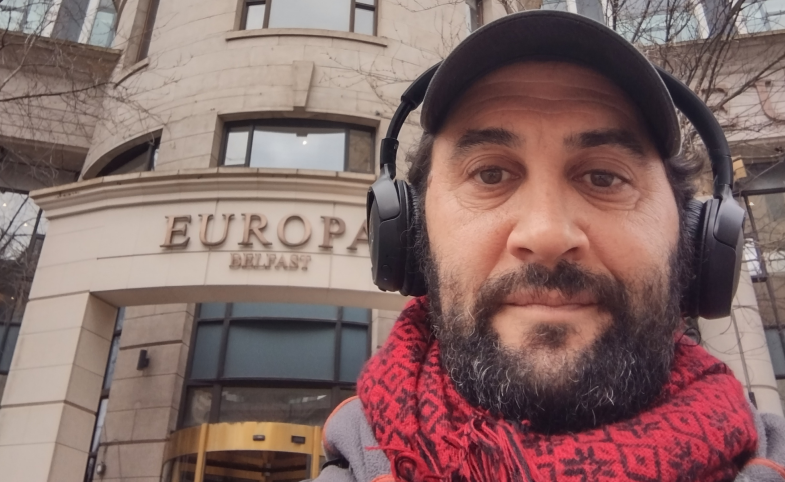
MPD Alumni Spotlight: Paul Rockower
To commemorate the 20th anniversary of the USC Master of Public Diplomacy program, housed at the USC Annenberg School for Communication and Journalism, the USC Center on Public Diplomacy interviewed distinguished alumni for a special series reflecting on their time at USC, their professional achievements, and the paths their careers have taken since graduation. View the complete list of alumni interviews.
Please introduce yourself, your class of MPD, and explain what you are currently doing and have done since graduating.
I am Paul Rockower, MPD class of 2010. Since graduating, I was a Visiting Fellow at the Taiwan Foundation for Democracy, and I consulted with the Indian Ministry of External Affairs on a public diplomacy project. For 7 years worked with the U.S. State Department, running performing arts academies in countries in conflict and managing its flagship music diplomacy program (American Music Abroad) and hip hop diplomacy program (Next Level), as well as running programs directly with U.S. embassies in Brazil, Colombia, Venezuela, Zimbabwe, among other places.
After the 2016 election, I discontinued my work with the State Department and began to work domestically to protect vulnerable communities from rising extremism. Today, I do extremism monitoring, emergency preparedness and crisis management for vulnerable communities in Arizona.
How has the program, broadly helped you in your career?
The USC MPD program helped give me new skills, new ideas and a strong platform to launch my career in international affairs. I had been a practitioner of public diplomacy prior to the program, but the USC MPD program created new opportunities for me in the international sphere, and a new set of skills and practitioner language in the field.
These skills were broadly transferable when I shifted to a domestic angle. All of the diplomacy, public diplomacy and strategic communications skills, as well as the project management tools have served me well throughout my varied career.
Was there one particular class in the program which helped prepare you for the workplace?
There were two classes that best prepared me for my further career as a public diplomacy practitioner:
a) MPD 504, a public diplomacy simulation class. In this class, we simulated public diplomacy campaigns on a weekly basis. This class taught me how to prepare campaigns and think of all the angles and stakeholders that went into a good public diplomacy campaign.
b) Professor Nick Cull’s class on Cultural Diplomacy: Professor Cull helped educate us on the emotional, transrational connections that shape good public and cultural diplomacy, especially through the intangibles of music, food, art, dance and culture. It was through studying successful cultural diplomacy campaigns, I was able to help create the field of Gastrodiplomacy.
What is your favorite non-academic memory of your days as an MPD Trojan?
This is a semi-academic. I had a capstone project called “The 21st Century Family of Man,” which re-imagined the famous “Family of Man” exhibit. This exhibition was up for Fall 2009/Spring 2010 in the Annenberg Gallery and student space. It was a real joy to see all the USC students interacting with my exhibition, or simply studying and taking in the photos.
On the exhibit:
Daily Trojan: https://dailytrojan.com/2009/11/10/master%E2%80%99s-student-brings-image...
Voice of America: https://www.voanews.com/a/famed-1955-family-of-man-photo-exhibit-enjoys-...
How do you feel the world of public diplomacy and public engagement has changed during your time?
I have been so taken with the appearance of Gastrodiplomacy as an internationally-renowned tool of public and cultural diplomacy. The field of Gastrodiplomacy was created in the lab of Prof Cull’s Cultural Diplomacy class, and the field has spread as a diplomatic concept all over the world. That was something that began in the USC MPD program. Since then, I have spoken to foreign ministries, universities and conferences all over the world on Gastrodiplomacy, as well as helping to advise on a gastrodiplomacy project for the UK Queen’s Platinum Jubilee.
What would your advice be to today’s students?
Use the platforms available at USC, whether Anneberg, or the Center on Public Diplomacy or other available platforms to amplify your work. When I was a student, we wrote op-eds for the USC Center on Public Diplomacy or Neon Tommy as a way to use the platforms available to MPD students to give our ideas and work to a broader audience in the field.
Tags
Visit CPD's Online Library
Explore CPD's vast online database featuring the latest books, articles, speeches and information on international organizations dedicated to public diplomacy.
Popular Blogs
-
September 22
-
October 5
-
October 5
-
October 13
-
October 15