









The CPD Blog is intended to stimulate dialog among scholars and practitioners from around the world in the public diplomacy sphere. The opinions represented here are the authors' own and do not necessarily reflect CPD's views. For blogger guidelines, click here.
Indonesia's Global Ambitions Need Public Diplomacy
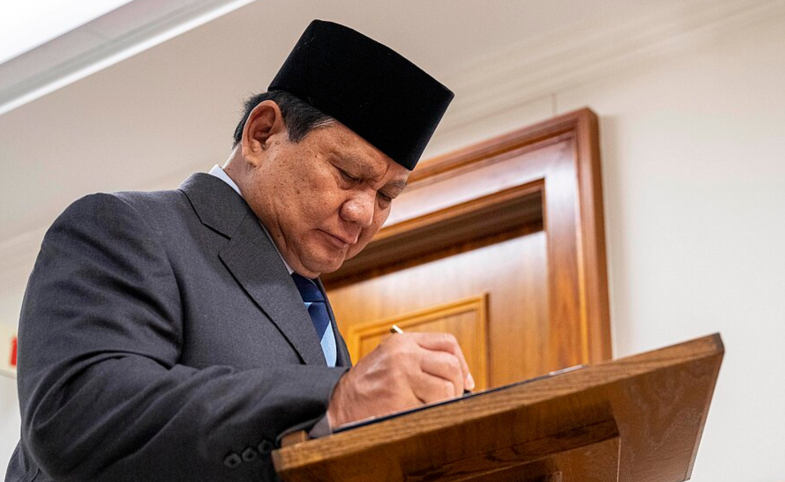
Indonesian President Prabowo Subianto has become one of the most traveled presidents in Indonesian history. Within 18 months in office, he traveled more than 57 times to nearly 30 countries worldwide, from Asia to Australia, Europe to the Middle East. He also spoke at some of the world's most important multilateral and international gatherings, including the UN General Assembly in New York, the World Economic Forum in Davos, and the Shangri-La Dialogue in Singapore. But one thing missing from these trips is a coherent idea of what Indonesia could offer to the international community and how to promote the nation through public diplomacy.
In this time of global uncertainty, Prabowo clearly shows that he wants to have a greater role on the world stage. Indeed, international cooperation and diplomacy have become more important than ever before. Many global challenges, such as securing energy supply, attracting foreign investment, and expanding market access, have become key focuses of those trips. However, if Indonesia wants to play a significant global role, it has to focus on the ideas it can offer the world.
Despite these frequent trips and international engagement, Prabowo’s global ambitions not only lacked a coherent foreign policy strategy, but also thought leadership. For instance, in the World Economic Forum speech, unlike Canada’s Prime Minister Mark Carney, who has a clear vision of the world and criticized the collapse of the current world order, Prabowo’s speech mainly highlighted domestic programs such as his ambitious nutritious meal program.
To help Indonesia play a more important role on the world stage, Prabowo could learn from his predecessor. In the past, Indonesia has offered some big foreign policy ideas that revolutionized the international world order and regional architecture. At the very least, there are two examples of how Indonesia's thought leadership could have a long-lasting impact on the world order and regional architecture even with less frequent travel.
In the 1955, under President Soekarno, Indonesia hosted the Asia-Africa conference in Bandung. He gathered world leaders from the newly independent countries in Asia and Africa to discuss what the post-colonial world order should look like. As a result, there are many initiatives that revolutionized not only how these new independent countries think about the world order, but it also initiated some important initiatives. Initiatives such as the New International Economic Order (NIEO), which inspired the United Nations Trade and Development (UNCTAD), and the initial idea to make a more just legal regime for the ocean, which later became the United Nations Convention on the Law of the Sea (UNCLOS).
"For a foreign policy idea to flourish, it should be built not only by diplomats at a formal negotiating table, but also by elements and forums outside the government."
A more recent example came under the previous administration of President Joko Widodo. Despite being criticized for underperforming on the world stage and for having a limited interest in foreign policy, Indonesia introduced the ASEAN Outlook on the Indo-Pacific under his administration. The initiative, which was later endorsed by ASEAN, is important for asserting ASEAN centrality amid increasing geopolitics. It put forward ideas on how ASEAN should be at the center of the Indo-Pacific discourse.
I would argue that the AOIP initiative has had significant success in promoting ASEAN's importance in Indo-Pacific discourse. If we look at other prominent countries' Indo-Pacific strategies, such as those of the United States, Canada, France, the European Union, and others, all these documents endorsed and recognized ASEAN's centrality in the Indo-Pacific. All these documents even refer specifically to the AOIP documents, in which Indonesia is an important architect.
These two examples show how ideas matter more than the travel frequency. Ideas could have a long-lasting impact rather than merely being in the room without making significant contributions to the forum.
One thing that the current administration could learn from those two foreign policy successes is the importance of promoting ideas through public diplomacy. For a foreign policy idea to flourish, it should be built not only by diplomats at a formal negotiating table, but also by elements and forums outside the government.
The Bandung Conference had a long-lasting impact, even more than seven decades after its conception, as it was discussed in many seminars and discussions beyond the conference itself. Scholars and pundits across the globe have written works that discuss, debate, and reinvent the ideas of the Bandung Conference and its relevance to the current challenges the world faces. In 2017, many decades after the conference, scholars of international law looked back and named it one of the most important milestones in the history of international law.
The AOIP's international recognition was also a result of countless seminars, public discussions in universities, and articles that endorsed the initiatives throughout the region. This allows the AOIP to be recognized and to gain what it deserves.
Currently, the Prabowo administration does not yet have a clear foreign policy vision, nor is it truly engaging with the scholarly and academic community that can help those ideas flourish. Involving public diplomacy through track two diplomacy is crucial. After all, government officials and diplomats come and go during the course of an administration, whereas this epistemic community remains.
As Ali Alatas, one of the longest-serving Indonesian foreign ministers, famously said: “Diplomacy is too important to be left to diplomats alone." As such, ideas and public diplomacy are essential if President Prabowo Subianto wants to play a greater role and have a long-lasting impact on the world stage.

Visit CPD's Online Library
Explore CPD's vast online database featuring the latest books, articles, speeches and information on international organizations dedicated to public diplomacy.
POPULAR ARTICLES
-
September 22
-
October 5
-
October 13
-
October 5
-
October 15
MORE FROM THIS AUTHOR
Join the Conversation
Interested in contributing to the CPD Blog? We welcome your posts. Read our guidelines and find out how you can submit blogs and photo essays >.