









The CPD Blog is intended to stimulate dialog among scholars and practitioners from around the world in the public diplomacy sphere. The opinions represented here are the authors' own and do not necessarily reflect CPD's views. For blogger guidelines, click here.
Not for Sale: Ukraine’s Pavilion at Expo 2025 Osaka
César Corona is CEO of ExpoMuseum.com, an organization devoted to documenting World Expos and collaborating with partners and press to share knowledge about them. Below is the second installment in a photo series documenting Expo 2025 Osaka, with all images captured by Corona unless otherwise noted. For more of his work—including part one of this series—visit his author page.
At many Expos, it is disappointing to see national pavilions that function less as spaces of intercultural encounter and more as handicraft stores. Culture is used as a decorative backdrop, while the real goal is to sell souvenirs. This transactional approach trivializes national identity, turning it into merchandise instead of conveying deeper values or visions that could serve strategic national objectives. According to the Convention Relating to International Exhibitions, these events must not be of “an essentially commercial nature.” Their purpose is to inspire and educate rather than sell.
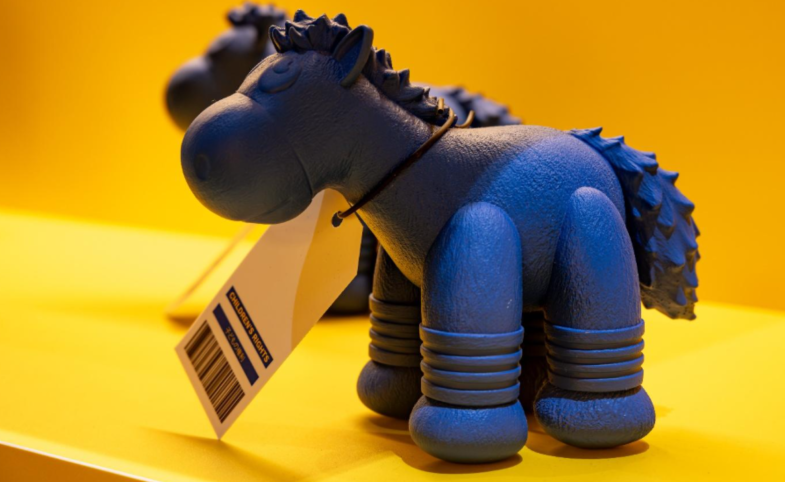
At Expo 2025 Osaka, Ukraine did exactly the opposite. Located within the Commons Pavilion C, the Ukraine Pavilion looks like a shop, but its objects are Not for Sale. Instead of promoting goods through culture, Ukraine promotes culture and values through the familiar language of goods. The emphasis is on what cannot be priced: freedom, dignity, sovereignty.

(Image: ©Expo 2025)
The pavilion resembles a store with its shelving, labeled objects, and clean design aesthetic, but it shifts the experience by excluding the possibility of buying. Items become prompts rather than commodities. Each object carries a barcode, which visitors can scan with a handheld device provided by the pavilion. The device plays short videos that deepen the explanation, linking the object to a value and showing how that value is threatened or defended in the context of the ongoing invasion.

As First Lady Olena Zelenska put it during Ukraine’s National Day at Expo 2025 Osaka, the pavilion “is dedicated precisely to values. It is called ‘Not For Sale,’ because values are not for sale, yet they are of immeasurable worth.”
Zelenska also warned that values everywhere face “serious tests,” from propaganda to online manipulation. She asked whether the world still has enough humanity, whether aggressors will be punished, and whether justice can be restored. Her speech reinforced the pavilion’s concept: what is displayed in Osaka is not merchandise, but a set of commitments.

Some countries chose not to take part in this World Expo for budgetary or political reasons. Ukraine’s choice to participate, under a full-scale invasion, signals a different approach to strategic international communication: presence is influence. By standing on the Expo stage, Ukraine not only contested the narrative but also took advantage of the opportunity to engage directly with a foreign audience. This approach belongs to a longer lineage of Expo statecraft. As Nicholas Cull notes in his article "Overture to an alliance: British propaganda at the New York World's Fair, 1939-1940," the United Kingdom used its pavilion there to maintain visibility, mobilize support, and signal resolve on the eve of war.
The concept of a store that refuses to sell, so that values can take center stage, works well. Yet its impact would be stronger with more Ukrainians physically present in the pavilion. Objects can spark curiosity, but it is human interaction that anchors meaning. Hosting staff from Ukraine, carefully selected and trained, could share personal stories, engage in dialogue, and embody the values the pavilion seeks to highlight. Their presence would connect abstract ideas to lived experience, making the message more relatable and deepening visitors’ empathy.
In an Expo environment where too many countries reduce culture to crafts and shops, Ukraine used the appearance of a store to argue for something more. Its pavilion makes the refusal to sell the message itself. It insists that what matters most, including life, freedom, and dignity, cannot be commodified, only defended and shared. For public diplomacy, the lesson is clear: ensure presence even when it is difficult and create experiences that speak to the public in meaningful ways while advancing strategic national objectives. At Expo 2025 Osaka, Not for Sale reads as a public commitment: not for sale, not for surrender, and not to be silenced.

Visit CPD's Online Library
Explore CPD's vast online database featuring the latest books, articles, speeches and information on international organizations dedicated to public diplomacy.
POPULAR ARTICLES
-
September 22
-
October 5
-
October 5
-
September 9
-
September 22
MORE FROM THIS AUTHOR
Join the Conversation
Interested in contributing to the CPD Blog? We welcome your posts. Read our guidelines and find out how you can submit blogs and photo essays >.