









The CPD Blog is intended to stimulate dialog among scholars and practitioners from around the world in the public diplomacy sphere. The opinions represented here are the authors' own and do not necessarily reflect CPD's views. For blogger guidelines, click here.
Public Diplomacy in the News: The UN's Uncertain Future, China's Space Diplomacy, & Shifting U.S. Soft Power
“Public Diplomacy in the News” is a CPD Blog series by Andrew Dubbins that spotlights noteworthy stories on public diplomacy topics such as cultural diplomacy, nation branding, exchange programs, international events and conferences, digital diplomacy, and strategic global communications.
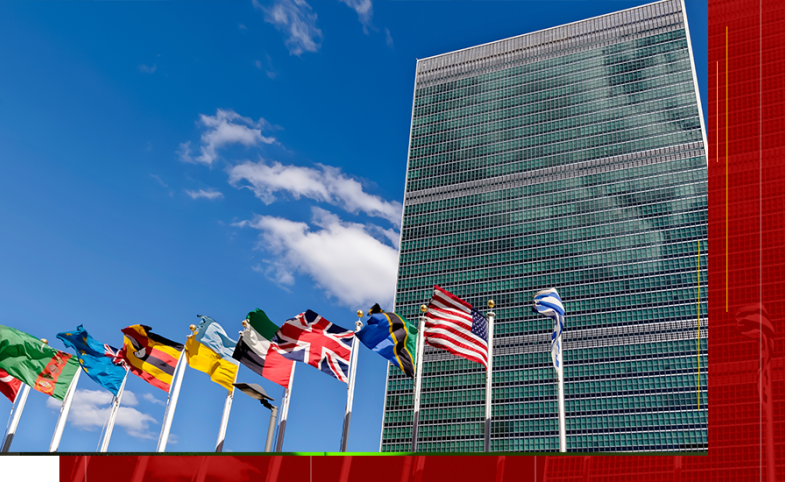
Diplomatic Challenges and an Uncertain Future for the United Nations. Reuters’ Antoni Slodkowski examines six major developments from September’s 81st United Nations General Assembly, where world leaders confronted escalating conflicts, emerging technological threats and questions about the institution’s future. Although no major diplomatic breakthroughs emerged, U.S. and Iranian officials resumed indirect negotiations following a collapsed ceasefire, while discussions between American and Russian diplomats raised hopes for a limited ceasefire protecting Ukrainian energy infrastructure and grain shipments. Artificial intelligence overshadowed climate change on the diplomatic agenda, with technology executives urging international cooperation on AI safety despite U.S. resistance to global regulation. Venezuela’s interim president, Delcy Rodríguez, made a surprise appearance for talks with President Donald Trump, while Sudan’s military leader was notably absent after being denied a U.S. visa. The gathering also highlighted the UN’s deepening financial and institutional challenges, including shrinking budgets, declining political influence and uncertainty over who will succeed Secretary-General António Guterres when his term ends in December. Despite these obstacles, the summit underscored the UN’s continuing role as a venue for dialogue amid increasingly fractured international relations.
China’s Expanding Space Diplomacy With Pakistan. China is strengthening its strategic partnership with Pakistan through space cooperation, including plans to send the first Pakistani astronaut aboard China’s Tiangong space station. Two Pakistani pilots are undergoing intensive training in Beijing, with one expected to be selected for a weeklong mission this autumn, becoming the first foreign astronaut to visit the Chinese station. The mission will include four Pakistani biotechnology experiments focused on food security and climate change, offering Pakistani scientists an opportunity to conduct research in orbit. The initiative builds on broader cooperation under China’s Belt and Road Initiative, including satellite launches, navigation technology and a Pakistani-built lunar rover scheduled to accompany China’s Chang’e 8 mission around 2028. Although Pakistan remains heavily dependent on Chinese spacecraft, launch facilities and technical expertise, the partnership illustrates how Beijing is using space exploration as a tool of science diplomacy, technological cooperation and international influence.
Saad Sayeed and Ariba Shahid / Reuters
The Shifting Landscape of American Cultural Soft Power. In an episode of The New York Times podcast The Opinions, host Nadja Spiegelman speaks with authors Euny Hong and W. David Marx about the changing influence of American culture and the rise of competing cultural powers, particularly South Korea, Japan and China. While American music, Hollywood films and fashion have shaped global popular culture for decades, the guests argue that the United States is losing its monopoly on cultural influence as streaming platforms and social media make international entertainment more accessible. South Korea’s success with K-pop demonstrates the importance of government investment, private-sector partnerships and digital distribution, while Japan’s cultural exports have flourished largely through independent creative industries despite less successful government initiatives. China, meanwhile, has struggled to export its popular culture, although phenomena such as Labubu demonstrate its growing potential. The discussion also explores how commercialization and social media have shifted cultural influence away from enduring movements associated with identity and political values toward short-lived trends and consumer products. Ultimately, the guests suggest that while American culture remains globally dominant, the emergence of a more multipolar cultural landscape is challenging its traditional soft power advantage and raising questions about whether cultural popularity still translates into lasting international influence.
Nadja Spiegelman, Euny Hong and W. David Marx / New York Times
Thailand’s Growing Soft Power Through Culture and Tourism. Thailand is leveraging its cultural influence to strengthen its global image, attract international visitors and generate economic growth amid increasing competition from neighboring countries. Inspired by the success of South Korea’s Korean Wave, Thailand has expanded its soft power strategy beyond traditional strengths such as food and tourism to encompass film, music, fashion, festivals and wellness. Government incentives have attracted major international productions, including HBO’s The White Lotus, whose third season reportedly contributed to a surge in tourism to Koh Samui. Meanwhile, Thai-born global superstar LISA has helped introduce Thai culture to millions through music and entertainment, demonstrating the diplomatic potential of cultural figures. Thailand is also positioning itself as a leading wellness destination, drawing visitors through traditional healing practices and luxury retreats. However, experts caution that cultural popularity and tourism alone may not deliver lasting economic benefits without sustained government investment, effective policies and broader economic development. Ultimately, Thailand’s challenge is translating its growing cultural appeal into enduring international influence and economic competitiveness.
The Changing Appeal of China’s Panda Diplomacy. TIME’s Chad de Guzman examines whether China’s longstanding practice of lending giant pandas to foreign zoos remains an effective tool of public diplomacy amid rising geopolitical tensions. Following President Xi Jinping’s announcement of two new pandas for Zoo Atlanta, experts reflect on how panda diplomacy, which gained prominence after President Nixon’s historic 1972 visit to China, has traditionally symbolized goodwill and helped strengthen bilateral relationships. Yet China’s increasingly assertive foreign policy and growing international tensions have diminished the effectiveness of these symbolic gestures. A 2026 survey found that just 28% of Americans said receiving pandas would improve their perception of China, while significantly more favored concrete policy changes on trade and fentanyl. Animal welfare advocates have also criticized the use of pandas as diplomatic bargaining chips. Nevertheless, experts argue that while affection for pandas does not necessarily translate into support for Beijing’s policies, the animals can still foster cultural goodwill and preserve opportunities for cooperation amid strained international relations.

Visit CPD's Online Library
Explore CPD's vast online database featuring the latest books, articles, speeches and information on international organizations dedicated to public diplomacy.
POPULAR ARTICLES
-
September 22
-
October 5
-
October 5
-
September 9
-
September 22
MORE FROM THIS AUTHOR
Join the Conversation
Interested in contributing to the CPD Blog? We welcome your posts. Read our guidelines and find out how you can submit blogs and photo essays >.