









The CPD Blog is intended to stimulate dialog among scholars and practitioners from around the world in the public diplomacy sphere. The opinions represented here are the authors' own and do not necessarily reflect CPD's views. For blogger guidelines, click here.

I was delighted to read the CPD Blog written by Anja Eifert on ... >
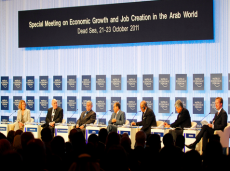
Successful public diplomacy is based on providing foreign publics what they need, be it information, a vaccination program, or help in securing economic well-being.

As much of the world’s media continues to focus on the politics of the 2014 Sochi Winter Olympics and the continued violent protests in the Ukraine, another country closer to home threatens to descend into civil war.
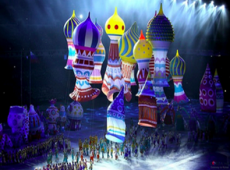
China, the United Arab Emirates, Indonesia, and Russia are now known globally for their economic strength. But what about their cultures?
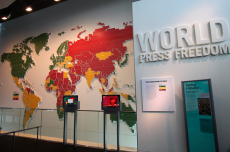
Among the principal assets of U.S. public diplomacy are American values. They are admired around the world, even by many people who dislike American policy. No other political system offers such extensive individual and systemic freedoms as those enumerated in the Bill of Rights. Showcasing and standing up for those freedoms should be at the heart of U.S. public diplomacy.

“Treknie gadi (the fat years) – tas jums tiešām ir jāzina (that one you really have to know),” said the Latvian teacher, and, for the next two hours, our language class dissected those two words. We read in Latvian about Prime Minister Aigars Kalvītis and his famous 2005 speech to the nation promising a modern incarnation of Jacob’s biblical prophecy of seven ‘fat years’ of prosperity followed by seven years of hardship. We learned pārpalikums (surplus) and dižkibele (global financial crisis).

Shirley Temple Black, an American cultural icon of the Great Depression Era, and U.S. Ambassador to both Ghana (1974-76) and Czechoslovakia (1989-92), passed away on Monday, February 10th. CPD reached out to a few public diplomacy scholars and practitioners for their take on her global public diplomacy impact.
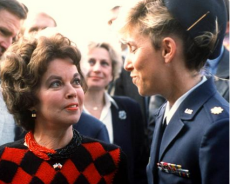
I’m a Shirley Temple fan. Not a big fan of her movies; they seemed more suited for my sister. I’m a fan of her diplomacy in Czechoslovakia. I was a Newsweek reporter living in Prague between the 1989 “Velvet Revolution” and 1991 when I saw up close how Ambassador Shirley Temple Black worked it. That’s how I became a fan. (Disclosure: I like ambassadors, my wife was U.S. ambassador to Hungary 2010-13.)
America has had many notable diplomats dealing with Czechoslovakia, or the more modern Czech Republic, a country split from Slovakia in 1993 following a “Velvet Divorce.”
Pages
Visit CPD's Online Library
Explore CPD's vast online database featuring the latest books, articles, speeches and information on international organizations dedicated to public diplomacy.
POPULAR ARTICLES
-
September 22
-
October 5
-
October 13
-
October 5
-
October 26
Featured Blogger
Join the Conversation
Interested in contributing to the CPD Blog? We welcome your posts. Read our guidelines and find out how you can submit blogs and photo essays >.