








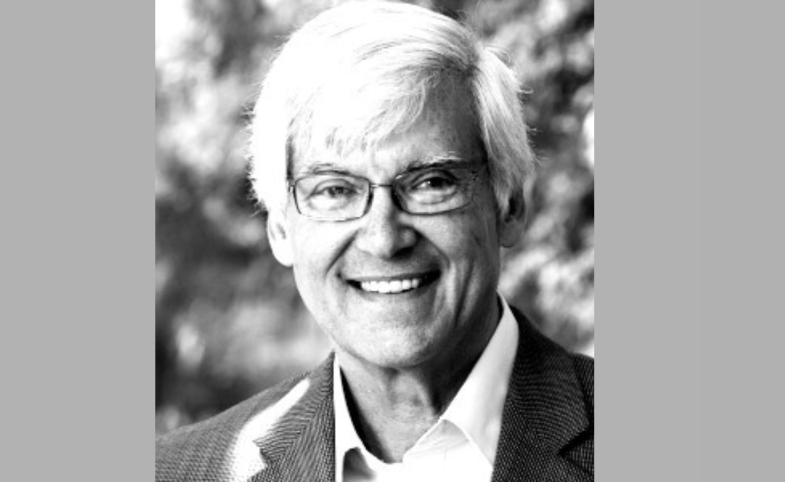
Q&A with CPD: Geoffrey Cowan
In this series, CPD interviews international thought-leaders and key practitioners of public diplomacy. Here, CPD's Juliana Maitenaz speaks with Geoffrey Cowan, founder of the USC Center on Public Diplomacy and former dean of the Annenberg School for Communication & Journalism. Cowan has been an important force across a spectrum of communication and public policy arenas as a lawyer, academic administrator, government official, bestselling author, distinguished professor, non-profit executive, and Emmy Award-winning producer. Prior to becoming dean, President Bill Clinton appointed Cowan to serve the nation as the director of Voice of America, the international broadcasting service of the U.S. Information Agency.
What drew you to public diplomacy, and your later influence on the study of the subject at Annenberg via the Center on Public Diplomacy and Master of Public Diplomacy program?
I grew up in a family that was intensely interested in the Voice of America. My father had been its second director in World War II under President Franklin Roosevelt. Then, I had the chance under President Bill Clinton to become the director of Voice of America, which was an incredibly interesting job for me. While I was there, I was recruited to become the dean of the Annenberg School, where I became interested in developing new fields of study. By that time, Voice of America was considered part of the public diplomacy field, and I realized there was no academic institution really studying public diplomacy. So, I created the USC Center on Public Diplomacy, followed by an academic program that's now the Master of Public Diplomacy. We had the ability to recruit a faculty member who would provide the signature for us, and after an international search, found Professor Nicholas Cull.
You served as the 22nd Director of the Voice of America, a crucial tool of communication for over eight decades, directly reaching citizens across the globe. Can you speak about its importance to American public diplomacy, and where it may be heading in the future?
Much of what is being dismantled by this administration will survive in some form. You have the National Endowment for the Arts being eliminated, but you don't get rid of the arts; you just have less funding for it. USAID is being eliminated, but that doesn't get rid of aid. Universities are losing funding but even with fewer resources, they'll survive. But the Voice of America is funded almost entirely by the U.S. government. It's difficult to see how you resuscitate that.
It may be that, in some form, Voice of America will survive. There are appropriations bills right now being considered. Maybe it will survive. If it doesn't, then the question is, what will replace it? I think something like Voice America will be rebuilt, but will you be able to build fifty language services that people trust, with that credibility, and with that level of reporting excellence? Will you be able to weave in music and cultural diplomacy? Will you be able to train people in English or in American history and literature, and so forth? My definition for the Voice of America was to reach the people of the world with the information they need in the languages they speak over transmission systems which they could receive for years. Something like that will materialize but it may not happen through a government entity.
What advice do you have for Annenberg students, and beyond, looking to become practitioners of public diplomacy?
Public diplomacy is always going to be important for corporations. For the government, it'll be important for states and cities. It'll be important for cultural institutions. People with a Master of Public Diplomacy degree would thrive at LACMA or the Metropolitan Museum, or corporations like Disney that are hugely important for states like California. Public diplomacy is always going to be an important skill. It's like journalism school. The number of jobs in newspapers is declining sharply, but USC Annenberg students still get jobs. The reason is that there's a need for people who can write well and tell stories well, who can be good investigators and conduct research. I think, in the same way, there will always be a need for cultural competency and ability to reach audiences around the world.
Visit CPD's Online Library
Explore CPD's vast online database featuring the latest books, articles, speeches and information on international organizations dedicated to public diplomacy.
Popular Blogs
-
September 22
-
October 5
-
October 5
-
September 9
-
September 22