









The CPD Blog is intended to stimulate dialog among scholars and practitioners from around the world in the public diplomacy sphere. The opinions represented here are the authors' own and do not necessarily reflect CPD's views. For blogger guidelines, click here.
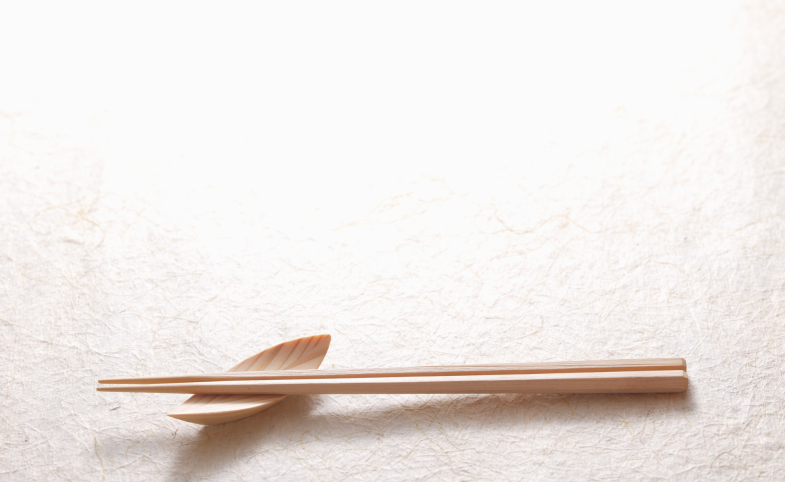
Between the Sticks: The Ancient Wisdom That World Leaders Still Haven't Learned
Last week, in my class Communicating in a Global Society, I decided to move beyond slides, theories, and lectures. Public diplomacy, after all, is not something learned solely through lectures and case studies, it is more to feel, practice, and sometimes stumbled through. So instead of beginning with a routine lecture, I walked into the classroom carrying a simple bundle of chopsticks and a bowl of rice.
At first, the students laughed. Some were intrigued, others skeptical. A few immediately admitted they had never used chopsticks before; others claimed mastery but hesitated when asked to demonstrate. I distributed pairs of chopsticks across the room and simply said, “Let’s try.”
What followed was not just an exercise in coordination, it became an unfolding lesson in culture, identity, and communication. Students fumbled, dropping grains of rice, and comparing techniques. Some held the sticks rigidly, as though gripping a pencil for the first time; others instinctively loosened their hands, discovering a rhythm that felt almost intuitive. The conversation moved beyond getting it “right” or “wrong” and toward something more meaningful. They began to read between the lines, recognizing that these small, non-verbal gestures carry cultural weight. In those quiet moments, they started to see the bigger picture: understanding another culture is often found in the smallest details.
I then introduced what seemed like a minor detail: how chopsticks are held varies across regions. In some cultures, precision and stillness dominate; in others, fluidity and speed are valued. The angle, the spacing, the subtle gestures, these are not random. They are learned behaviors shaped by history, social norms, and shared practices. A simple food utensil becomes a language.
I paused and asked my students, “What did you learn today from this simple exercise?”
A voice answered from the back of the room, “Patience… to learn and to understand.”
And that was the moment the lesson deepened. Another student reflected aloud, “I didn’t realize something so small could carry so much meaning.” That, to me, was the breakthrough. Culture does not always announce itself in grand rituals or formal ceremonies. Often, it resides in the ordinary in how we eat, greet, gesture, and move through the world.
The art of chopsticks taught my students that day a very important lesson: patience and the importance of understanding. Mastery did not come instantly. It required slowing down, observing carefully, and being willing to fail repeatedly. In that process, they experienced what it feels like to stand outside one’s own cultural comfort zone. And in that discomfort, they began to appreciate the quiet discipline embedded in everyday practices across cultures. By the end of the session, the chopsticks were no longer just objects. They had become bridges tools that revealed both the difficulty and the possibility of understanding. My students did not leave as experts, but they left more aware. And awareness, paired with patience, is the first step toward empathy.
"Culture does not always announce itself in grand rituals or formal ceremonies. Often, it resides in the ordinary in how we eat, greet, gesture, and move through the world."
We often hear about a “clash of civilizations,” a famous phrase that suggests deep, inevitable conflict between cultures. But as I watched my students struggle and then slowly adapt, I was reminded that the issue is rarely civilizations themselves. The real challenge lies in the clash of misunderstandings and the lack of patience to understand others. When we fail to interpret the symbols, gestures, and practices of others, we create distance where there could be connection.
I am not a practitioner of public diplomacy in the traditional sense. I do not negotiate treaties or stand at podiums representing nations. Rather, as an academic, my focus lies in examining the micro-level practices of communication that often go unnoticed. These everyday gestures, while seemingly insignificant, reveal a critical insight: diplomacy does not begin with policy frameworks or formal dialogue. It originates in the capacity to understand others, their behaviors, meanings, and cultural contexts.
We often speak of diplomacy as strategy, as language crafted with precision and intent. Yet at its core, diplomacy is nothing more and nothing less than communication. Not merely the exchange of words, but the interpretation of meaning, the reading of nuance, the willingness to step outside oneself and dwell, however briefly, in the world of another. In this sense, the study of everyday communication is not peripheral to diplomacy; it is its very foundation of this highly sophisticated profession.
It is tempting to view diplomacy through the lens of grand speeches, strategic negotiations, or carefully designed policy frameworks. Yet, in practice, it is constructed from the smallest units of human interaction: the capacity to listen attentively, to observe carefully, and to interpret meaning beyond one’s own assumptions. I often encourage my students to consider the Foreign Service Officer Test, but I also remind them that technical knowledge alone is not sufficient. If a student cannot understand why someone holds chopsticks differently, how can they hope to navigate the far more complex terrain of cross-cultural dialogue on a global stage?
If public diplomacy is to be effective, it cannot begin with policy alone. It must begin with communication, not just speaking, but truly understanding. We must learn to read the subtle languages embedded in everyday practices, to recognize that difference is not deficiency, and to approach unfamiliarity with curiosity rather than judgment. In a world increasingly defined by global interaction and global connectedness, the art of communication is no longer optional, it is foundational. Before we can represent, negotiate, or advocate, we must first learn to understand.
Sometimes, that lesson starts with something as simple as picking up a pair of chopsticks and realizing that even the smallest gestures can carry the weight of culture. What seems ordinary becomes profound: a reminder that culture is not always spoken, but felt, held, and practiced. And perhaps that is where true diplomacy begins not in the grand halls of power, but in the quiet mastery of learning how to hold, how to listen, and how to understand. As Harper Lee so powerfully reminds us in To Kill a Mockingbird: “You never really understand a person until you consider things from his point of view… until you climb inside of his skin and walk around in it.”

Visit CPD's Online Library
Explore CPD's vast online database featuring the latest books, articles, speeches and information on international organizations dedicated to public diplomacy.
POPULAR ARTICLES
-
September 22
-
October 5
-
October 13
-
October 5
-
October 15
MORE FROM THIS AUTHOR
Join the Conversation
Interested in contributing to the CPD Blog? We welcome your posts. Read our guidelines and find out how you can submit blogs and photo essays >.