









The CPD Blog is intended to stimulate dialog among scholars and practitioners from around the world in the public diplomacy sphere. The opinions represented here are the authors' own and do not necessarily reflect CPD's views. For blogger guidelines, click here.
Strategic Heritage Engagement: Bridging Hard Power and Public Diplomacy
The current global geopolitical climate is perhaps the harshest it has been in decades. Devastating conflicts, the degradation of trust in leaders and international institutions, and the continuous assault on the environment itself are forcing many to reckon with what constitutes actual influence on existing power structures. Beliefs and concepts that once fit comfortably into the collective lexicon are now routinely and understandably questioned.
Soft power has been increasingly challenged in recent years. It is not difficult to find articles or statements on how soft power is no longer relevant to international affairs, or even how it somehow no longer exists. But while soft power may be less utilized through traditional people-to-people exchanges currently (which could likely return with changes in leadership), it is increasingly being exercised into the material domains of long-term infrastructure strategy that picks up where military strategy falls short.
The destruction of cultural heritage sites, particularly in contemporary conflicts, is a potential opening for external powers to shape influence, legitimacy and security in post-war environments. The precedent is already established: after the fall of Saddam Hussein in 2003, Iran filled the cultural and religious vacuum in Iraq while Washington prioritized military and political objectives. With the numerous U.S. military bases planted throughout the Gulf, American influence, especially in any non-military respect, has not grown or improved in the region in the past twenty years. The long-term advantages of Iran’s strategy in Iraq is evident, as is the blind spot in the U.S. post-conflict plan.
"The destruction of cultural heritage sites, particularly in contemporary conflicts, is a potential opening for external powers to shape influence, legitimacy and security in post-war environments."
Heritage properties are valued as symbols of soft power in public diplomacy contexts—but they are also cultural matériel: physical anchors of political and cultural legitimacy. In peacetime, they generate aesthetic appreciation and support domestic identity. In war, they can swiftly become strategic liabilities. Such historical landmarks are not only a source of attraction, but also a strategic asset whose destruction ultimately creates downstream consequences.
In the current war in Iran, more than 140 cultural sites have reportedly been damaged or destroyed by U.S. and Israeli strikes since February, including UNESCO World Heritage landmarks. While negotiations to end the war continue, discussions have expanded beyond ceasefires and security guarantees to potentially include reconstruction financing.
Whether or not elements of this framework actually materialize, China is poised to expand its role in Iran as both rebuilder and narrative catalyst through the Iran-China 25-year Cooperation Program. This 2021 agreement, under which Beijing committed $400 billion to Iranian energy, transport and cultural infrastructure in exchange for a steady supply of discounted crude oil, serves as a vital aspect of China’s Belt and Road Initiative.
The dual-use nature of the BRI has long positioned Iran as an important node in China’s massive overland and maritime networks—deepening economic dependence while reinforcing regional cooperation long before the war began. And in February 2023, Beijing further formalized its commitment when President Xi Jinping and then-Iranian President Ebrahim Raisi signed a memorandum of understanding specifically on cultural heritage cooperation, which included a wide range of objectives such as joint archaeology projects as well as the restoration and recovery of significant cultural artifacts.
By integrating the cultural heritage domain into its larger economic and infrastructure strategy, China is acknowledging that the influence of these historical properties extends to who participates in rebuilding them—and that subtle advantage can also become a force multiplier if the destruction originated from a competitor or adversary.
Public diplomacy is not just a tool to utilize in times of relative peace, nor is it strategically optional during or after kinetic operations. Building relationships, projecting values and shaping narratives are just as important as mapping post-conflict soft power outcomes, particularly starting with cultural heritage sites.
Maintaining UNESCO membership—not just for preservation but also for positioning influence in reconstruction alliances—is a logical step in this approach. The U.S. withdrawal from UNESCO, which takes effect at the end of 2026, may not trigger immediate security risks, but will further solidify American unilateralism that may shut out potential allies while opening the door for adversaries to not only install their own agendas, but also step in as more reliable and resourceful actors in the spheres or industries of their choosing.
Public diplomacy, when integrated with strategic heritage engagement, can serve as a much-needed bridge between kinetic operations and reconstruction outcomes. Strategic heritage engagement is a preemptive instrument of statecraft, a pre-planned function that anticipates the soft power consequences of hard power decisions or oversights. If America is a multi-domain—and not just military—superpower, it will own the rebuilding of the infrastructure it bombs in a way that completes its national defense posture in service of its national interests, or avoid striking such sites altogether through the lens of the 1954 Hague Convention coupled with the precision of UNESCO-provided coordinates.
The soft power of cultural heritage sites is undeniable. The recurring destruction of these sites across contemporary conflicts suggests a clear reality: the consequences of any attacks on such sites extend far beyond the physical battlefield, and they deserve serious strategic planning before potential conflicts as well as in the aftermath. With this approach, public diplomacy can help clarify how refraining from strikes, as well as rebuilding amid tragic losses of life and culture, are critical components to the broader architecture of long-term security.
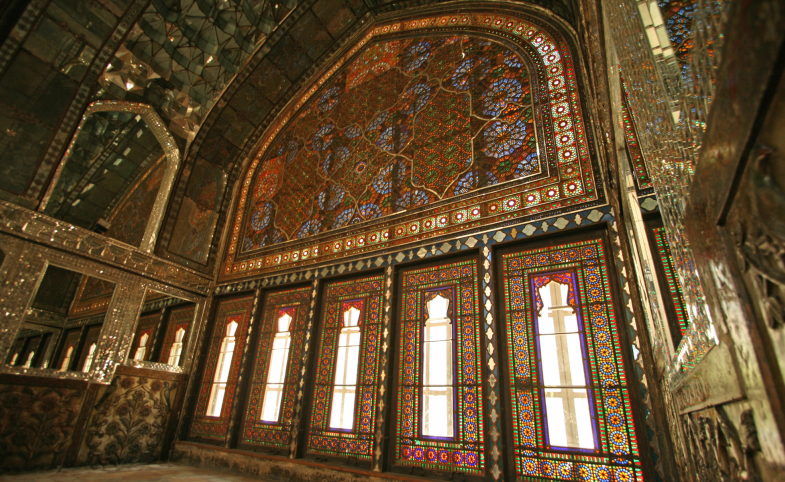
Featured Image: Iran's Golestan Palace, damaged by a March 2026 airstrike according to a report by UNESCO.

Visit CPD's Online Library
Explore CPD's vast online database featuring the latest books, articles, speeches and information on international organizations dedicated to public diplomacy.
POPULAR ARTICLES
-
September 22
-
October 5
-
October 5
-
September 9
-
September 22
MORE FROM THIS AUTHOR
Join the Conversation
Interested in contributing to the CPD Blog? We welcome your posts. Read our guidelines and find out how you can submit blogs and photo essays >.