









The CPD Blog is intended to stimulate dialog among scholars and practitioners from around the world in the public diplomacy sphere. The opinions represented here are the authors' own and do not necessarily reflect CPD's views. For blogger guidelines, click here.
Soft Power and Globalization: Attraction Relies on Connectivity
How do globalization and soft power dynamics intersect and interact? This is the core question that inspired my recently published journal article, "The nexus between globalization and soft power: attraction runs on connectivity channels," co-authored with William Jones. The aim is to clarify how tightly intertwined global connectivity channels are to international patterns of attraction and influence – a relation that is often implied and taken for granted – and the significance of mastering but also damaging these interactions.
The main argument contends that soft power "runs on" globalization’s connectivity channels, conceptualized as physical and digital infrastructure that enable the flow of people, ideas, capital and goods.
Connectivity channels enhance (or stifle) dynamics of attraction. For instance, whether legitimately or not, if a country closes its borders, imposes unilateral tariffs, or suspends the issuance of education visas, its image and reputation can be adversely affected. Conversely, if another country expands its visa-free policy, advances a free-trade agreement, or builds a long-awaited railway in a landlocked area, appreciation should follow. In all these situations, soft and economic power are closely intertwined. Recognition is hoped to be accompanied by economic gains, but if problems arise, resentment is likely to follow.
How does a virtuous cycle of soft power empowerment look like?
A country aspiring to captivate foreign audiences must identify and cultivate widely appealing resources rooted in its culture, values, foreign policy, and overall accomplishments. These resources should then be effectively promoted abroad through strategic approaches like public diplomacy or collaborations with international media. A successful reception not only enhances a country’s image and reputation but also creates an inviting atmosphere conducive to pursuing more tangible policies. The outcomes of this process take place within a variety of dimensions of connectivity. Notable examples include increased people-to-people interactions facilitated by the influx of tourists and students, as well as intensified digital and physical connections achieved through infrastructure development and the establishment of additional communication channels. These developments can, in turn, lead to further investment opportunities and collaborations.
"A country aspiring to captivate foreign audiences must identify and cultivate widely appealing resources rooted in its culture, values, foreign policy, and overall accomplishments."
Taking one step back, how have these conditions originated and evolved?
Globalization "turbocharged" American soft power as connectivity channels stemmed from the U.S. and predominantly flowed in one direction. Thanks to Hollywood, popular music, and famous brands, nearly the entire world gained exposure to (and appreciation for) U.S. culture and the "American dream." However, the U.S. did not receive nearly as much exposure from the rest of the world. The dynamics of attraction were almost entirely unilateral, at least beyond the ‘developed world’. One may wonder about Europe’s appeal, but its charm was generally recognized in a narrower and oft-romanticized way due to its history, culture, architecture, landscapes, cuisine, in addition to norms. Yet, somehow, it never managed to be as widespread and influential as its American counterpart. Then came (Cool) Japan, followed by the Korean Wave, and now possibly China. Is this tide signaling the long-fabled Asian Century? Perhaps a rebalancing is underway, but it may be premature to make such a definitive statement.
Regardless, global digitalization has also accelerated the dissemination of disinformation and misinformation, further amplified by algorithms and now AI. In essence, both opportunities and challenges have become more pronounced, as most countries now have the means to effectively promote their image internationally. However, just as easily, detractors and opposers can fabricate false narratives, potentially damaging their reputation.
Was then the post-Cold War period between the 1990s and the early 2000s a ‘golden era’ for soft power dynamics of attraction, preceding widespread digitalization and social media’s abuses? Could this be seen as a brief period one of non-zero-sum growth in which all willing countries were able to grasp some global attention? The Global Soft Power Index already warned that “the global public’s capacity to develop familiarity with and admiration for nation brands seems finite, favouring prominent countries and those making deliberate efforts to stand out. Less familiar nations struggle to capture attention and affection in this highly competitive environment.” As a case in point, ongoing developments are not deterring proactive actors, including South Korea, Thailand, the Gulf countries, and certainly China, from intensifying their efforts. In contrast, the US appears to be going in the opposite direction, completely disregarding its once-unrivaled position as the “shining city on a hill”.
Even before America First’s undoing of the country’s soft power, great power politics was already resulting in limitations or closures of physical and digital connectivity channels (e.g. US–China decoupling), which has negatively affected people-to-people interactions. While some exchanges still occur online, they are often polarized, which limits the chances of a respectful and open dialogue.
A crucial takeaway is that increased connectivity channels do not necessarily equate to enhanced soft power, as these channels can be weaponized and exploited. For the time being, digital channels stand out as the most concerning ones due to their accessibility, ‘spreadability,’ and volatility.
Yet, beyond the alarming conduct of some major powers, other countries are pursuing their own less confrontational agendas, perhaps in a post-liberal way, driven by pragmatism more than values and ideologies. These countries, like South Korea, aim to enhance their international standing while focusing on economic gains first, and they do so without the need for direct hostility, prioritizing self-elevation and betterment over belittling or opposing others. This approach could represent a more constructive form of soft power competition, significantly assisted by globalization, which is likely to endure even without its former ‘champion’.
Despite the challenges, if the goal is to enhance national soft power, maintaining open channels is still preferable to the alternative, as globalization facilitates this process. In turbulent times, it is crucial to reassess and even strengthen the connectivity channels that enable soft power dynamics of attraction and influence to flourish.
After all, who would prefer a global setting characterized by fierce ‘hard’ competition for dominance over one defined by ‘soft’ competition for prestige? As the late Nye contemplated, is it more effective to lead by force or by example? If anything, ongoing developments suggest that the former approach may be too costly.
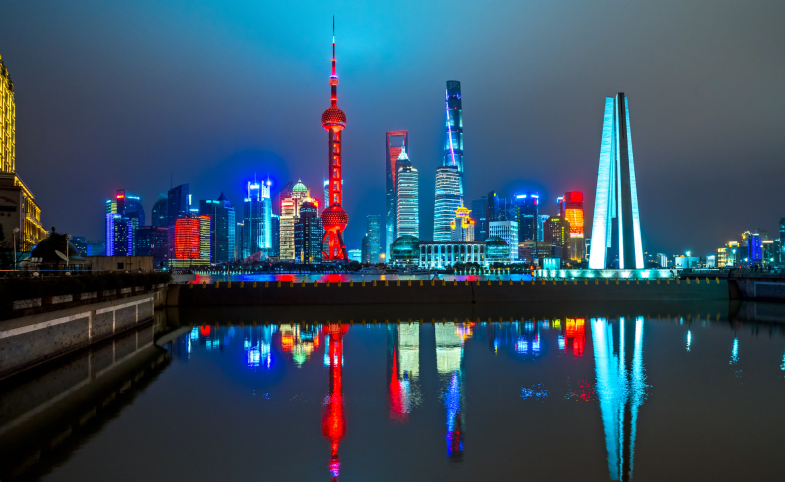
Featured photo: Shanghai city skyline

Visit CPD's Online Library
Explore CPD's vast online database featuring the latest books, articles, speeches and information on international organizations dedicated to public diplomacy.
POPULAR ARTICLES
-
September 22
-
October 5
-
October 5
-
October 13
-
October 15
MORE FROM THIS AUTHOR
Join the Conversation
Interested in contributing to the CPD Blog? We welcome your posts. Read our guidelines and find out how you can submit blogs and photo essays >.