









The CPD Blog is intended to stimulate dialog among scholars and practitioners from around the world in the public diplomacy sphere. The opinions represented here are the authors' own and do not necessarily reflect CPD's views. For blogger guidelines, click here.
America’s World Cup Cities in Conversation: Narratives from the Group Stage
This is the third in a series of blogs by Professor Jay Wang, Director of the Master of Public Diplomacy Program at USC Annenberg, focusing on how the eleven U.S. host cities for the FIFA World Cup are represented and discussed across digital and social media environments during the FIFA tournament. Read Part One and Part Two.
As the FIFA World Cup moved from anticipation to competition, the conversation surrounding the eleven U.S. host cities also evolved. Before kickoff, much of the public discussion centered on preparations, transportation, security, and readiness. During the group stage, however, the focus broadly shifted to experience. With a significant influx of international fans, host cities became stages for cultural expression that extended well beyond the stadium. The observations below draw on Brandwatch monitoring of online news and social media conversations during the group stage (June 13–27), focusing on the key narratives that emerged during this period.
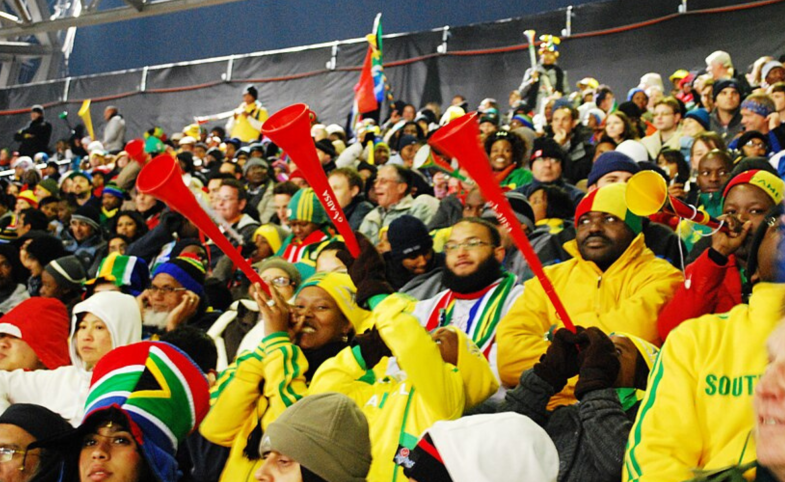
Across the host cities, one of the most prominent narratives was the visibility of international fans and the vibrant atmosphere they created. Whether it was Norwegian supporters performing their signature “Viking Row” chant in Times Square, Scotland’s Tartan Army taking over Boston, Dutch supporters organizing Orange Fan Walks in Houston, or Argentine fans marching through Kansas City, each city became a showcase for the performance of national culture and identity. Fans filled streets, restaurants, public squares, and transit systems with songs, flags, costumes, and celebrations, temporarily transforming urban spaces into international meeting grounds.
These fan encounters also generated examples of intercultural exchange. In several cities, local residents, businesses, and public officials became active participants in the festivities. Boston police joined fan celebrations; Philadelphia saw Brazilian supporters gathering on the steps of the Art Museum; and Atlanta featured a widely shared jersey swap between Spanish and Cape Verdean fans that attracted more than two million views on X. Japanese supporters’ post-match cleanup of Dallas Stadium also drew widespread attention and admiration. Closely related was a broader narrative about the hospitality of host cities as reflected in international visitors’ experiences and impressions. Kansas City, for example, received praise for its organization, clean airport, and helpful volunteers. Collectively, these stories underscore that host cities are not simply venues for competition but places where international publics encounter local communities.
"With a significant influx of international fans, host cities became stages for cultural expression that extended well beyond the stadium."
At the same time, several narratives revealed the tensions that can arise when global audiences encounter local practices. One recurring example was U.S. tipping culture. From Philadelphia and New York/New Jersey to Atlanta and Kansas City, restaurants’ use of automatic gratuities became a source of debate. One Instagram post that received more than three million views declared: “Foreigners in the U.S. for the World Cup have refused to pay mandatory tips at bars and restaurants. ‘Don’t bully us for tips, pay your workers better!’ The rest of the world is finally saying what Americans have been thinking for years.” While seemingly mundane, the discussion illustrated how everyday cultural norms can become highly visible during a global event.
Several cities became focal points for broader geopolitical and cultural debates that extended beyond the matches themselves. Los Angeles and Seattle were closely associated with Iran’s complaints regarding travel arrangements and visa restrictions. Meanwhile, a group-stage match between Egypt and Iran in Seattle became an international cultural flashpoint as local organizers designated it a “Pride Match” during Seattle’s Pride weekend, prompting disagreement over the display of LGBTQ+ symbols inside the stadium. These episodes illustrate how host cities can become sites where international political and cultural issues intersect with sport.
The tournament also elevated stories of smaller soccer nations. Atlanta became associated with Cape Verde’s historic World Cup debut, while Houston hosted Curaçao’s first-ever World Cup goal and DR Congo’s long-awaited return to the tournament. The Congolese team’s arrival in custom suits designed by Congo-born, Paris-based designer Alvin Mak went viral, attracting coverage from Vogue.
In sum, the group-stage narratives suggest that the host cities have become platforms where international perceptions are continuously shaped and negotiated through fan experiences, cultural encounters, and shared public spaces. They point to the public diplomacy value of a mega-event such as the World Cup. Through the lived experiences of host cities, international visitors encounter a more personal and human dimension of the United States, one often distinct from the country’s broader political image in recent years. While it remains to be seen whether these positive impressions endure, one theme that has come through clearly is that host cities have become important diplomatic actors in shaping how the world experiences America.
Historian Barbara Keys put it well: “Sport’s popularity is a function of the inherent unpredictability of every contest, which produces genuine drama, and of its capacity to create a uniquely powerful emotional bond between spectators and participants.” That unpredictability gives the tournament remarkable communicative power while intensifying the emotional experiences that influence how host cities are remembered. As the tournament moves into the knockout rounds, it will be worth watching how these narratives continue to evolve.
Note:
The analysis in this series draws on data collected through Brandwatch, a digital media monitoring and social listening platform, using a tailored set of search terms designed to capture conversations related to each host city and the World Cup. The objective is not to provide a comprehensive analysis of all online discussions, but rather to offer a snapshot of prominent narratives, recurring topics, and notable points of attention during the period examined.

Visit CPD's Online Library
Explore CPD's vast online database featuring the latest books, articles, speeches and information on international organizations dedicated to public diplomacy.
POPULAR ARTICLES
-
September 22
-
October 5
-
October 5
-
October 13
-
October 15
MORE FROM THIS AUTHOR
Join the Conversation
Interested in contributing to the CPD Blog? We welcome your posts. Read our guidelines and find out how you can submit blogs and photo essays >.