









The CPD Blog is intended to stimulate dialog among scholars and practitioners from around the world in the public diplomacy sphere. The opinions represented here are the authors' own and do not necessarily reflect CPD's views. For blogger guidelines, click here.
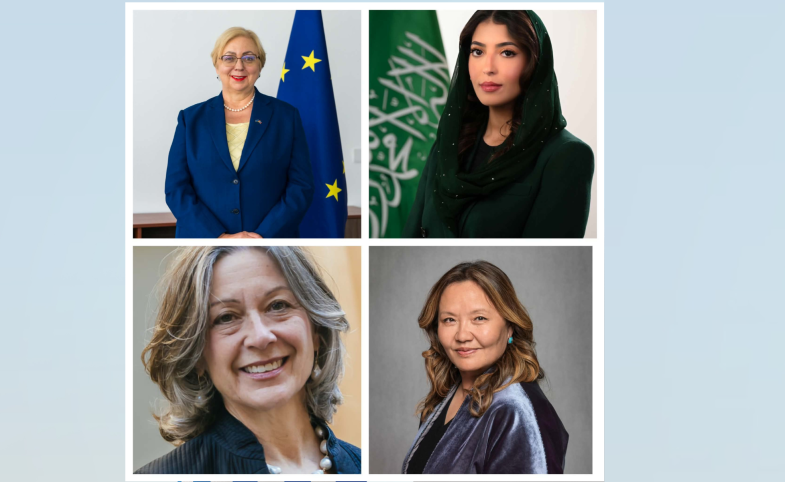
Women in Diplomacy: Insights from Four Women Shaping International Affairs
June 24 marks the International Day of Women in Diplomacy. For much of history, diplomacy, like many areas of politics and international affairs, has been a male-dominated profession. While the representation of women in diplomacy has improved significantly over the past decades, gender disparities remain, particularly in senior leadership positions.
According to the Anwar Gargash Diplomatic Academy’s Women in Diplomacy Index 2025, the share of women ambassadors has continued to increase across the globe. However, women remain underrepresented in top diplomatic posts and decision-making roles.
Encouragingly, a policy brief by the Georgetown Institute for Women, Peace and Security highlights that the global share of women ambassadors has increased from approximately 1 percent in 1968 to nearly 25 percent in 2024. Against this backdrop, I was honored to interview four remarkable women in diplomacy from the United States, Mongolia, Saudi Arabia, and Lithuania/the European Union. Through their stories, we gain a deeper understanding of both the opportunities and challenges facing women in international affairs today, as well as valuable lessons for the next generation of leaders.
Dr. Vivian S. Walker (United States)
A former Executive Director of the U.S. Advisory Commission on Public Diplomacy and a retired senior foreign service officer, Vivian S. Walker is Co-President of the Public Diplomacy Council of America, Practitioner in Residence and Professor at the Walsh School of Foreign Service at Georgetown University, Co-Editor of the Palgrave Macmillan Series in Global Public Diplomacy, and Faculty Fellow at the University of Southern California’s Center on Public Diplomacy. Previously, she taught at the Central European University, the National War College, and the National Defense College of the UAE. Her thirty year diplomatic career included service in Central Asia, the Caucasus, Afghanistan, and North Africa.
"My mother was born in Hungary, moved to Sweden following the Hungarian revolution in 1956, and later immigrated to the United States," she recalls. Growing up with that international perspective sparked an early interest in different cultures, histories, and societies.

Without knowing much about diplomacy at the time, Walker enrolled at Georgetown University's School of Foreign Service because it simply sounded interesting. Years later, she is now a professor, teaching in the graduate program where her own journey began. Beautiful full circle.
After Georgetown, Walker pursued a PhD in English Language and Literature at the University of Chicago. Yet as she neared graduation, she realized that a traditional academic career was not what she wanted.
"I had a revelation," she says. "Did I want to spend my whole life writing articles about Shakespeare that nobody would ever read? The answer was no."
Instead, she took the U.S. Foreign Service Exam, passed, and began a career that ultimately led her to public diplomacy which was a field she describes as the perfect fit.
Unlike many diplomatic roles focused primarily on government-to-government engagement, public diplomacy allowed her to connect directly with local communities. Through initiatives such as Fulbright scholarships, educational exchanges, and cultural programs, she could help people access information, ideas, and opportunities that could create positive change in their own societies.
"What I loved about public diplomacy was that I could both teach and learn," she explains. "In some sense, I never really left graduate school. The world became this great classroom where I could be both teacher and student."
Reflecting on the challenges of her career, Walker believes one of the biggest obstacles facing public diplomacy is that it is often undervalued as a tool of statecraft. While military operations or economic initiatives can produce visible and measurable outcomes, public diplomacy relies on long-term relationship-building, trust, and influence.
"Soft power requires patience," she notes. "You rarely get immediate results, and it's often difficult to measure success."
This challenge becomes particularly significant when policymakers seek clear evidence of impact. Unlike military victories or economic indicators, changes in perceptions, attitudes, and relationships often unfold gradually over years, making them harder to quantify despite their lasting importance.
When asked what advice she would give to young women considering careers in diplomacy or international affairs, Walker emphasizes that success in the profession is ultimately determined by individual capability rather than gender.
At the same time, she acknowledges that diplomatic life can place unique demands on family life. Frequent international assignments may affect spouses' careers, children's education, and support networks in ways that many other professions do not.
"My advice is not so much about whether women can succeed in diplomacy because they absolutely can," she says. "It's about understanding the realities of the lifestyle and preparing for them."
Having served in a variety of cultural contexts, including more conservative societies, Walker says she consistently found that professionalism earned respect. While adapting to local customs was sometimes necessary, she never viewed those adjustments as barriers to doing her job effectively. For instance she was always treated with respect as a professional in the most conservative of countries. “Did I wear longer skirts? Did I cover my hair? Yes. Was that a sacrifice? Absolutely not”, she said.
Hessa Alyahya (Saudi Arabia)
Hessa Alyahya is Director of Public Diplomacy and Media Affairs at the Embassy of the Kingdom of Saudi Arabia in Washington, D.C. A graduate of Georgetown University's Master of Science in Foreign Service program, she has worked in media, strategic communications, and multilateral affairs, including at the United Nations. Through her work, she seeks to promote dialogue and strengthen mutual understanding through public diplomacy and people-to-people connections.
For Hessa Alyahya, diplomacy began long before she officially entered the profession. Arriving in the United States at the age of 18 with little English, she found herself navigating not only a new language and culture, but also misconceptions about Saudi Arabia and Saudi women.
As an international student in New York, she was often challenged by classmates and professors about news headlines concerning her country. While the experience was difficult, it also became an unexpected training ground for diplomacy.
"I found myself constantly explaining who we really are—our culture, our history, and what often gets lost behind headlines" she recalls. "Living in America challenged me in ways that, without realizing it, were preparing me for diplomacy long before I held the title."
Looking back, Alyahya believes those experiences quietly shaped the diplomat she would later become. Although some people are drawn to diplomacy by the opportunity to live in different countries, she says her motivation has always been different.
"For me, diplomacy was never about moving from post to post," she says. "It was about representation, and about helping others see us beyond the stereotypical assumptions."
Originally trained in political science, Alyahya joined Saudi Arabia's diplomatic service and later moved into public diplomacy, where she discovered a passion for the field. After serving in media affairs, she rose to become Director of Public Diplomacy and Media Affairs at the Embassy of Saudi Arabia in Washington, D.C., leading a team of up to 14 professionals.
She believes diplomacy extends far beyond traditional politics. Education programs, cultural exchanges, sports diplomacy, and people-to-people connections all contribute to building understanding between societies.
"People often think diplomacy only happens between governments," she says. "But even simple conversations can leave lasting impressions."
Reflecting on the challenges of her work, Alyahya describes media diplomacy as demanding and fast-paced. Working in Washington, D.C., where developments unfold rapidly, requires balancing timely communication with strategic considerations and national interests.
"My priority is national interests, not headlines," she explains. "Sometimes there are active conversations taking place between countries, and not everything can be discussed publicly."
Despite the pressure, she finds the work deeply rewarding and considers Washington one of the most dynamic environments for understanding diplomacy in practice.
When asked what advice she would give to young women interested in international affairs, Alyahya emphasizes the importance of communication, initiative, and building relationships.
"Grades get you in the room. How you carry yourself, how you listen, how you make people feel, that’s what keeps you there" she says.“Opportunities often go to those who know how to communicate, connect with others, and step beyond their comfort zone.”
As a university student, she founded a Saudi student club to introduce local communities to Saudi culture. Those experiences led to internships and opportunities that would ultimately shape her career.
"It's the little things," she says. "Never underestimate the power of a simple conversation. You may forget it later, but other people won't."
While acknowledging that women often face additional challenges and sometimes have to work twice as hard to prove themselves, Alyahya remains optimistic about the next generation.
"Diplomacy isn’t about having all the right answers. It’s about having the courage to engage with people who see the world differently and finding common ground where others see division. Young people have an important role to play in that."
For Alyahya, diplomacy is ultimately about representation, understanding, and the power of human connection.
Unurmaa Janchiv (Mongolia)
Unurmaa (“Unro”) Janchiv is Mongolia’s Honorary Cultural Envoy from 2015 to 2026, a cultural and public diplomacy practitioner, and Founder and CEO of Great Diplomacy Ltd., based in London. With more than 20 years of experience in the creative industries, she has played a key role in fostering cultural connections between Mongolia and the United Kingdom. Through exhibitions, performances, and international collaborations, she has promoted Mongolian culture and strengthened people-to-people ties across Europe. She works closely with the Embassy of Mongolia in the UK and other European countries, Arts Council of England and various Mongolian and UK governmental bodies on cultural relations. Among the highlights of her work is the successful production of The Mongol Khan in London, which brought together over 200 creatives from Mongolia and the United Kingdom.
For Unro, cultural diplomacy was never separate from culture itself. Having lived and worked internationally for many years, she came to believe that culture is one of the most powerful ways to build understanding between people and nations.
Through these experiences, she realized that cultural diplomacy is diplomacy in action, creating connections where formal political channels sometimes cannot.
Since 2009, she has led numerous exhibitions and cultural initiatives across the United Kingdom and Europe to promote Mongolia's heritage, history, and contemporary culture. Through these experiences, she realized that cultural diplomacy creates connections where traditional political channels sometimes cannot, inspiring her to dedicate her career to fostering international understanding and representing Mongolia on the global stage.
Over time, her work evolved from organizing cultural events to engaging with broader questions of international cooperation, soft power, and cultural policy, ultimately motivating her to pursue further academic research on cultural diplomacy.
When she first arrived in the United Kingdom in 1998, she found that many people knew little about Mongolia beyond stereotypes associated with Chinggis Khan (often spelt in the West as Genghis), and nomadic life. This motivated her and her team to tell Mongolia's story in its own voice through exhibitions, performances, conferences, and artistic collaborations.
"People didn't know much of our contemporary culture," she recalls. "We have to tell our own story if we want to have cultural dialogue and be understood on the world stage."
Over the years, she has organized over eighty projects across the United Kingdom and Europe and brought together members of the Mongolian diaspora to share their culture with local communities. These initiatives have been presented at prestigious venues including Asia House, the European Bank for Reconstruction and Development, the University of Cambridge, the University of Oxford, the Marylebone Theatre, and the London Design Festival.
Among the many initiatives she has worked on, one of the highlights was serving as a UK-based producer of The Mongol Khan presented in London in 2023 following a recommendation from the Ambassador of Mongolia to the United Kingdom. The production brought together more than one hundred creatives from Mongolia and over one hundred artists and professionals in the United Kingdom. Staged at the London Coliseum Theatre in the heart of the West End, it represents a significant milestone in her career and remains one of her most rewarding and challenging professional achievements.
Reflecting on the challenges of cultural diplomacy, she notes that international projects often involve people with different expectations, priorities, and communication styles. Working with artists, institutions, governments, and communities from diverse backgrounds requires patience, flexibility, and strong relationship-building skills.
"Whether through culture, education, media, or multilateral cooperation, building trust and nurturing relationships are long-term investments whose results are often difficult to measure, but whose impact can last far beyond the present generation."
"Successful diplomacy begins with listening," she says. "Rather than focusing on differences, I try to identify shared goals and values. Building trust takes time, but it creates the foundation for long-term collaboration."
Drawing on more than two decades of experience working with British institutions and creative industries, she believes that diplomacy is not simply about representing national interests, but about creating spaces where mutual understanding and cooperation can flourish.
For young women interested in international affairs and cultural diplomacy, she emphasizes the importance of curiosity, communication, and authenticity. She encourages young people to learn languages, seek mentors, and embrace leadership opportunities even when they seem challenging.
"Diplomacy is not only about negotiations between governments," she says. "It is also about building trust, understanding communities, and creating opportunities for cooperation through public diplomacy."
She believes that every citizen abroad is an ambassador for their culture. By representing their heritage with confidence, authenticity, and integrity, individuals can help foster greater understanding between communities and contribute to a more connected and peaceful world.
"Remain authentic," she advises. "Some of the most effective diplomats are those who lead with both confidence and integrity."
Ambassador Ina Marciulionyte (European Union/Lithuania)
H.E. Ina Marciulionyte is the Ambassador of the European Union to Mongolia. She is a career diplomat with more than 25 years of experience of working in various capacities. Before coming to Mongolia, she served as Ambassador of the European Union to the Lao PDR. Marciulionyte completed PhD course in International relations and Diplomacy at the Centre d’Etudes Diplomatiques et Stratégiques. Her mother tongue is Lithuanian, and she speaks fluent English, Russian and French.
For Ambassador Ina Marciulionyte, diplomacy and culture have always gone hand in hand. Before entering the diplomatic service, she served as Lithuania's Vice Minister of Culture, where she worked closely with UNESCO. Her experience naturally led to her appointment as Lithuania's Ambassador to UNESCO, marking the beginning of a distinguished diplomatic career.
"UNESCO was a special kind of diplomacy," she recalls. "It was about culture and education, but also about negotiation and understanding different perspectives."
Working in a multilateral environment exposed her to the complexities of international cooperation. Even in areas such as cultural heritage and cultural diversity, countries often held competing interests, making compromise and consensus-building essential.
"It taught me how important it is to listen, to understand the arguments of others, and to find common ground," she says. Working in multilateral diplomacy also taught her that compromise should not be seen as weakness, but as an essential part of achieving progress. "When countries have different interests and perspectives, compromise becomes the only way forward," she says.
One of the highlights of her career came in 2006, when she chaired the UNESCO World Heritage Committee. Recognizing the need for more efficient procedures, she introduced several reforms, including a speaking timer that limited interventions and helped prevent meetings from extending late into the night. The system proved so effective that it continues to be used today.
Reflecting on the challenges of diplomatic life, Marciulionyte emphasizes the personal sacrifices that often accompany the profession. Frequent relocations require diplomats and their families to adapt constantly to new cultures, schools, and social environments.
"It is a life that requires flexibility," she says. "You make friends, leave them behind, and learn how to maintain relationships across distances."
For women diplomats, she notes, balancing professional and family responsibilities can present additional challenges. Support from partners and family members is often essential. "It is more difficult, but it is absolutely doable," she says. "And we need more women in diplomacy."
In her view, diverse teams make diplomacy stronger. "Men and women bring different perspectives and ways of understanding the world. When you have that balance, the work becomes healthier and richer."
Looking at the future of diplomacy, Marciulionyte believes that technological advances cannot replace the value of personal interaction. "Face-to-face meetings are different," she says. "Diplomacy is first and foremost about meeting people, talking to them, understanding them, and finding common ground."
She worries that younger generations, accustomed to communicating primarily through screens, may lose some of the interpersonal skills that diplomacy requires. To young people interested in international affairs, she recommends participating in debate clubs and developing the ability to argue, listen, and understand different viewpoints.
While she acknowledges that artificial intelligence will become an increasingly important tool, she believes critical thinking will matter more than ever.
"AI should serve people, not the other way around," she says. "Those who know how to use it wisely will succeed, but we must remain smarter than the tools we create."
For Marciulionyte, the essence of diplomacy remains unchanged: building trust, understanding others, and maintaining the human connections that no technology can replace.
* * *
On this International Day of Women in Diplomacy, the stories of these four extraordinary diplomats serve as a reminder that women continue to make invaluable contributions to international affairs. More importantly, they offer encouragement to the next generation of women leaders: remain curious, listen carefully, embrace opportunities, and never underestimate the power of human connection. Their experiences also highlight a lesson that is increasingly relevant in today's fast-paced world: diplomacy requires patience. Whether through culture, education, media, or multilateral cooperation, building trust and nurturing relationships are long-term investments whose results are often difficult to measure, but whose impact can last far beyond the present generation.
As the world faces increasingly complex challenges, one message emerged consistently from these conversations: diplomacy, at its core, remains a profoundly human endeavor.

Visit CPD's Online Library
Explore CPD's vast online database featuring the latest books, articles, speeches and information on international organizations dedicated to public diplomacy.
POPULAR ARTICLES
-
September 22
-
October 5
-
October 5
-
October 13
-
October 15
MORE FROM THIS AUTHOR
Join the Conversation
Interested in contributing to the CPD Blog? We welcome your posts. Read our guidelines and find out how you can submit blogs and photo essays >.