









The CPD Blog is intended to stimulate dialog among scholars and practitioners from around the world in the public diplomacy sphere. The opinions represented here are the authors' own and do not necessarily reflect CPD's views. For blogger guidelines, click here.
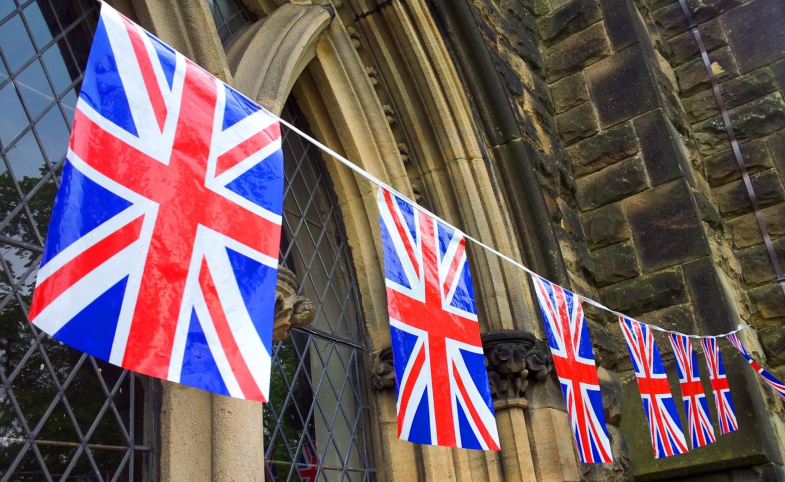
British Soft Power: The Force of Attraction Versus the Force of Example
Friends of Britain everywhere look on aghast as the nation’s government and Parliament await their seventh Prime Minister in ten years. Baleful books ask whether the financial crisis of 2008, COVID-19, or Britain’s decision to leave the European Union (Brexit), after a referendum in 2016, are most to blame for the overwhelming sense—in all media—of chaos and stagnation (e.g. AG Hopkins, The Land Where Nothing Works: How Britain Lost the Plot, Princeton University Press, 2026). The London Review of Books presents a group of its writers under the headline, "How Did We Get Here?" They debate the death of local government; the housing crisis; the failure of devolution to Scotland, Wales and Northern Ireland; the rise of ‘Reform’, the pro-MAGA party on the Right; the Labour government’s capacity for self-harm; the decline of British cities, and so on.
As in the rest of Europe, all commentators consider a return to steady economic growth as the starting solution to all the problems. "The collapse in economic growth is the most important fact about British economics and politics," wrote the Financial Times’s principal commentator, Martin Wolf, in May.
Inevitably Britain’s key soft power resources have been severely affected by the general situation. The new director general of the BBC, Matt Brittin, formerly head of Google in Europe, in his first public statement in June, announced a future of fewer TV channels, fewer radio stations, fewer programs and, above all, fewer staff. "The news division is to scrap shows including Radio 4’s The World Tonight, which has aired for 56 years."
The BBC has been affected primarily by the decline in its traditional income from viewers and listeners, but also by the upsurge of digital alternatives in all media, especially those aimed at young people. Debates flourish about its basic constitutional status as a public service broadcaster. But with the Labour government focused single-mindedly—and so far unsuccessfully—on ways and means to revive economic growth, the fate of the BBC is well down its list of priorities. The minister responsible, Lisa Nandy, has never expressed herself publicly on the future of the corporation. The incoming prime minister, Andy Burnham, looks unlikely to change this situation.
A few, rare, press reports hint at the difficulties facing the organization formally responsible for expressing British public diplomacy in the world: the British Council (founded 1934). While its websites continue to project an idea of "business as usual" (meaning English-language teaching above all), news filters through of the Council "selling everything it can to survive," while 80% of its teaching staff in a country like Italy are threatened with dismissal.
Although defended by The Guardian (but largely ignored by the others), the Council labors under the weight of a £197m loan given to it in 2020 to enable its survival in the COVID-19 crisis. With British public finances under extreme pressure as the needs of defense spending loom ever larger, the all-powerful Treasury shows no sign of forgiving the Council this loan when its repayment falls due in September this year. The latest news suggests the Council will have to close operations in 11 countries, and pare back its staff by a further 15%, after already losing over 2000 personnel since 2021.
One version of the bigger picture is supplied by Brand Finance's annual Soft Power Index, a survey of 193 nations using 150,000 interviews based on 55 metrics. Revolving around the basic commercial concept of brands, respondents are also required to comment on national virtues such as trust, familiarity, respect for law and human rights, safety and security, ethical standards and low corruption, sustainability and good governance.
Observing a drop from 3rd to 4th place in the global rankings—caused by symptoms said to be visible across most western nations—the executive summary of the Index commented on the state of Britain's reputation in these terms :
"Against a backdrop of sustained underinvestment in the nation brand and soft power strategy, control over the UK’s image is increasingly slipping away. Social media are dominated by persistent negative narratives fuelled by both genuine discontent as well as disinformation around post-Brexit trade frictions, migration pressures and backlash, alleged high crime rates, and supposed freedom of speech limitations, crowding out positive stories and reinforcing largely undeserved perceptions of Britain’s twilight."
All this in spite of the fact that the Labour government installed its own Soft Power Council in January 2025, taking over from the Soft Power Research Group created in 2020. Both organizations depend on support from the Foreign Office, the Department of Media, Culture and Sport, and the British Council. Both involve leading figures from the business, sport, and the creative sectors. But the Council has yet to produce any sign of its thoughts or activities.
"...To stay at number 4 in a soft power world of 193 nations remains a remarkable achievement, a tribute to how often Britain still succeeds in offering to the world its distinctive blends of tradition and modernity."
In Joseph Nye’s 2004 seminal text developing his original conception of "soft power," the Harvard political scientist frequently suggested that there is a difference between soft power as the "force of attraction" and, alternatively, as the "force of example" (Joseph S. Nye, Soft Power: The Means to Success in World Politics, New York, Public Affairs, 2004, pp.11-15). No nation offers more eloquent confirmation of the pragmatic usefulness of this distinction than Britain.
Leading commentators who insist that much talk of national decline is exaggerated are intervening on the "force of attraction" side of the argument, ignoring the rest. Confirming remarks made in a 2014 British Academy pamphlet by Cambridge academics Chris Hill and Sarah Beadle, The Art of Attraction: Soft Power and the UK's Role in the World, then by Michael Clarke and Helen Ramscar in their exceptional 2022 book, Britain's Persuaders: Soft Power in a Hard World, Michael Syed, a leading commentator in The Times, wrote recently that:
"The UK...has some of the finest universities in the world, superb AI and life sciences and a deep tradition of due process and law. We also have the English language, Greenwich time zone and superb creative industries....The point I’m making is that the UK is a sleeping giant, a superpower waiting to be unleashed. This is why the rest of the world looks with mystification at our political paralysis and unseriousness...We are a greyhound straining at a leash of our own making."
In his 2014 pamphlet, Hill had shown he was aware of the "force of example" dimension of the question: "Soft Power begins at home, as reputation and trust are both intimately linked to the nature of domestic achievements." But that was before Brexit, widely perceived now as a dramatic act of self-harm and isolation.
Other disasters have since piled up in the public sector: in transport, health, law and order, and education. Many universities are shedding scores of personnel, as they face dwindling enrollments due to limits on overseas students imposed by successive governments, and a chaotic student loan system. They also suffer from the technocratic managerialism inherited from the New Labour era of the 1990s, and a radically misconstrued idea of competition imposed on them by Tory administrations from 2010 on. Unsurprisingly Oxford and Cambridge are not affected, while the contradiction remains, never discussed, that almost all of the destructive policies were devised by politicians educated at Oxford.
The "force of attraction" versus "force of example" distinction has now been weaponized by Britain’s MAGA enemies in Washington. Only weeks after King Charles’s undisputed "soft" triumph in the U.S. capital, Vice President JD Vance launched another attack on the "civilizational decline" he saw in the UK (as in the rest of Europe), following the latest in a —small but abhorrent—series of fatal attacks by immigrants on British citizens.
Yet Britain has unlimited resources on the "force of attraction" side of the account. Universal Studios will soon begin building their first European theme park in Bedfordshire. The 2026 London Marathon has attracted 1.1 million ticket applications. The state of Texas will shortly open a new representative office in London. The Guardian newspaper now claims to have 1.5 million subscribers worldwide, providing the once-failing newspaper with £125m last year.
In sport, there is the Premier League, Wimbledon, Ascot and Formula One. In the creative industries there is popular music, theatre and television, and the legacy of an artist like David Hockney. Oxford remains number 1 in the world ranking of research universities.
None of this will console those members of the elite, for example in the military, who always insist that this is a hard-power world, and Britain must spend whatever it takes to maintain what they claim to believe is its "leading" role in bodies like NATO. But, as the long-standing Financial Times commentator Philip Stephens has recently written, sooner or later, even they too will be forced to face "...the profound psychological shift that Britain has tried so resolutely to avoid since the dissolution of its empire: that Britain can still count itself a great nation, but it is no longer a great power."
For the rest of us, looking from outside, to stay at number 4 in a soft power world of 193 nations remains a remarkable achievement, a tribute to how often Britain still succeeds in offering to the world its distinctive blends of tradition and modernity.

Visit CPD's Online Library
Explore CPD's vast online database featuring the latest books, articles, speeches and information on international organizations dedicated to public diplomacy.
POPULAR ARTICLES
-
September 22
-
October 5
-
October 13
-
October 5
-
October 15
MORE FROM THIS AUTHOR
Join the Conversation
Interested in contributing to the CPD Blog? We welcome your posts. Read our guidelines and find out how you can submit blogs and photo essays >.