









The CPD Blog is intended to stimulate dialog among scholars and practitioners from around the world in the public diplomacy sphere. The opinions represented here are the authors' own and do not necessarily reflect CPD's views. For blogger guidelines, click here.
Soft Power 'Made in Italy'
Governments and other institutions choose ‘soft power’ today from the conviction that their institutions, personalities, brands, and culture are endowed with a charisma of their own which can be leveraged to generate prestige, attention, and respect in the world: in a word, influence. This approach has been embraced energetically by the Meloni government since 2022 in favor of the nation's food and wine heritage. The strategy found the peak of its international success when, in December 2025, Italian cuisine as a whole was admitted to UNESCO's list of intangible world heritage treasures. This was the first time an entire national food tradition – not just single dishes or meals – had received such an accolade. The Prime Minister commented: “For Italians our cooking is not just food or a collection of recipes, but much more — it is culture, tradition, work and wealth.”
Soft power specialists have long recognized that narratives are among the key tools for leveraging "soft" resources. In Italy, such narratives try to project the best of their originator’s ideas of identity and modernity, examples which can be enduring and inspirational. They are discourses which serve a unifying internal function, as well as being key to a brand's reputation, export promotion and cultural diplomacy, public or private. Italy's National Corporate Heritage awards include a category for "places as narratives." (Il Sole 26/4).
'Made in Italy'
Language is at the heart of the government's grand crusade in favor of everything "Made in Italy." On the April 15, 2026, the Ministry of Industry celebrated its national "Made in Italy Day," hailing the 1000 brands by this time included in its "Register of Historical Trademarks," invented in 2019 to recognize brands with at least fifty years of a continual tradition of excellence. The Minister said that the event, and the achievement, reflected, "the vitality of our industrial and manufacturing heritage, which combines tradition, quality innovation and competitivity, and which demonstrates that Italy's productive history is not just a remnant of the past but a strategic lever to enable us to face the challenges of an ever more complex global context."
But it was at the grand celebration of all things wine in Verona in April, "Vinitaly," that the vitality of this approach was most visible. On entering the event, the 90,000 visitors were greeted by a 30-meter long, 10-meter high wine bottle labelled "Inside is Italy." Supplied by the “Ministry of Agriculture and Food Sovereignty," the bottle contained six statues from the Uffizi Gallery in Florence depicting the god Dionysus and the cult of Bacchus. Outside, expert guides introduced visitors to the "sacred nature of wine and its complexity" (Il Sole 12/4).
Showing how trade fairs have become sector festivals, Vinitaly took over the center of Verona offering a vast array of events, meetings, tastings and wine talks. Meanwhile, the Vinitaly Roadshow reaches out to global markets, particularly in Asia, compensating in part for the effect of President Trump's tariffs on exports to the US market.
A fresh height of patriotic feeling and promotional drive was reached by the Milan interior design festival in April, known officially as the Salone del Mobile. Hailed by the Il sole 24 Ore financial newspaper as "the Olympics which Italy has won every time in its 64 year life," the Salone was described as an event which welcomes all those interested in "novelty, quality and creativity in one of the key strategic sectors of Made in Italy." The city's cultural institutions, its key museums and universities, would be involved, the point being – said the newspaper - to promote "products, contents, networking which together can drive investments, influence opinions, determine processes." Over 1900 exhibitors were present from 32 countries (Sole 19/4. Salone del Mobile).
The force of cultural example
The Sole 24 Ore newspaper, published by the powerful national association of industrialists, Confindustria, has long believed in the cultural dimensions of Italy's productive activities. In a February 2026 special edition, its cultural supplement, Domenica, cited a famed economic historian of the mid 20th century, Carlo Cipolla, who said: "Ever since Medieval times, Italians have always, in the shadow of their bell towers, produced goods which delighted the world."
Another contributor to the same publication repeated the notion of "L'Heritage," as an asset able to transform the confidence [in a product, a brand] built over time into a promise for the future" (ibid). The remark echoed an assertion by one of the heirs to the Ferrero chocolate brand, who in 2018 said: "Tradition is like a bow and arrow. The further back we can draw the bow-string, the further forward we can project the arrow of modernity, vision and innovation."
"Ever since Medieval times, Italians have always, in the shadow of their bell towers, produced goods which delighted the world."
Thursday, Feb 5, was World Nutella Day, showing off all the variants, recipes, and a history book about the beloved hazelnut spread, recently featured in outer space. The Lavazza coffee company has its own Museum in Turin where it promotes its company values. The Buccellati family silverware company – with 65 shops around the world – recently inaugurated its stand at the Shanghai Exhibition Center, highlighting its "heritage" of artisan excellence, and cultural creativity. (Sole 19 April). The luxury menswear brand Zegna, starting in 1910 from a tiny village in Piemonte, says, "Zegna’s journey of craftsmanship, responsibility, and innovation continues into the future. Our Road to Tomorrow remains guided by the dream of our Founder, who believed that industry, communities and nature could thrive in harmony." With over 500 boutiques word-wide, this company too offers a book, a Foundation, and in particular the 'Zegna Oasis', a nature park in the Piedmont Alps reflecting the values of the founder, Eremenegildo Zegna, a pioneer environmentalist.
Fashion
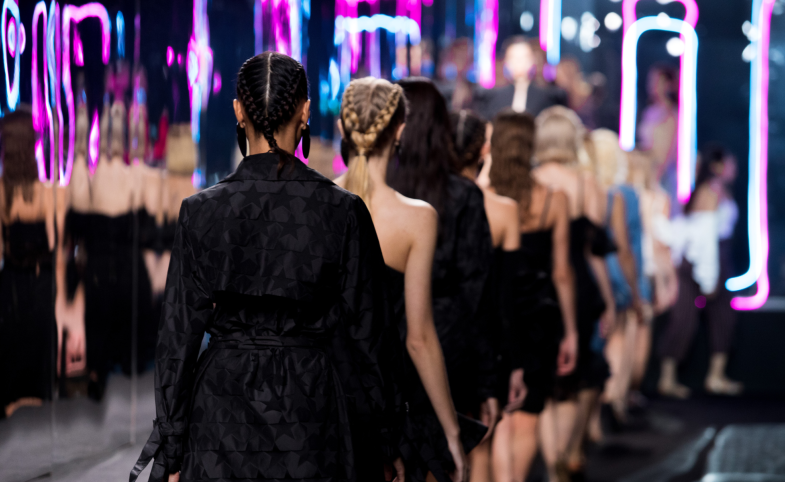
At the start of Milan Fashion Week in September 2025, the Financial Times's fashion expert, Elizabeth Paton, reflected on the meaning of "Made in Italy" in that context, at that time. The sector was facing severe challenges: the crisis of legitimacy of the luxury sector in general, investigations into some of its labor practices, supply chain issues, and generational passages; but it was still a great industry employing over 600,000 people, and "a byword for sophisticated craftsmanship."
As for the force of its attraction, during the Milan event, the audience nearly fell off their seats when Stanley Tucci and Meryl Streep arrived to film a segment for The Devil Wears Prada 2. At a February 2026 continuation, Mark Zuckerberg arrived at his first ever fashion show, "apparently," said the Financial Times, "to broker the latest AI-powered smart glasses deal with the Italian eyewear giant EssilorLuxottica." But the MaxMAra brand said that their offerings on this occasion were “inspired by the dark ages for the new dark ages," a reference also, perhaps, to the deep shadows left by the recent deaths of the greatest personalities of contemporary Italian fashion, Giorgo Armani and Valentino Garavani.
The national traditions in fast trains, fast cars, fast bikes continue to demonstrate their enduring vitality and world prestige. They mean that when Italian foreign minister Tajani visited Beijing, as in April, he needed to address not only geopolitics, but also brand piracy, market access for sectors like jewelry, cosmetics, meat; the e-commerce traffic in fashion items like luxury shoes, even in Parmesan cheese; TV rights for Series A soccer games, landing rights for airlines, the €46bn trade deficit. In a Sole24 Ore interview, Tajani also mentioned intense Chinese interest in Italy's culture old and new, with eleven exhibitions under way in total including one opened by himself in Beijing dedicated to the Uffizi and the geniuses of the Renaissance (Il Sole 18 April).
The Made in Italy Crusade
The official Made in Italy crusade would, in normal times, have helped console the nation for the decline of historical soft resources such as football and cinema, and their stars. It would compensate for the atomization of Italian productive activity, with 99% of companies employing less than 50 people, and producing 70% of GDP, a universe notorious for its conservatism and aversity to risk. Great is the nostalgia for the grand, inspirational companies of the past like Fiat, Olivetti, Piaggio (its Vespa scooter has just celebrated with great fanfare its 80th anniversary).
London-based Brand Finance publishes a global soft power index and a table of "brand values" in monetary terms. These are based on 175,000 interviews across 41 countries and 31 productive sectors. In early 2026, the commentary claimed that Italian products were "the most loved in the world, together with those made in Japan and the US." But it also said that the Italian brands with the highest value and global presence were "few and represent iconic sectors." In fact, in the top ten by monetary value, only Ferrari (n.2), Gucci (n.5) and Ray-Ban (n.10) are globally present. (No.1, Generali, is an insurance group). The nation itself came ninth in the Global Soft Power index, and was said to be among the most resilient among advanced economies.
No land illustrates the efficacy of the soft power formulas–force of example, force of attraction–like Italy. The nation embodies enduring local ideas of sovereignty, identity and of the balance between tradition and modernity, between economics and culture. Its popular cuisine–pizza, pasta, capucino and all the rest–are emulated world-wide. The enduring attraction of the country as a tourist destination is confirmed by plans for 269 new hotels, allegedly to be opened by international chains in the next few years (Il Sole). Especially, in a time of generalized international crisis, every traditional boundary between public and private is dissolved, as the nation deploys its distinctive formulas of life–its "soft" assets–with all the energy at its disposal.

Visit CPD's Online Library
Explore CPD's vast online database featuring the latest books, articles, speeches and information on international organizations dedicated to public diplomacy.
POPULAR ARTICLES
-
September 22
-
October 5
-
October 13
-
October 5
-
October 15
MORE FROM THIS AUTHOR
Join the Conversation
Interested in contributing to the CPD Blog? We welcome your posts. Read our guidelines and find out how you can submit blogs and photo essays >.