









The CPD Blog is intended to stimulate dialog among scholars and practitioners from around the world in the public diplomacy sphere. The opinions represented here are the authors' own and do not necessarily reflect CPD's views. For blogger guidelines, click here.
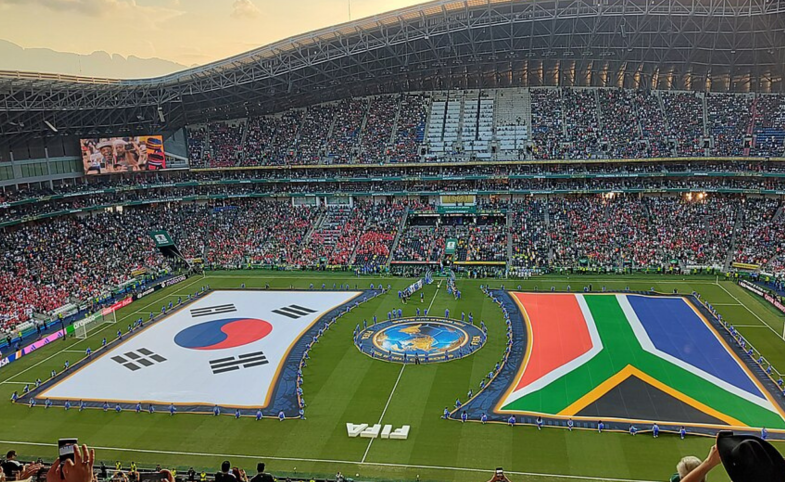
The Cost of Off-Field Narratives
The cheapest standard ticket to the World Cup Final costs over five thousand dollars; the most expensive cleared thirty thousand (roughly). This was the most expensive World Cup in tournament history, and FIFA had to slash prices across all 104 matches days before kickoff.
Yet all over the countries locals, visiting and diaspora fans were able to celebrate the games together, but for free.
From the Central Park Great Lawn where fifty thousand fans gathered to watch the game in community, to the U.S. National Mall, which became the go-to base for several thousand fans to watch Team USA matches, watch parties have now become a staple for mega events, but with an expectation of "free."
With this year's World Cup being hosted across North American Nations, we saw city governments, consulates, diaspora nonprofits, and small-staffed diplomatic missions building a parallel infrastructure of free public watch parties. In Kansas City, dozens of free screenings spanned six municipalities. In D.C., embassies rented out breweries to give their nationals a place to gather. A Congolese refugee in Kentucky organized theater screenings so his community could watch their national team play for the first time since 1974.
That this parallel infrastructure exists at all, often in tension with the official tournament logistics, tells you something about where diplomacy is heading. The people doing the ground-level work are opting for free access and diaspora connection over branded activations. These things are not just accessible, but convert into lasting goodwill between mega events and local communities. However, although promising, such a strategy isn't actually free.
For example, if a consulate plans to organize a free watch party for its diaspora, it will most likely need year of preparation (at least). A national broadcaster on board; the local mayor's office on board; six figures raised. Part of that year will likely go to fighting the tournament's governing body over sponsorship rules, just to raise local money from companies that qualify as sufficiently “local.” And the organizers may be criticized back home for encouraging their people to gather at all, given the political tensions of the moment.
Free doesn't mean cheap. Free means you have absorbed enormous security responsibility on behalf of everyone who shows up, and if a crowd incident happens, you are the person explaining it the next morning. This matters because most conversations about mega-events and public diplomacy start in the wrong place. They start with the host's script, the story a city or nation-state pays to tell. Every bid book reaches for one of three sentences: we're here, we're back, we're still here. Very little of that survives contact with the actual tournament.
What survives is the unscripted. A home crowd applauding a visiting athlete instead of their own. A foreign correspondent going in skeptical and coming out softened. Fans who shipped their car overseas and road-tripped the host country to catch matches. Nobody scripted them, but these are the moments that last in our collective memory.
The awkward truth about narrative control at this scale is you don't have any. Cities are the canvas, while the audience is the author. One can build the conditions: transit, venues, volunteer training, safety perimeter. However, You cannot manufacture the chants strangers teach each other the night of a match.
Which raises the second, harder question. If the host doesn't control the story, and the story is the main deliverable of the public diplomacy spend, who is actually benefiting? It seems an expensive oversight to not consider.
The industry has been rearranging its costs in a way worth naming plainly. Sponsorship rights have been climbing for years, and activation budgets, the money that reaches fans on the ground, have been eaten alive paying for that climb. A billion dollars of sponsorship producing a branded press release is not the same civic asset as a fraction of that money producing a watch-party network in neighborhoods that would otherwise never touch the event.
Cities know. Some have stopped wanting to host at all. Hamburg's residents voted against an Olympic bid in 2015 and again this June. Boston, Rome, and Budapest all withdrew from the 2024 race, leaving only Paris and Los Angeles standing. The pattern is not fatigue, but math. Between 1960 and 2016, the average Olympic Games ran 156 percent over budget. When the security bill and the reputational risk sit with the host, and the celebration credit sits with everyone else, elected officials start doing arithmetic the industry would rather they didn't.
"The awkward truth about narrative control at this scale is you don't have any. Cities are the canvas, while the audience is the author."
Los Angeles is in a version of this problem right now. The 2028 Olympics are two years out. The federal government has allocated a billion dollars for security and designated the Games a National Special Security Event, which means federal law enforcement, not the city, leads. That designation may reveal underlying tensions as the city won't likely have much power over how federal agencies operate during the Games.
The polite framing is that these details get worked out amongst stakeholder, but a more honest one is that a city is being asked to sign for a party whose costs it may carry alone, on political terms it cannot set.
And underneath all of it, the part that goes quiet on every panel I have ever seen on the subject, the sport at the center of the celebration is still out of reach for kids in the lower-income neighborhoods of the host city itself. Elite youth club soccer in the U.S. runs from a thousand to over ten thousand dollars a year, before travel and tournament costs. The Aspen Institute found 21 percent of low-income youth have reliable transportation to games and practice, versus 86 percent of high-income kids. If the local child cannot afford to play the game the state is spending billions to host, the "legacy" line in the bid book is mere marketing, not policy.
I do not dare to say that I have a clean resolution for any of this. The problem is structural. The industry rewards the visible surface and underinvests in what actually converts into lasting goodwill: a consular officer and a mayor's office building a free watch party out of nothing and hoping nobody gets hurt, and everyone leaves satisfied.
If mega-events are going to keep functioning as public diplomacy, the measure has to move. Not what is said, but what experience is remembered.

Visit CPD's Online Library
Explore CPD's vast online database featuring the latest books, articles, speeches and information on international organizations dedicated to public diplomacy.
POPULAR ARTICLES
-
September 22
-
October 5
-
October 5
-
October 13
-
October 15
MORE FROM THIS AUTHOR
Join the Conversation
Interested in contributing to the CPD Blog? We welcome your posts. Read our guidelines and find out how you can submit blogs and photo essays >.