









The CPD Blog is intended to stimulate dialog among scholars and practitioners from around the world in the public diplomacy sphere. The opinions represented here are the authors' own and do not necessarily reflect CPD's views. For blogger guidelines, click here.
Trust Cannot Be Threatened into Existence
There is a room most people never see. It has no cameras. No press pool waiting outside the door. The people in it have spent years, sometimes decades, learning the cultural grammar of the country across the table. They know which silences mean yes, and which mean something far more complicated. They know that the word "consider" in one language carries a different weight than it does in another, and that a proposal floated informally over tea on a Tuesday can become policy by Thursday if the relationship is right. Nothing in that room moves fast. Everything in that room is intentional.
I spent years in rooms like that, working alongside career diplomats at the State Department, supporting several National Security Councils across different administrations, and then representing private sector global companies. And I want to tell you something clearly, as someone who has watched that work up close: what those men and women do is not soft. It is not slow. It is not naive. It is one of the most sophisticated, high-stakes, technically demanding disciplines in the world. It just does not look like anything on a screen.
This week, a lot of us watched something very different. On Tuesday morning, the President of the United States posted that "A whole civilization will die tonight, never to be brought back again." By Tuesday evening, 90 minutes before his own 8 p.m. deadline, he agreed to a two-week pause. Pakistan mediated. Iran offered a 10-point proposal. White House press secretary Karoline Leavitt called it "a very strong threat that led to results." The moment has already been absorbed into the news cycle and we’re on to the next.
I am not interested in prosecuting the politics as that’s not what’s needed now. What I am interested in is what this week reveals about something we as Americans have been getting quietly, dangerously wrong.
Threats are not a foreign policy. And the research has been telling us that for 60 years.
Thomas Schelling, one of the foundational thinkers in conflict studies, drew a distinction that most people in public life have never heard of but that every serious negotiator understands. Deterrence, threatening someone to stop them from doing something, has a reasonable track record. Compellence, threatening someone to force them to do something they have already decided to do, is an almost entirely different animal. It requires the target to make a visible, humiliating, public concession. It activates not just fear but pride, political constraint, and reactance. It is, in most cases, the hardest move on the board.
The empirical record on coercive pressure against civilian populations and infrastructure is bleak. Robert Pape's landmark analysis found that it rarely achieves political objectives and frequently hardens the resolve it was meant to break. What actually produced movement this week was not the rhetoric. It was Pakistan's mediation, Iran and the US's underlying economic pain, the military realities on the ground, and a face-saving mechanism that gave both sides an off-ramp. Attribute the outcome to the Truth Social post and you are confusing the loudest noise in the room for the force that moved the furniture.
There is also the credibility problem. A threat only compels action if the target believes you will follow through. When you extend a "final" deadline three times in three weeks, actors on the other side do not update toward fear. They update toward disciplined patience.
Now add the medium. And the problem compounds.
Ian Bremmer has spent years making the case that we live in what he calls a G-Zero world, one where no single power provides the stabilizing architecture that once made coordination possible. The rules-based order is under stress. The margins for error are thin. The relationships that fill those gaps when formal structures fail matter more, not less, than they did a generation ago.
Into that context, we have introduced social media as a primary instrument of statecraft. And here is the structural problem that does not get discussed enough: social media is not just an imperfect diplomatic channel. It is architecturally incompatible with what diplomacy requires.
Researchers call it context collapse. A message designed for one audience, carrying specific cultural weight, timed for a specific moment in a negotiation, reaches every audience simultaneously, stripped of context, with no interpretive scaffolding. Diplomacy is the precise opposite. It is the art of differentiating communication by audience, culture, relationship stage, and moment. It is the management of ambiguity across time. A post collapses all of that into a single, permanent, emotionally charged signal that is optimized for reaction, not for deliberation.
And then there is translation. Not just linguistic translation, though that alone is consequential when a word like "civilization" carries different historical freight in Tehran than it does in Washington. But cultural translation: the entire architecture of what a message means, who sent it, under what authority, with what implied history. A post has no envelope. It has no relationship attached to it. It arrives everywhere at once with no sender-receiver context that makes meaning coherent across cultures.
The recall research is equally sobering. People remember narratives and relationships. They do not retain declarative statements posted in anger. A post that commands attention for 48 hours leaves almost no durable signal as credible policy commitment. The people across the table know this. They are waiting it out.
The collective we, as Americans with our current leadership, have not just eroded American soft power. We have, to use a word current political leadership cling too, obliterated it.
I know this not only from the research but from the work itself. As Executive Director of Business for Diplomatic Action, a coalition I co-founded with the legendary advertising executive Keith Reinhard, we spent years making the case that American brands were functioning as de facto ambassadors whether corporate America acknowledged it or not. Before a single diplomat sets foot in a country, Coca-Cola, Levi's, Apple, Nike, and Hollywood have often already been there for decades, carrying signals about American creativity, aspiration, and values that no embassy could manufacture or purchase. The research we built that work on was unambiguous: global consumers distinguished sharply between American people and American policy, and they were far more favorably disposed toward the former. That distinction is a reservoir of goodwill. It is not permanent. It is not unconditional. And it is being drawn down in ways that will take years to fully measure. When the country that gave the world its most admired brands signals contempt for the world that admired them, the brands do not escape the damage. They absorb it.
"We are going to need an army of diplomats, across sectors, to rebuild America's standing in the world."
Joe Nye at Harvard gave this phenomenon its name more than three decades ago, and I had the privilege of working with him as one of our senior academic advisors during the BDA years. His insight was deceptively simple: hard power commands. Soft power attracts. It operates not through coercion or threat but through the pull of values, culture, institutions, and credibility. When other nations want what you want, not because you forced them to but because your example made it desirable, that is soft power working. It is also, not coincidentally, the condition under which formal diplomacy becomes exponentially more effective. You negotiate from a very different position when the other side already believes in some version of what you stand for.
Soft power is not built by governments or brands alone. That is the piece that gets lost in most foreign policy discussions. It is also built by Fulbright scholars who spend a year living inside another country's intellectual culture. By Peace Corps volunteers learning a language and a community from the inside out. By the international students who come to American universities and return home having absorbed something of how we think, argue, and create. By Sister Cities relationships and exchange programs and the tens of thousands of ordinary citizens who have spent their lives building person-to-person connections across national lines, often without any institutional support or recognition, because they understood instinctively that relationships between people are the substrate on which everything else rests. This is citizen diplomacy. It is unglamorous, unsponsored, and almost entirely invisible to the news cycle. It is also one of the most powerful instruments of American influence ever developed.
Nye was careful to note that soft power is not a tap you can turn on and off. It accumulates slowly, through consistent demonstration of values over time, and it depletes in the same way trust depletes: faster than it builds, and through mechanisms that are not always visible until the damage is done.
A nation that threatens to obliterate a civilization on a Tuesday morning and then posts about peace by Tuesday night has not demonstrated strength to the watching world. It has demonstrated incoherence. And incoherent actors, however militarily powerful, do not attract. They alarm. The students who might have chosen an American university are reconsidering. The civil society leaders who once looked to American institutions as models are looking elsewhere. The alliances that were built on a shared belief in what America represented are being quietly stress-tested in ways that will not show up in any poll for years.
A nation that threatens to obliterate a civilization on a Tuesday morning and then posts about peace by Tuesday night has not demonstrated strength to the watching world. It has demonstrated incoherence. And incoherent actors, however militarily powerful, do not attract. They alarm.
This is what makes the current moment categorically different from previous periods of American foreign policy turbulence. We have had presidents who overreached. We have had wars of contested legitimacy and policies that cost us credibility in specific regions or with specific populations. But the soft power infrastructure, the exchanges, the institutions, the cultural relationships, the basic sense that America's stated values bore some relationship to its actual behavior, that largely survived.
What is happening now is structural. The signal being sent is not that America made a mistake. The signal is that America no longer believes in the framework that made it worth emulating. That is a different problem. And it will require a different, much larger, much longer response.
Here is what I taught my global MBA students. And what I believe even more now than I did then.
Condoleezza Rice and Amy Zegart wrote something in Political Risk that I assigned in every section of my geopolitical risk course: every organization that operates across borders is now a geopolitical actor, whether it understands itself to be one or not. Business leaders, NGO executives, university presidents: you are all, in some form, in the diplomacy business. You are building trust across difference. You are managing perception across cultures. You are making commitments that have to survive relationships, not just transactions.
That means the diplomat's toolkit is your toolkit. Cultural intelligence. Patience with process. The willingness to let the other side have a public win so the agreement holds. The understanding that the goal is not the announcement. The goal is what happens six months after the announcement, when no one is watching.
This is, at its core, sophisticated selling. It is the long game of narrative and relationship that every great account manager, every great field commander, every great community organizer already understands. You do not win by cornering people. You win by giving them a reason to move.
What comes next will require more than outrage. It will require preparation.
There will be a reckoning. There always is. And when it comes, when the next administration or the one after that is handed the task of rebuilding American credibility on the world stage, it will not be accomplished by a speech or a summit or a carefully worded executive order. It will be accomplished by people. Specifically, by a generation of foreign service officers, diplomats, national security professionals, and business leaders, who chose this work anyway, during the hard years, and who spent that time becoming ready.
The foreign policy pipeline runs through places like Georgetown's Walsh School of Foreign Service, Tufts Fletcher School, USC Annenberg and the Bush School at Texas A&M, institutions that have quietly kept the flame lit for the discipline of statecraft while the rest of the world argued on social media. The students coming out of those programs right now are entering a field that has been battered, underfunded, and publicly mocked. Some of them will leave. The ones who stay will be the most important professionals of their generation. We should be saying that out loud, consistently and without apology.
But the rebuilding cannot be left to the foreign policy schools alone. Every graduate business school in the United States needs to be asking itself, right now, whether it is preparing leaders for the world that actually exists. Geopolitical risk, corporate diplomacy, crisis management, and political intelligence are not just electives. They are not simply enrichment offerings tucked into an optional January or summer term. They are core competencies for anyone who will run an organization, manage a supply chain, represent a brand, or lead a team across borders in an era where a single post can trigger a boycott and a tariff can restructure an industry before the quarter closes. I taught these subjects to global MBA students at Hult International Business School because I believed then, as I believe more urgently now, that business leaders are diplomats whether they have chosen that identity or not. The question is simply whether they are prepared for it. Most are not. And that gap is no longer theoretical. It is a liability showing up in real time, in boardrooms and brand strategies and supply chain decisions made by leaders who were never given the frameworks, tools, and context to see the geopolitical terrain they are operating in.
Every American Owns Our Credibility Deficit
Here is what the research on trust tells us, and it is the part that does not fit on a bumper sticker: trust is not rebuilt in moments. It is rebuilt in increments, and the increments are not symmetrical. Psychologist Roy Lewicki's foundational work on trust repair distinguishes between calculus-based trust, the kind that says I believe you because the incentives align, and identification-based trust, the kind that says I believe you because I know who you are and what you stand for. The first can be rebuilt relatively quickly with consistent behavior. The second, once broken, takes years. Sometimes generations. Because it is not really about behavior. It is about shared narrative, about whether the other party believes your values are actually aligned with theirs and that you will act accordingly when no one is watching.
America's credibility deficit right now is not primarily calculus-based. Other nations are not simply questioning whether our incentives are currently aligned with theirs. They are questioning the deeper thing. They are asking whether we still mean what we have always said we mean. Whether the values we exported and asked others to build their institutions around are ones we are willing to hold ourselves. That is an identification-based trust problem. And Lewicki's research, along with decades of subsequent work in organizational psychology and international relations, is unambiguous: you cannot accelerate the repair of that kind of trust. You can only earn it back through sustained, consistent, culturally intelligent engagement over time. There is no shortcut. There is no post that fixes it.
Other nations are not simply questioning whether our incentives are currently aligned with theirs. They are questioning the deeper thing. They are asking whether we still mean what we have always said we mean. Whether the values we exported and asked others to build their institutions around are ones we are willing to hold ourselves.
This is why the work ahead is not a diplomatic sprint. It is a generational project. The Foreign Service officers who will do the most important repair work have not finished graduate school yet. The business leaders who will carry American brand credibility into the next decade are sitting in MBA programs right now, in classrooms that may or may not be teaching them what the moment actually requires. The relationships that will matter most in 2040 are being built right now in language classes, fellowship programs, overseas postings, boardrooms, and brand strategies that receive almost no coverage and very little thanks. The architecture of renewed American credibility will be assembled across all of those places, by people most of us will never know by name, doing work that looks nothing like anything we see on our daily feeds.
So here is what I want to leave you with, whether you are an American or an ally watching from abroad, a business leader who has been managing the impacts of geopolitical shocks, a student trying to decide if this work is worth choosing, a dean deciding what belongs in a core curriculum, or a career diplomat who has been quietly holding the line and wondering if anyone is paying attention.
It matters. The slow, deliberate, thoughtful, serious work matters. The cultural fluency and the patience and the long game and the relationships built across years of showing up consistently, those are not relics of a more innocent era. They are not soft. They are not slow. They are the only instruments that have ever actually worked. And it cannot be replaced by AI.
We are going to need an army of diplomats, across sectors, to rebuild America's standing in the world. Suit up.
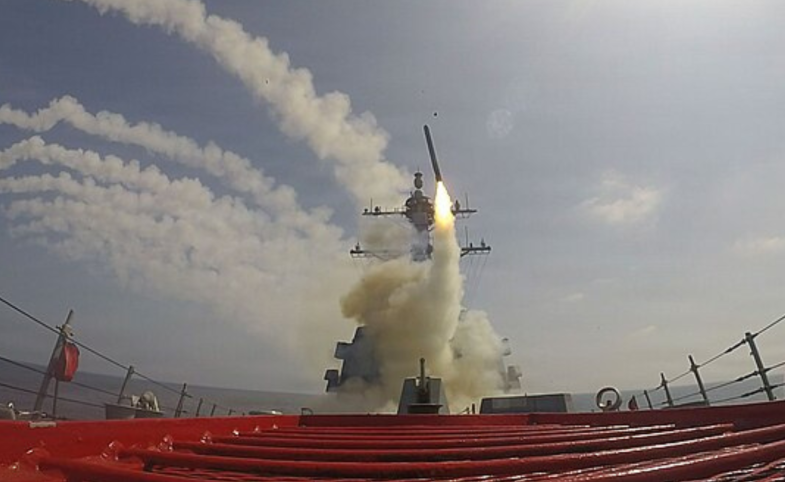
Featured photo: Arleigh Burke-class guided-missile destroyer USS Frank E. Petersen Jr. (DDG 121) fires a Tomahawk Land Attack Missile during operations in support of Operation Epic Fury, Feb. 28, 2026. (U.S. Navy Photo)

Visit CPD's Online Library
Explore CPD's vast online database featuring the latest books, articles, speeches and information on international organizations dedicated to public diplomacy.
POPULAR ARTICLES
-
September 22
-
October 5
-
October 13
-
October 5
-
October 15
MORE FROM THIS AUTHOR
Join the Conversation
Interested in contributing to the CPD Blog? We welcome your posts. Read our guidelines and find out how you can submit blogs and photo essays >.