







Q&A with CPD: Damon Woods
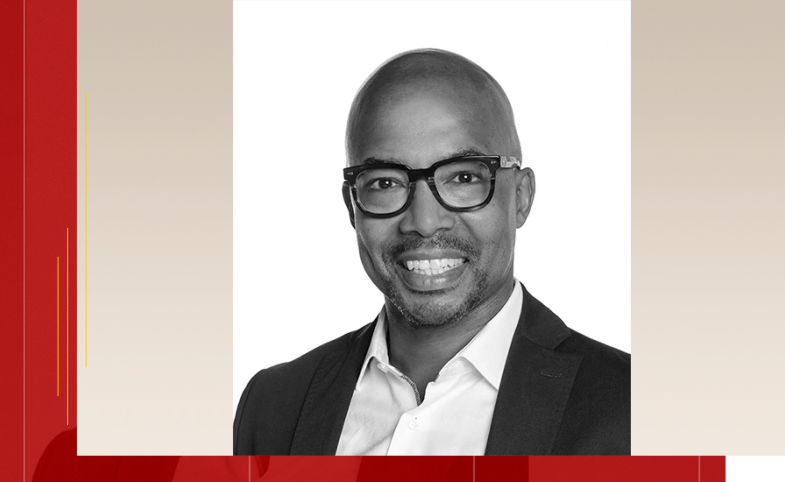
In this series, CPD interviews international thought-leaders and key practitioners of public diplomacy. Here, CPD's Juliana Maitenaz speaks with Damon Woods, an adjunct instructor at USC Annenberg and former U.S. diplomat.
Could you tell us a bit about your early career and how you entered the field of public diplomacy?
Even before understanding what public diplomacy was, I always enjoyed building international awareness and engagements. I was always trying to figure out how to connect minority communities, in particular Black communities, into international spaces and to identify engagement points. I would rally high school students to go to other countries to study and have them share those experiences with the community by presenting at schools, churches, and other community-based organizations.
During university, I engaged people around international topics and foreign policy issues. At the University of Pittsburgh I worked on a program called Blacks in Asia, which showcased Black students and professionals working throughout Asia in the early and mid-90s, and it was designed to build networks for participation in international business, international law, foreign policy, and international security issues. It was important to know and to see that these people existed.
My formal introduction to public diplomacy came under USIA, the United States Information Agency, in 1998 when I worked for an organization called the Phelps Stokes Fund, which was a contractor with USIA. In 1999, USIA was integrated into the Department of State, and this is where my experience was grounded in the practice of public diplomacy.
I became a Program Officer at the State Department covering Africa PD and the HIV/AIDS crisis starting in 2001. This was actually a continuation of the work I was doing at the Phelps Stokes Fund. The work, covering the AIDS pandemic in the late 90s and early 2000s, is the hallmark of my professional career. It is where I learned how to do public diplomacy—engaging strategically with a variety of people from around the world in governments, NGOS, and community groups. The issue had political and moral weight, scientific weight, and cultural and economic implications. It was a fascinating way to learn how to do public diplomacy under this topic. I have conducted PD programs in Africa, Asia, Europe, and Latin America and have been fortunate to work with people from every country on the planet.
With over a decade of experience in the State Department, what would you say are the most useful lessons and tools you learned that remain relevant today?
One of the things that I learned, and still hold today over 25 years later, is the need for discipline in communication. It is something I share with students, colleagues, and clients that I interact with. It is very important to be disciplined in your language, because that helps build trust and also sets the direction, intention, and tone of the work.
If communication is not disciplined, and is highly opinionated or driven by emotional appeal, it is not strong enough to last. What I learned was to be factual, and with the facts, you can engage with people not through argument, but through points of understanding. That is something I have held onto throughout my career.
Being disciplined in language does not mean shutting people off who do not agree. It means being clear about your position. It does not mean you cannot change, but it means your position is grounded. You have reviewed the facts, understood the arguments, and can communicate in a way that elevates the policy issue or engagement.
In the current environment, particularly in U.S. foreign policy, communication is often not disciplined, which creates confusion. When messaging lacks discipline, it allows for multiple interpretations, which is not a good position to be in.
As MPD students, we had the opportunity to take your course called “Race and Public Diplomacy.” Could you outline how this course came to be at USC and what you find the most crucial takeaways for students have been?
The course that I developed at the University of Southern California was not by accident. It was a thought process I found myself in after the murder of George Floyd, and in trying to understand how the Trump administration’s ethos and method were operating. It moved me to reflect on my life and what I had done to support, or remain quiet in the face of what I now understand to be white supremacy. That was a very important realization.
I kept thinking about the murder of George Floyd, the reactions of the government, and the global outcry that followed. The structures that were in place, and the language around race, had evolved very quickly in government, commerce, research, and the media landscape. I wanted to examine the dynamics of race in foreign policy and public diplomacy and provide a critical understanding of those dynamics.
I reached out to Robert Banks, who was leading the public diplomacy program at USC, to see if there was an appetite to explore topics of race, public diplomacy, and foreign policy communications. He was very open to the idea, and we developed it together. I am grateful for his openness and his understanding of the importance of this conversation.
What I try to do in the class is bring a critical understanding to why we communicate the way we do, what aspects of that are rooted in racial constructs, and how we can move beyond that to more innovative forms of engagement. I also explore what tools and topics can be addressed through public diplomacy.
What is always striking is that many students have never had a course to examine race in foreign policy or race in general. This is a real and necessary conversation. The goal is to help students engage with the topic openly, thoughtfully, and respectfully, and to build their own understanding of race, culture, and global engagement. It is powerful when people are no longer afraid of the topic and can speak about it with clarity and respect.
You just started a new role at Social Good Solutions consulting firm—congratulations! Could you share more about this organization and how your experience in public diplomacy has informed your career path and successes?
Social Good Solutions and the Black Equity Collective, where I am now serving as the Director of Policy and Advocacy, is truly a gift at this time. I often say that one of the best parts of my career is being in the classroom, and this work allows me to continue that engagement while also working directly on policy.
I enjoy engaging with policy and understanding how government functions in order to think more innovatively about the well-being of people. This work is highly focused on the African American community, and given the current climate around race, diversity, equity, and inclusion, it is a powerful space to be in.
I am working alongside an incredibly talented group of colleagues who are committed to developing new approaches to justice, economic growth, and access. These are critical issues, and my background in public diplomacy—particularly in engaging across government and community—adds value to this work.
In just the past two months, I have been to Sacramento twice and have met with community groups and leaders. More importantly, I am working with a group of dynamic African American women who have built something meaningful and are centered on the stability and strength of the Black community in California.
My experience in public diplomacy informs how I engage, communicate, and contribute to policy and outreach. I am excited about the work and the opportunity to apply that experience in this moment.
Visit CPD's Online Library
Explore CPD's vast online database featuring the latest books, articles, speeches and information on international organizations dedicated to public diplomacy.
Popular Blogs
-
September 22
-
October 5
-
October 5
-
September 9
-
September 22