









The CPD Blog is intended to stimulate dialog among scholars and practitioners from around the world in the public diplomacy sphere. The opinions represented here are the authors' own and do not necessarily reflect CPD's views. For blogger guidelines, click here.
Border Crossings on Display: Digital Diplomacy and the “Border Control Museum Complex”
Borders play an important symbolic function in modern states. They represent the outer limits of a country’s body politic and of the "imagined community" that populates it. The symbolic dimension of borders is reflected in narratives about their origins and place in national histories. One of the ways these narratives are reproduced and promoted is through the establishment of dedicated cultural-historic museums in sites where border control facilities operate.
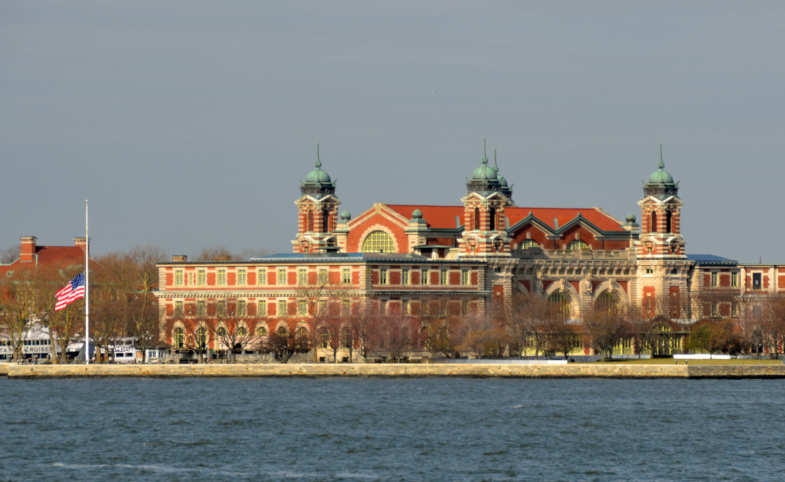
Early examples of border-themed museums are the Wall Museum at Check Point Charlie in Berlin (1962) and the Border Patrol Museum in El Paso (1979). Since the 1990s, these establishments have proliferated. This is the case for Ellis Island Museum of Immigration in New York (1990), the Museum of Immigration at Pier 21 in Halifax, Canada (1999), and the Border Force Museum in Liverpool, UK (1994). Albeit inspired and shaped by local historical circumstances, these institutions, through their existence and activities, have collectively contributed to the formulation of the meaning of borders in today’s world. Some portray borders as "gates" to a better future for the “huddled masses yearning to breathe free” (This passage from Emma Lazarus’ poem “The New Colossus” refers to migrants. The poem is engraved on the Statue of Liberty s pedestal. The monument is located next to the Ellis Island migration facility in New York.). Others embody the exclusionary nature of the territorial state system.
In this sense, these facilities represent what Walters (2006: 198) calls an emerging “border control museum complex." "Complex," here, is meant not only in the architectural sense--as structures with similar functions-- but also in terms of the type of discursive practices they perform when engaging with the public. These overlapping and interconnected practices shape the content of the emerging global narrative about the meaning of border control in contemporary societies, and how this narrative is built upon individual countries’ "border heritage."
The highly symbolic and evocative nature of the subject matters they deal with has meant that these museums are inextricably linked with debates about national identity in the countries hosting them. A less visible but nonetheless important aspect of these institutions’ activities has to do with their impact on international relations. Border-themed museums have become active in the international realm by globalizing the content of their exhibitions and by expanding their outreach activities targeting international partners (visitors or other foreign institutions). By highlighting the global connections among different experiences of bordering, these museums have sought to provide a new vision of the phenomenon of border control. They have also projected a different image of the host country to the rest of the world, acting as informal ambassadors.
As a result, "museum diplomacy" has become an important component of contemporary international relations, complementing governments’ efforts in reaching out to foreign publics beyond official channels. These sui-generis diplomatic practices have expanded in scope and become more sophisticated, involving a greater use of digital tools. Like many other public and private institutions, border-themed museums over time have established a presence on digital platforms as a way to showcase their collections and engage the wider public. These “connected museums” have applied a visitor-centered approach that relies on direct communication and engagement on social media with local and foreign audiences.
Digital diplomacy on display: the cases of the Berlin Wall and Ellis Island museums
Consider two examples of border-themed museums’ digital diplomatic efforts and their implications: the Wall Museum and Ellis Island. If we look at their social media activities, and in particular their official Facebook page postings (for Ellis Island, click here; for the Wall Museum, click here), we can detect recurrent themes. When it comes to their public relations efforts, the two museums share a similar international orientation with regard to the topics they address and the subjects they feature in their posts. Their social media communication makes references to the lived experiences of those who went through the border control facilities or the role that public officials played in their making. What these subjects share is the emphasis on the international dimension. Indeed, the majority of these posts are about subjects whose nationality of origin is not that of the country where the museum is located. In the museums’ social media posts, there are recurring references to international historical figures (e.g. former U.S. presidents George H.W. Bush and Theodore Roosevelt in the Wall Museum). When individuals who have passed through the border control facilities are mentioned, the focus is on their connections to their countries of origin. These individuals’ cross-border experience is presented as heroic, and individuals who cross borders are presented in a positive light as symbols of freedom and opportunity. This is the case of the families who used a balloon gondola to fly over the Berlin Wall to find freedom in Western Germany. These profiles are contrasted to historical and contemporary figures who represent oppression and violation of human rights (e.g. Russian president Vladimir Putin)
"The border control museum complex is more problematic and controversial than its supporters seek to project through their social media engagements."
The international topics addressed in these entries range from the overtly political to the more neutral ones, emphasizing cultural and societal exchanges that migrants fostered. Examples of political themes include the frequent references to the Cold War in the Wall Museum. The East-West tension that the wall represented is projected in the “new cold war” between Russia and the West, epitomized by the contemporary plight of oppressed populations in Ukraine or dissidents within Russia. Connections with other events around the world that express similar meanings are also highlighted (e.g. threats to democratic systems such as 9/11).
More politically charged themes, such as global inequality, poverty, racism/prejudice, which played an important role in shaping cross-border movements flowing through the border facilities, are not present. These themes are nonetheless implicit in some of the practices deployed at these facilities that are mentioned in the museum’s communication (e.g. health checks targeting ‘dangerous populations’). The overwhelming representation of European countries in the museum’s social media communication also foregrounds how immigration policies at the time excluded citizens from non-European countries.
On the complexity of the border control museum complex
Border control museums' digital activities show that these institutions can be prominent public diplomacy actors. The Berlin Wall and Ellis Island museums illustrate how these efforts can contribute to the promotion of particular narratives about the nature of international relations. In these cases, border control facilities and the individuals associated with them (migrants, but also public officials) represent symbolically key pillars of the global liberal order, based on principles of freedom, human rights, rule of law, and economic and social interdependence. It is a selective narrative, however, since it erases some of the most contentious aspects of border control (human rights violations, prejudice, inequality), and glosses over the host country’s role in perpetuating them. Cast in this light, the border control museum complex is more problematic and controversial than its supporters seek to project through their social media engagements.

Visit CPD's Online Library
Explore CPD's vast online database featuring the latest books, articles, speeches and information on international organizations dedicated to public diplomacy.
POPULAR ARTICLES
-
September 22
-
October 5
-
October 5
-
September 9
-
September 22
MORE FROM THIS AUTHOR
Join the Conversation
Interested in contributing to the CPD Blog? We welcome your posts. Read our guidelines and find out how you can submit blogs and photo essays >.