









The CPD Blog is intended to stimulate dialog among scholars and practitioners from around the world in the public diplomacy sphere. The opinions represented here are the authors' own and do not necessarily reflect CPD's views. For blogger guidelines, click here.
Cultural Diplomacy and Its Ecosystems: Building Relationships in Times of Transition
Culture is often seen as what countries choose to show the world: art, heritage, literature, music, language, traditions and creative industries. Yet governments do not produce international cultural relationships alone. These relationships emerge through ecosystems involving diplomats, cultural institutions, artists, writers, scholars, universities, diaspora communities, private organizations and individuals. Institutions can provide resources and continuity, networks connect people across borders, and individuals can initiate encounters beyond formal government direction. This challenges narrower state-centered understandings of cultural diplomacy (Albro, 2012; Dâmaso, 2021).
The question, then, is not only what a country should communicate about itself. It is also: who makes cultural diplomacy possible, and under what conditions?
This question draws on research originally conducted for my doctoral work on cultural diplomacy in Cuba, Colombia and Chile during the early post-Cold War period. For my CPD Fellowship, I returned to this empirical material, including interviews, and reanalyzed it through the lens of disruptive cultural diplomacy as a platform for peacebuilding. My first CPD blog, “Disruptive Cultural Diplomacy” (Montoya, 2026), explored how cultural encounters can interrupt simplified narratives and create spaces for dialogue. Here, I consider the ecosystems that make such encounters possible.
Cuba: Infrastructure and Adaptation
Cuba entered this period with a comparatively developed cultural infrastructure. During the severe economic crisis of the Special Period, shrinking public resources did not end international cultural relationships. Instead, these relationships increasingly drew on institutional support, individual initiative, professional networks, international partnerships, and external resources.
An interview conducted during my earlier research, and reanalyzed for this Fellowship, illustrates this dynamic. A Cuban diplomat involved in cultural relations recalled how La Noche Tropical in Japan brought together 124 Cuban artists with support from Mitsubishi. Diplomatic facilitation intersected with private resources, cultural actors and transnational networks.
The Cuban case illustrates how disruptive cultural diplomacy can emerge through adaptation. Established institutions do not necessarily constrain disruption. They can provide infrastructure through which unexpected actors, resources and relationships move beyond conventional boundaries between diplomatic representation, cultural production and private support.
Colombia: Experimentation and Institutional Learning
Colombia followed a different path. During much of the period, it lacked a consolidated national cultural ministry, yet this did not mean the absence of cultural diplomacy.
By the late 1980s and early 1990s, narcotrafficking and political violence increasingly shaped Colombia’s international image. The Committee for the Promotion of Colombia's Image, created in 1989, brought public and private actors together around this challenge. An exhibition on Medellín’s urban violence, later presented at the International Monetary Fund in Washington, brought artistic engagement with violence and trauma into an international setting. Rather than denying Colombia’s difficulties, it offered another way of seeing them.
"Culture is not only something a country represents. It is also something people create, inherit, remember, question, preserve and transform."
Its disruptive potential lay not in replacing a negative narrative with a positive one, but in interrupting the reduction of Colombian identity to violence and narcotrafficking. The case also suggests how institutions can strengthen practices and relationships that emerge elsewhere.
Chile: When Relationships Become Resources
Chile offers a third pathway. Years of dictatorship and exile generated transnational relationships among artists, writers, intellectuals, scholars, universities and cultural organizations. These relationships developed through exile, solidarity, academic exchange and artistic collaboration rather than as instruments of a future cultural diplomacy strategy.
After the return to democracy, some of these relationships became part of the environment through which Chile rebuilt its international connections. The 1999 exhibition Retratando la Ausencia: Pablo Neruda, organized by the Chilean Embassy in Israel and featuring photographer Luis Poirot, illustrates this interaction. The embassy provided an institutional setting while the artistic work engaged memory, absence, exile, and political silencing.
Its disruptive potential lay in creating an international space for engaging with memory without requiring the institution, artist or audience to arrive at a single interpretation of Chile’s past.
One Governance Challenge
These are not three national models. Cuba highlights infrastructure and adaptation; Colombia, experimentation and institutional learning; Chile, relationships developed beyond formal institutions that later became institutional resources.
All three nevertheless point to a common governance challenge. Cultural diplomacy crosses societies marked by contested memories, political disagreement, violence, stigma, migration and competing understandings of identity and belonging. The challenge is therefore not simply how to coordinate cultural diplomacy, but how to sustain relationships when societies themselves do not speak with one voice.
This perspective resonates with scholarship that expands cultural diplomacy beyond traditional diplomatic actors and examines the role of artists, educators, cultural organizations, NGOs, communities, and other participants in the cultural sphere (Jessup, 2019; Nazarian, 2019; Dâmaso, 2021). Relational and collaborative approaches to public diplomacy similarly emphasize relationships rather than the transmission of messages alone (Cowan & Arsenault, 2008; Zaharna, 2013).
Three implications follow.
1. Support capacity, not only messaging. Relationships and cultural infrastructures often take years to develop. Sustaining them requires more than producing messages or events.
2. Recognize actors as participants, not instruments. Artists, educators, communities, scholars, and other cultural actors bring their own knowledge, relationships, and interpretations. Their contribution cannot always be reduced to a predetermined diplomatic objective.
3. Coordinate without demanding uniformity. Coordination and uniformity are not the same thing. Institutions can provide resources, continuity and access without requiring every cultural actor to communicate the same interpretation of history, identity or belonging.
Creating Conditions for Encounter
The cases also offer another way to understand disruptive cultural diplomacy. Disruption need not mean confrontation. It can mean interrupting simplification: opening space for experiences, actors, or relationships that do not fit comfortably within a single national narrative or institutional script.
Across these cases, this took different forms: mobilizing cultural infrastructure beyond conventional state–non-state boundaries in Cuba; challenging the reduction of Colombia to violence and narcotrafficking; and creating international spaces for engaging with Chilean memory without requiring interpretive uniformity.
Cultural diplomacy cannot resolve historical trauma, political conflict, or social inequality. Nor does sustaining relationships require treating every cultural position as beyond criticism. Its contribution may be more modest, and perhaps more durable: helping sustain conditions for encounter and relationship when agreement remains out of reach.
Culture is not only something a country represents. It is also something people create, inherit, remember, question, preserve and transform. One direction for the future of cultural diplomacy may therefore lie in how institutions, networks and individuals sustain meaningful relationships across difference, rather than in determining which narrative should prevail.
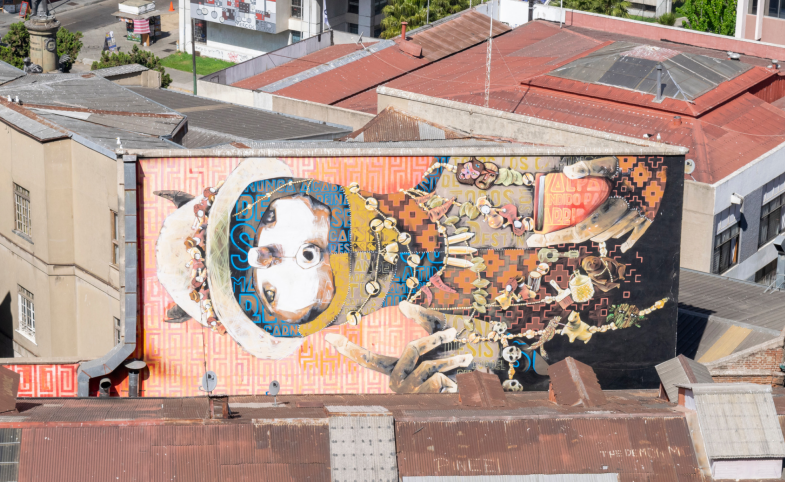
Featured photo: Mural in Valparaíso, the UNESCO World Heritage port city and cultural capital of Chile

Visit CPD's Online Library
Explore CPD's vast online database featuring the latest books, articles, speeches and information on international organizations dedicated to public diplomacy.
POPULAR ARTICLES
-
September 22
-
October 13
-
October 5
-
October 5
-
October 26
MORE FROM THIS AUTHOR
Join the Conversation
Interested in contributing to the CPD Blog? We welcome your posts. Read our guidelines and find out how you can submit blogs and photo essays >.