









The CPD Blog is intended to stimulate dialog among scholars and practitioners from around the world in the public diplomacy sphere. The opinions represented here are the authors' own and do not necessarily reflect CPD's views. For blogger guidelines, click here.
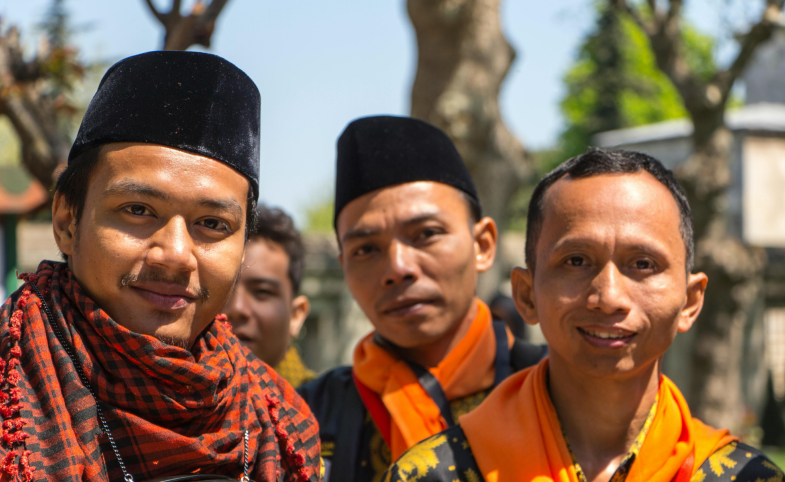
Landing in the Land of Smiles: My First Lessons from Indonesia
Every journey begins with curiosity and a quiet accumulation of questions. Mine began the moment an unfamiliar land greeted me with the simple language of a smile, a reminder that before we can understand a nation’s politics, its economy, or the complexities beneath the surface, we must first encounter its humanity. It is often through that humanity that everything else begins to make sense.
Thirty hours is a long time to travel from Washington, D.C. to Jakarta. Long enough to wonder what the world’s fourth most populous nation might reveal beyond the headlines: geopolitical competition, economic growth, digital transformation, strategic weight in the Indo-Pacific. As a Council on Foreign Relations International Affairs Fellow, I arrived expecting my first lessons to come from meetings with academics and government officials, from conversations about artificial intelligence’s role in governance and Indonesia’s evolving regional influence. Instead, my first teachers were the ordinary people of Jakarta, wreathed in smiles.
Shortly after arriving in the "land of smiles," I was deeply honored to be welcomed by Pakistan’s Ambassador to Indonesia, Ambassador Zahid Hafeez Chaudhri, who graciously hosted a welcome dinner at his residence in Jakarta. The evening was far more than diplomatic courtesy. It was an introduction to the cultural mindset necessary to truly understand Indonesia. Having lived and served in Indonesia, Ambassador Chaudhri spoke not only as an accomplished diplomat, but as someone who had learned to read Indonesian society from within.
His reflections revealed a depth of cultural understanding that cannot be acquired through travel guides, policy briefs, or formal diplomatic engagements alone. It is a form of knowledge cultivated through humility, intellectual curiosity, patient observation, and genuine engagement with people. Such understanding does not come from merely serving in a country or passing through it; it is earned by becoming part of its culture, investing in people-to-people relationships, listening with genuine curiosity, respecting local customs, and learning to read the unspoken: the smiles, gestures, silences, and countless nonverbal cues through which a society quietly reveals its values.
Over fresh coconut water and dragon fruit, our conversation ranged across Indonesia’s culture, society, social values, traditions, customs, economics and, most fascinating of all, its coffee culture. He shared stories from his own experiences before offering a piece of advice that would stay with me throughout my fellowship: “Do not merely observe the culture. Become part of it. Absorb its sights and sounds.”
Those words of wisdom came from a diplomat deeply versed in the difference between cultural appreciation and cultural appropriation, and they reframed how I approached Indonesia. They challenged me to move beyond observer and become active learner: to walk its neighborhoods with curiosity, to appreciate its culture with humility, to approach every interaction with an open heart and an open mind. Ambassador Chaudhri’s deep appreciation for Indonesian culture prepared me not simply to study the country, but to experience it.
"Every effective diplomat, scholar, and practitioner of diplomacy eventually discovers that countries cannot be understood from the outside looking in. They reveal themselves only to those willing to listen before they analyze, observe before they judge, and participate before they draw conclusions."
In that moment, I realized that diplomacy is not merely the practice of engaging governments; it is the discipline of understanding people. Every effective diplomat, scholar, and practitioner of diplomacy eventually discovers that countries cannot be understood from the outside looking in. They reveal themselves only to those willing to listen before they analyze, observe before they judge, and participate before they draw conclusions.
In international affairs, we often analyze countries through strategic competition, trade balances, security partnerships, and technological innovation. Those dimensions are essential. But they are incomplete without an understanding of the people whose values, customs, and everyday interactions shape national identity. Policy explains what a country does; culture often explains why. That realization is, perhaps, the greatest gift of the Council on Foreign Relations International Affairs Fellowship: the chance to experience a society and its culture from within, and to build relationships that make for better, more effective foreign policy. Policy built without understanding a society is policy built on sand, I believe.
As a CFR Fellow, my learning began the moment I stepped onto the bustling streets of Jakarta. My most meaningful observations emerge from walking alongside ordinary people whose names rarely appear in policy papers, yet whose lives quietly write the story of the nation every single day. With every exchanged Salam, every warm “Terima Kasih” (“Thank you”), every smile, and every brief conversation, I found myself learning a language that extended far beyond words. These small gestures of kindness and respect became windows into Indonesia’s values, reminding me that the character of a nation is often revealed through the everyday interactions of its people. That realization deepened during my rides on the back of motorcycle’s taxis, where drivers navigated Jakarta’s relentless traffic with remarkable precision and calm. What first seemed like a convenient way to move around the city gradually became an unexpected lesson in understanding its social and urban fabric.
As my learning journey continued, my evening walks through the streets of Jakarta became some of my most valuable cultural lessons. With each step, the city revealed another layer of itself. Every day, I pass street vendors who transform narrow sidewalks into vibrant community spaces from dawn until well past midnight, serving not only food but also conversation and a sense of belonging. Neighborhood shopkeepers’ welcome strangers with effortless warmth, while security guards patiently guide pedestrians through chaotic traffic of the city.
At the local markets, sellers greet customers with smiles as generous as their offerings, reminding me that commerce here was as much about human connection as it was about exchange. And long after much of the city has gone to sleep, construction workers continue their labor beneath the glow of floodlights, quietly building city’s skyline. Walking these streets, I realized I’m witnessing more than the daily routines of a bustling capital. I’m observing the quiet rhythms that sustain a society, the ordinary moments through which a nation’s values, work ethic, resilience, and sense of community reveal themselves. They may never appear on the front pages of newspapers, address international conferences, or draft national policy. Yet, together, they form the living infrastructure of Indonesia. They are the quiet custodians of its values, the steady rhythm beneath its economic dynamism, and the human face behind the statistics that so often dominate discussions of development and geopolitics. If governments shape the institutions of a nation, it is ordinary people who give those institutions meaning.
Perhaps that is one of the first lessons Indonesia has taught me: if we seek to understand a nation, we must first learn to see the people whose lives quietly sustain it. Only then can we begin to understand the policies, institutions, and aspirations they shape. Sometimes, a nation’s most effective strategy is not announced in a policy speech or written into a national plan. Sometimes, it is expressed through something as simple as a smile. From the moment I landed in Jakarta, I found myself greeted smiles and genuine warmth. It was my first introduction to what I came to think of as the “land of smiles,” a smile that seemed to follow me wherever I go. Whether I’m searching for directions without speaking Bahasa Indonesia, buying my morning coffee, riding through the city, or simply making eye contact with a stranger, I’m almost always met with the same quiet expression of kindness.
For me, this was more than a pleasant first impression; it became an unexpected lesson in public diplomacy. Before I had learned Indonesia’s language, history, or political system, I had already begun learning its nonverbal vocabulary. Those smiles communicated something no translation was required to understand: a sense of welcome, respect, and openness. They reminded me that the first ambassadors of any nation are often not its diplomats, but its people.
In international affairs, we often speak of soft power as a nation’s ability to attract rather than compel. During my first few weeks in Indonesia, I began to appreciate that soft power is not exercised only through culture, media, or foreign policy, it is also embodied in millions of everyday interactions. Sometimes, a simple smile can become a nation’s quietest yet most enduring form of diplomacy, leaving an impression that lingers long after the conversation has ended. For practitioners of diplomacy, this is an important reminder. Communication does not begin with words. It begins with non-verbal language, symbols, gestures, and the countless cultural cues that societies understand instinctively but outsiders must learn to see. Indonesia, I quickly discovered, speaks fluently through all of them.
I argue that the strongest bridges between nations are rarely built in conference rooms alone. They begin in neighborhood cafes, over shared meals, during evening walks, in conversations with strangers, and in the willingness to appreciate symbols whose meanings cannot be translated directly into words. Sometimes they begin with a smile. This is only the first chapter of my Indonesian journey.
In the weeks ahead, I hope to share more stories that go beyond geopolitics, stories about art, culture, religion, food, technology, governance, digital transformation and the subtle forms of communication that shape how Indonesians understand themselves and engage with the world. Because sometimes the most important lessons in international affairs are not found in policy papers. Sometimes they are waiting quietly on a sidewalk in Jakarta, smiling back at you. The more I travel, the more I discover that the soul of a country isn’t found in its landmarks or in the halls of power but in the ordinary people you meet along the way.

Visit CPD's Online Library
Explore CPD's vast online database featuring the latest books, articles, speeches and information on international organizations dedicated to public diplomacy.
POPULAR ARTICLES
-
September 22
-
October 5
-
October 13
-
October 5
-
October 15
MORE FROM THIS AUTHOR
Join the Conversation
Interested in contributing to the CPD Blog? We welcome your posts. Read our guidelines and find out how you can submit blogs and photo essays >.