









The CPD Blog is intended to stimulate dialog among scholars and practitioners from around the world in the public diplomacy sphere. The opinions represented here are the authors' own and do not necessarily reflect CPD's views. For blogger guidelines, click here.
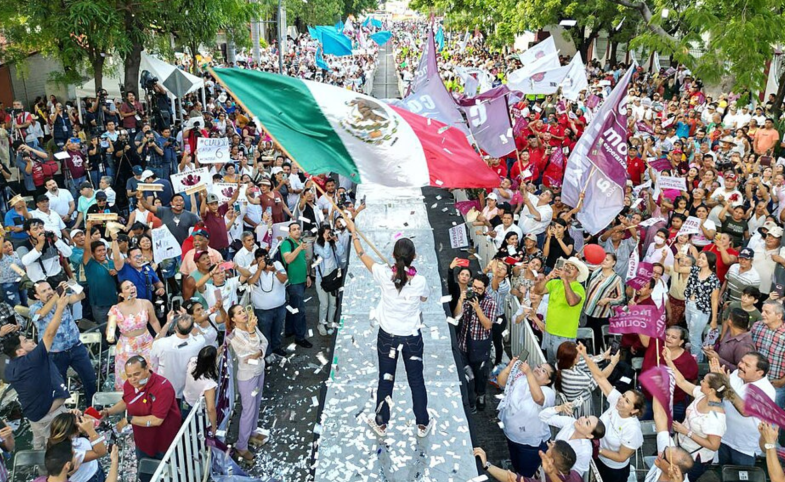
Mexico’s Public Diplomacy Moment Under President Claudia Sheinbaum
At a Turkish cooking event in Mexico City, I watched guests arrive curious about food and leave asking about history, language, travel and politics. During my time coordinating cultural affairs at the Yunus Emre Institute in Mexico (Cultural Center of the Turkish Embassy), I saw how a shared table could do what a formal speech often could not: create the trust that makes a difficult conversation possible. That small conversion — from taste to curiosity, then from curiosity to relationship — is public diplomacy at human scale.
Mexico already generates that curiosity almost effortlessly. Its cuisine, cinema, music, Indigenous cultures, universities, cities and diaspora travel farther than any official campaign. President Claudia Sheinbaum adds a distinctive contemporary story: Mexico’s first woman president and a climate scientist, leading a country that can speak simultaneously to North America, Latin America and the Global South. Sheinbaum deserves credit for recognizing that culture, social inclusion and sovereignty are not decorative elements of foreign policy. They are sources of legitimacy. Her opportunity now is to connect them through a coherent public diplomacy strategy.
Public diplomacy is not simply country promotion. In Joseph Nye’s language, soft power rests on attraction. In Nicholas J. Cull’s formulation, public diplomacy includes listening, advocacy, cultural diplomacy, exchanges and broadcasting. Cull’s most important lesson for the present moment is also the simplest: public diplomacy begins with listening. A government cannot build trust with foreign publics if it only transmits.
Mexico is better positioned than it sometimes appears. The Foreign Ministry already has an Executive Directorate for Strategy and Public Diplomacy and a Directorate-General for Cultural Diplomacy. Under Sheinbaum, several initiatives show what a broader system could look like. The exhibition “La mitad del mundo” brought the knowledge, creativity and resistance of Indigenous women to Spain. At FITUR 2026, Mexico presented states, artisans, cooks, businesses and destinations together rather than reducing the country to a logo.
"Sheinbaum deserves credit for recognizing that culture, social inclusion and sovereignty are not decorative elements of foreign policy. They are sources of legitimacy. Her opportunity now is to connect them through a coherent public diplomacy strategy."
Other actions widen the definition of public diplomacy. Mexican missions invited young people abroad to make mobile-phone films about soccer and culture through CortoMundial. The Consulate in Boston helped secure the voluntary return of 1,132 pre-Hispanic objects, turning heritage protection into a public story about responsibility. In the United States, Mexico’s 53-consulate network has paired protection of citizens with work against disinformation. These are not isolated communications products. They are forms of service, participation and relationship-building.
The weakness is not a shortage of Mexican stories. It is fragmentation. An exhibition in Madrid, a consular campaign in Los Angeles and a culinary event in Mexico City can each succeed while producing little cumulative learning. My own research on connectivity governance and pragmatic soft power argues that attraction becomes politically useful when institutions make cooperation credible and continuous. My study of Uzbekistan–Latin America public diplomacy reaches a related conclusion: distance is not only geographic. It is produced by weak visibility, irregular contact and the absence of durable networks.
Gastrodiplomacy illustrates the difference. Paul Rockower describes it as reaching hearts and minds through people’s stomachs. But food is not persuasive because a ministry announces that it is delicious. It works when cooks, migrants, students and guests become participants in the story. The same principle applies to film, heritage, science and sports: the foreign public should not be treated as an audience at the end of a campaign, but as a partner from its beginning.
Sheinbaum could consolidate this approach in three practical ways. First, the Foreign Ministry should establish a shared listening system across embassies and consulates, combining local partnerships, small-group conversations and ethical digital analysis. Second, it should connect cultural programming to exchanges, universities, scientific cooperation, tourism and diaspora networks. Third, it should evaluate more than attendance and media impressions. The meaningful questions are whether a program created a second encounter, a joint project or a relationship that survived the event.
This would fit Sheinbaum’s strongest international asset: a narrative of competence joined to social purpose. Mexico does not need to manufacture soft power. It needs to organize the public diplomacy that allows its many voices to listen, collaborate and endure. If Sheinbaum makes that shift, Mexico will not merely be more visible in the world. It will be more trusted — and more capable of shaping the relationships on which influence ultimately depends.

Visit CPD's Online Library
Explore CPD's vast online database featuring the latest books, articles, speeches and information on international organizations dedicated to public diplomacy.
POPULAR ARTICLES
-
September 22
-
October 5
-
October 5
-
October 13
-
October 15
MORE FROM THIS AUTHOR
Join the Conversation
Interested in contributing to the CPD Blog? We welcome your posts. Read our guidelines and find out how you can submit blogs and photo essays >.