









The CPD Blog is intended to stimulate dialog among scholars and practitioners from around the world in the public diplomacy sphere. The opinions represented here are the authors' own and do not necessarily reflect CPD's views. For blogger guidelines, click here.
The Peacemaker President and U.S Public Diplomacy
President Trump is promoting the United States’ and his own role as a peacemaker. The U.S. Peace Corps operates in a very different environment from the Cold War of 1961. But there are ways this unique institution could be reshaped for the TikTok era. The United States’ G20 Presidency for 2026 offers an opportunity to consolidate Trump’s peace efforts, rejuvenate America’s public diplomacy, and create a new vision for both the Peace Corps and the G20.
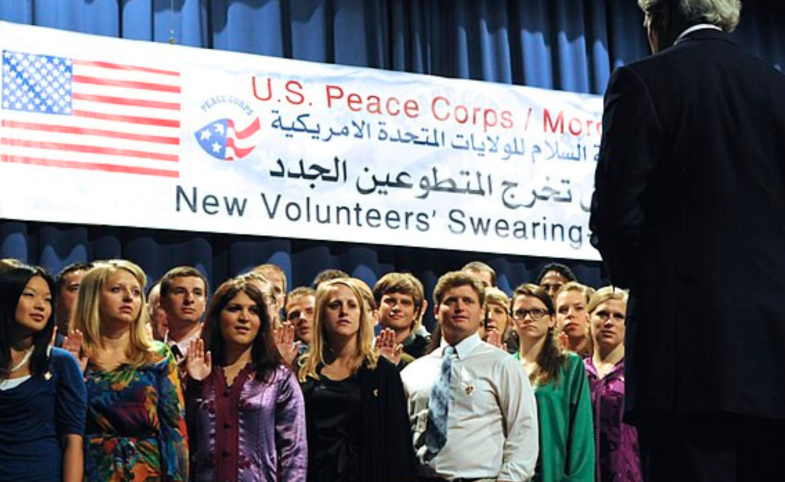
The Peace Corps has remained a stalwart of U.S. public diplomacy for over sixty years. It was a brand promoted by President Kennedy, who called on Americans "to sacrifice their energies and time and toil to the cause of world peace and human progress.” The original mandate of the Corps was as a pilot program. Since 1961, the Peace Corps has developed many diverse partnerships. And within the United States, Kennedy said he wanted to make full use of "the resources and talents of private institutions and groups. Universities, voluntary agencies, labor unions and industry.” The Peace Corps had a wider purpose beyond public diplomacy and ideology: "the great common cause of world development.”
The United States has just assumed the Presidency of the G20, the world’s forum for the largest economies. In its current model, at heads of government level, it was an American proposal of 2008 under President George W. Bush. Every state in the G20 has shared interest in global economic stability. This recognition of interdependence necessitates some wider form of cooperation. It is too soon to expect the G20 to adopt a common approach to joint development projects. But the "peace" theme favored by the Trump Administration could be developed.
One reason why this might appeal to President Trump is that they do not see the United Nations currently able to playing a meaningful role in promoting peace. Therefore the G20, a much smaller group, could begin to play its part in building consensus on peace building. The Corps is a successful model with an impressive legacy. It has operated in over 140 countries, and some 250,000 people have served. And the US Peace Corps already has worked with other countries on cooperative volunteering projects. Volunteers from Japan, South Korea, Germany and the United Kingdom have cooperated.
"The United States’ G20 Presidency for 2026 offers an opportunity to consolidate Trump’s peace efforts, rejuvenate America’s public diplomacy, and create a new vision for both the Peace Corps and the G20."
Here are three ideas for how to develop the U.S. Peace Corps to take in new forms of cooperation and harness new elements of the U.S. private sector in a common cause.
The U.S. could invite others from the G20 to welcome participants in future U.S. Peace Corps projects. Each country could propose, say, five candidates who would be interviewed by the Peace Corps for participation in defined or new projects. This would be similar to the exchange visits that U.S. embassies arrange for visitors interested in contacting U.S. counterparts and has existed for decades. Indonesians would be working alongside Americans and Mexicans. Argentines alongside Saudis, Americans, and French; Australian alongside Americans, South African and Turkish volunteers. Perhaps even Russians and Chinese. That would be truly innovative public diplomacy for peace.
Second, during the U.S. presidency of the G20, the Peace Corps could hold brainstorming sessions on line where G20-nominated participants could offer ideas and solutions to problems encountered in countries where the Peace Corp volunteers.
Third, the Peace Corps could harness the resources of companies that inspire international youth who are interested in promoting an era of digital peace. These companies could be invited to either fund a short term internship program for candidates nominated by G20 countries or fund new technology projects in the field for the Peace Corps. This is a 2026 take on the Fulbright scholarship scheme. Leading Candidates to participate and fund such internships would be the "Magnificent Seven": Amazon, Apple, Alphabet, Meta, Microsoft, Nvidia and Tesla. All these companies have financed recent collaborations with the U.S. government. This would make their outreach truly global and give them access to a new pool of talent. Many already employ many nationals of other G20 countries.
The budgetary implications of this scheme would be negligible, and Congress seems likely to provide level funding for the Peace Corps for 2026. If it were successful during the G20 Presidency then some cooperation with the relevant organization administered by the United Nations would be feasible such as the United Nations Volunteers
These ideas would recharge the U.S Peace Corps, promoting cooperation in ways that our era offers. The G20 would also take on a new dimension. Without some new aspiration, it perhaps risks degenerating into what Churchill feared for the new United Nations –"a cockpit in a Tower of Babel." This new pilot scheme for the Peace Corps would perhaps trigger efforts by other countries to reaffirm their shared interests in public diplomacy for the cause of peace.

Visit CPD's Online Library
Explore CPD's vast online database featuring the latest books, articles, speeches and information on international organizations dedicated to public diplomacy.
POPULAR ARTICLES
-
September 22
-
October 5
-
October 13
-
October 5
-
October 15
MORE FROM THIS AUTHOR
Join the Conversation
Interested in contributing to the CPD Blog? We welcome your posts. Read our guidelines and find out how you can submit blogs and photo essays >.