









The CPD Blog is intended to stimulate dialog among scholars and practitioners from around the world in the public diplomacy sphere. The opinions represented here are the authors' own and do not necessarily reflect CPD's views. For blogger guidelines, click here.
Public Diplomacy in the News: Rubio in India, British Soft Power, & the 'Orienfluencer'
“Public Diplomacy in the News” is a CPD Blog series by Andrew Dubbins that spotlights noteworthy stories on public diplomacy topics such as cultural diplomacy, nation branding, exchange programs, international events and conferences, digital diplomacy, and strategic global communications.
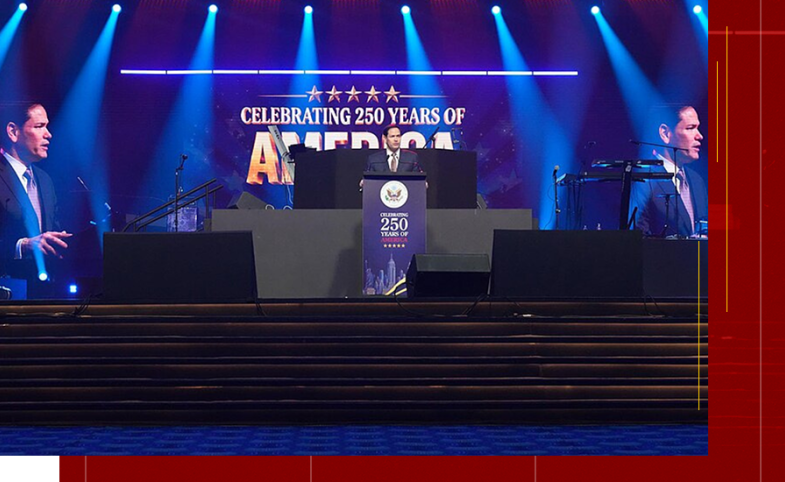
Rubio’s diplomatic soft-power tour in India. Amid high-stakes diplomacy on Iran and growing tensions over America’s relationship with India, Secretary of State Marco Rubio used a rare break in his schedule to embrace cultural diplomacy, touring landmarks such as Taj Mahal and Amber Fort alongside his wife while attending celebrations tied to the upcoming 250th anniversary of American independence. The visit, which included appearances with the Village People and lavish receptions organized by the U.S. ambassador, highlighted an effort to reinforce U.S.-India ties despite strains caused by tariffs, visa restrictions, and President Donald Trump’s shifting posture toward China and Pakistan. Rubio framed the sightseeing as a gesture of respect toward Indian culture while balancing an increasingly hectic foreign policy agenda.
British soft power in retreat. Mounting financial pressures and controversial restructuring at the British Council have sparked protests and no-confidence campaigns among staff across Europe, who warn that cuts driven by a nearly £200 million COVID-era debt threaten one of Britain’s most important instruments of cultural diplomacy. The planned sale of the council’s historic Madrid headquarters, alongside layoffs, strikes in Italy, and fears of further closures across Europe, has fueled accusations of poor leadership, excessive centralization, and disregard for local expertise. Critics argue that weakening the organization at a time of global instability and post-Brexit uncertainty risks undermining Britain’s international influence, educational ties, and long-cultivated global reputation.
Caroline Davies / The Guardian
Digital orientalism and the rise of the “Orienfluencer.” As confidence in Western institutions declines, a new class of online influencers has emerged that romanticizes Eastern societies as disciplined, traditional, stable, and spiritually intact alternatives to what they portray as a chaotic and decadent West. Drawing on examples ranging from “Chinamaxxing” influencers praising Chinese infrastructure and social order to figures like Andrew Tate and Sneako embracing authoritarian or religiously conservative societies abroad, The Spectator’s Margaret Mitchell argues that these personalities project their frustrations with Western culture onto idealized visions of China, the Islamic world, Dubai, or Southeast Asia. While these influencers market safety, order, masculinity, and prosperity, they often minimize or accept the tradeoffs of censorship, surveillance, labor exploitation, and authoritarianism, framing such sacrifices as worthwhile in exchange for stability and social cohesion.
Margaret Mitchell / The Spectator
LA28 expands the Paralympic stage Organizers of the 2028 Summer Paralympics unveiled a sweeping competition schedule for what is expected to be the largest Paralympic Games in history, featuring more than 560 events across 23 sports and the highest number of medal competitions since 1988. Set to open at SoFi Stadium and close at Los Angeles Memorial Coliseum, the Games will introduce new additions such as para climbing and expanded women’s events while spreading competitions across venues in Los Angeles County, including downtown Los Angeles, Long Beach, and Carson. Organizers framed the event as both a milestone for disability representation and a major showcase of elite athletic competition, emphasizing Los Angeles’s first-ever role as a Paralympic host city despite previously hosting the Olympics twice.
The Vatican’s moral warning on artificial intelligence. In his first papal encyclical, Pope Leo XIV laid out an expansive moral framework for the age of artificial intelligence, urging governments, corporations, and individuals to protect human dignity, labor, and social stability from the disruptive effects of rapidly advancing technology. The 42,300-word document, titled Magnifica Humanitas, called for regulation of AI companies, worker protections and retraining, safeguards against autonomous weapons, and stronger measures to shield children from harmful digital content, while emphasizing that technological progress must never come at the expense of humanity’s social and moral foundations. Framing AI as a challenge comparable to the Industrial Revolution, Leo positioned the Church as a moral voice capable of guiding ethical debates around automation, surveillance, warfare, and economic inequality, even as he acknowledged the technology’s potential benefits and opened dialogue with industry leaders such as Christopher Olah.
Motoko Rich, Elisabetta Povoledo and Elizabeth Dias / The New York Times

Visit CPD's Online Library
Explore CPD's vast online database featuring the latest books, articles, speeches and information on international organizations dedicated to public diplomacy.
POPULAR ARTICLES
-
September 22
-
October 5
-
October 5
-
September 9
-
September 22
MORE FROM THIS AUTHOR
Join the Conversation
Interested in contributing to the CPD Blog? We welcome your posts. Read our guidelines and find out how you can submit blogs and photo essays >.