









The CPD Blog is intended to stimulate dialog among scholars and practitioners from around the world in the public diplomacy sphere. The opinions represented here are the authors' own and do not necessarily reflect CPD's views. For blogger guidelines, click here.
From Visibility to Trust: The Conversion Question in Public Diplomacy Research
Given that visibility in public diplomacy is arguably at an all time high, with influence put out there instantaneously, one can find the data to support claims of greater exposure without difficulty. As for data to substantiate increased trust, that is a different matter entirely.
By definition, visibility is the quality/ state of being visible. Typically this word is paired with terms such as awareness, familiarity and others. The word trust is paired with the words credibility, willingness to rely on, benefit of the doubt amongst others.
For the 6 billion people online, exposed to public opinion and a variety of political perspectives, interest in and influence on international issues are arguably more important than ever before.
Another key concept, therefore, is soft power. To utilize public diplomacy through modern-day platforms, we must explore its influence and reach.
The concept of soft power was coined by Joseph S. Nye Jr. in his 1990 work, Bound to Lead: The Changing Nature of American Power and developed further in Soft Power: The Means to Success in World Politics in 2005, which set out three types of noncoercive influence: cultural appeal, political values and foreign policies sought after by others.
His most pertinent point, made in the 2008 journal piece Public Diplomacy and Soft Power is that to hold an asset and to derive results from it are not the same. Putting out important information, be it culture or values, does not in itself create soft power. As Nye made plain in his 2011 book The Future of Power, power is held by those who have the credibility to draw others in as much as by those who make the loudest broadcast.
Nicholas J. Cull’s taxonomy of public diplomacy defines listening as amassing information on foreign publics and their perspectives to inform policy and the other instruments of public diplomacy, all of which are predicated on having listened. In his 2019 work, Public Diplomacy: Foundations for Global Engagement in the Digital Age, Cull adds that the very act of listening, and being observed to do so, is a form of communication. It is the means by which foreign publics are made into supporters. Cull gives practitioners a point of departure but does little to explain what happens between listening and conversion. In lieu of a full theory of that gap, this piece puts forward a standard of practice: verification by conduct.
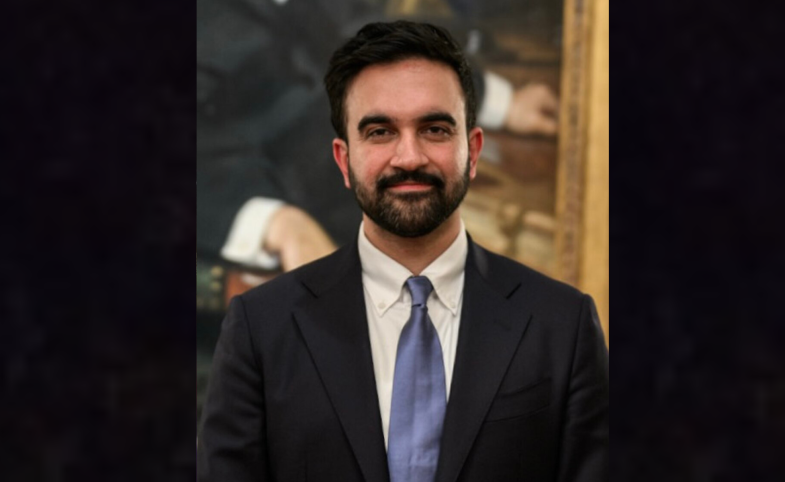
Verification by conduct has practical application, as with New York City Mayor Zohran Mamdani (pictured above), whatever one’s belief alignment. The mayor’s standing with New Yorkers can be verified not least by his hands-on, immediate governance of public facilities, which has shown institutional reliability and delivered results for many. The trust New Yorkers put in him has nothing to do with superficial branding. It comes from his support of the working class, the fact that he is of them and works for them, and the uncurated fashion in which he engages with daily life in working-class parts of town and on the city’s public transport.
Indices are read by few of the population. Most people are affected by emotion, which can be verified through conduct in quantitative terms (innovation, financial health, openness) and qualitative ones (transparency, good governance, integrity). Verification through influence is difficult to gauge, but indices can measure familiarity and favorability quantitatively, and opinion and perception qualitatively.
As for trust, although it could be quantified through surveys of diagnostic drivers and observable behavior, visible behavior is often a false proxy for trust, since it can include factors such as market dominance by a few large corporations, risk mitigation and convenience.
"An assessment of a sovereign actor’s public diplomacy can no longer be made by tallying up how many people are subject to its message. What is called for now are fresh analytical means of gauging the genuine ethos of a national entity in what it does: verification by conduct."
Nor can public diplomacy be evaluated through the organizational and capitalistic lens of future studies. Resources are typically analyzed only within the geographical area of the state that established them, and hard data must be integrated with regional publics’ sensitivities and points of interest.
A public diplomacy challenge is not a marketing challenge for a state’s organizations and corporations. Trust, influence and even verification of foreign governments have to be examined from the shared experience of foreigners and foreigners at home. All too often international relations are turned into market-like statecraft, which commercializes global engagement as if foreign publics’ belief systems, historical experiences and national narratives could be “managed” the way corporations market products to consumers.
Inherited systems of belief and a nation’s history create worldviews which shape perceptions of and interactions with foreign nations and peoples. These deeply rooted systems cannot be countenanced by statecraft reduced to the sum of corporate-inspired programs, predictive AI simulations, influential social media figures and propagandized cultural products tailored to the fortunate few. Rather, lasting public diplomacy is grounded in the simple yet profound verification of a state’s conduct.
Public diplomacy strategies therefore need to be evaluated as a whole, not as organizational units to be added up. To get at the heart of a state’s ethos and confirm it by what it does rather than how visible it is, three matters require further research. First, how does the consistency of a government’s actions with its messaging bear on its credibility, and is this quantifiable? Survey experiments, rather than surveys alone, are called for to test a country’s conduct and messaging and reach a conclusion on its credibility.
Second, what is the correlation between a government’s conduct and its credibility beyond mere exposure? Survey experiments could test varying degrees of alignment at different levels of exposure. Third, do domestic and diaspora audiences, or those in other states, verify a state’s conduct in the same way, or are they separate discourse communities with their own ideas of evidence? Comparative reception studies would show the divide.
An assessment of a sovereign actor’s public diplomacy can no longer be made by tallying up how many people are subject to its message. What is called for now are fresh analytical means of gauging the genuine ethos of a national entity in what it does: verification by conduct.

Visit CPD's Online Library
Explore CPD's vast online database featuring the latest books, articles, speeches and information on international organizations dedicated to public diplomacy.
POPULAR ARTICLES
-
September 22
-
October 5
-
October 13
-
October 5
-
October 15
MORE FROM THIS AUTHOR
Join the Conversation
Interested in contributing to the CPD Blog? We welcome your posts. Read our guidelines and find out how you can submit blogs and photo essays >.