








globalization
The American withdrawal from the Trans-Pacific Partnership trade agreement has opened the door to China to try and strike a pose as the leading defender of liberalized trade and globalization. The public face of this new push is none other than China’s president. This month, Xi became the first Chinese president to speak at the World Economic Forum in Davos where he set forth the case for continuing to expand global trade.
In order to add momentum to African economies, Gerd Müller, Germany’s minister for economic cooperation and development, and Sigmar Gabriel, the country’s minister for economic affairs, have launched a joint initiative. The approach fits their understanding of how to manage globalisation equitably. [...] about 1000 of 400,000 internationally active German private-sector companies have invested in Africa so far.
Can going on an exchange program prepare medical students for tomorrow’s health challenges? Is it really worth it to explore health systems in different cultural and social settings? Is it necessary to learn more about Global Health challenges while studying medicine?There is no doubt that society in general is becoming increasingly globalized, and this is seen through increased international travel.
Actually, the thought of integration came from President Ho Chi Minh. In December 1946, he sent a letter sent to the United Nations, written in French, with the following content: Vietnam is ready to open its doors for foreign businesses and experts to do business in Vietnam, and allow other countries to use Vietnam’s roads, ports and airports for transit.
History shows that cities have tended to embrace international opportunities in waves and cycles. They rarely break out into global activity by themselves. Cities participate in collective movements or networks to take advantage of new conditions, and often their demise or withdrawal from a global orientation is also experienced jointly with other cities as circumstances change, affecting many at once.
May’s focus was on the need to ensure that the benefits of "liberalism and globalisation" are more evenly distributed. For her, the EU referendum and the US presidential election should be read as wake-up call. Important as this analysis may be for electoral politics, it does not set out a clear road map for the UK’s future foreign policy.
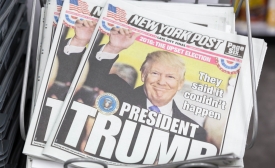
How did it happen, and what will happen next?