









The CPD Blog is intended to stimulate dialog among scholars and practitioners from around the world in the public diplomacy sphere. The opinions represented here are the authors' own and do not necessarily reflect CPD's views. For blogger guidelines, click here.
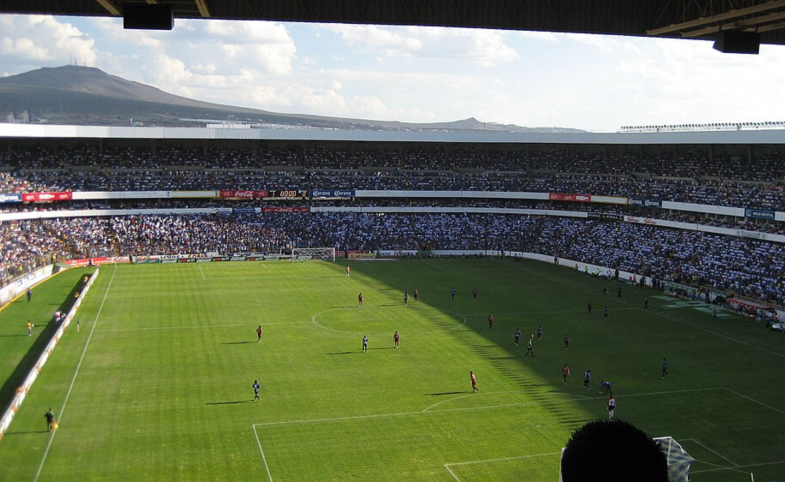
Mexico Had Something to Prove: FIFA 2026 as Sports Diplomacy
I remember the question because I heard it under studio lights, not in a seminar room: Is Mexico ready?
In the months before the 2026 FIFA World Cup, I covered international affairs and joined on-air television discussions on Milenio TV, Fórmula TV and CNN Türk. The same doubt kept returning in different accents. Would President Claudia Sheinbaum keep Mexico in the tournament after a security crisis? Could a country confronting spectacular violence safely receive the world? Around those tables, some of the least confident voices were Mexican. Their skepticism was not disloyalty. It came from experience.
The anxiety became acute after the February killing of cartel leader Nemesio Oseguera Cervantes, known as “El Mencho,” triggered retaliatory violence, road blockades and burning vehicles. Four Liga MX matches were postponed, and the images traveled much faster than institutional reassurance. Calls to reconsider or even cancel Mexico’s role in the World Cup entered the public conversation. Sheinbaum chose to stay the course. She said the tournament was not at risk, while Mexican authorities and FIFA continued reviewing security and transport plans.
That decision mattered beyond sport. Mega-events are often described as showcases, as if a country simply places its best image in a window. I saw something more demanding. FIFA 2026 became a public diplomacy test in real time: not whether Mexico could conceal its vulnerabilities, but whether it could govern visibly through them.
Nicholas Cull’s influential account of public diplomacy begins with listening and treats advocacy, cultural diplomacy, exchange and international broadcasting as connected practices. That framework helps explain why stadium security alone could never settle the question. Mexico had to hear the fear, answer it with institutions and let millions of visitors judge the answer in streets, airports, fan zones and ordinary encounters.
I call this diplomacy by proof. A government can say a destination is ready. A tournament makes the claim observable. Every organized arrival, protected public gathering and welcoming interaction becomes evidence; every failure also becomes evidence. The message is not controlled exclusively by the presidency, the Foreign Ministry or FIFA. It is co-produced by police officers, volunteers, vendors, journalists, supporters and residents with smartphones.
Manuel Castells’s idea of communication power also clarifies what I watched happen on television. In a networked media environment, official statements compete with burning-car footage, fan videos, foreign headlines and conversations around Mexican dinner tables. The government could not simply impose a reassuring narrative. It had to intervene in a contested field of meaning and then sustain its words with visible performance. The frame shifted only when lived experience became stronger than the image of paralysis.
"A World Cup can advertise a country, but public diplomacy begins when the event creates participation, exchange and relationships that outlast the promotional postcard."
Sports diplomacy scholars Stuart Murray and Geoffrey Allen Pigman describe international sport and diplomacy as an expanding, often overlapping relationship. That distinction matters here. A World Cup can advertise a country, but public diplomacy begins when the event creates participation, exchange and relationships that outlast the promotional postcard. Sheinbaum’s decision to give Mexico’s ceremonial ticket No. 00001 to 21-year-old Indigenous athlete Yolett Cervantes Cuaquehua offered one symbolic answer to the question of who represents Mexico.
The more consequential answer happened outside the VIP box. With tickets priced beyond the reach of many families, the government supported public viewing spaces. During the opener, hundreds of thousands gathered at 18 street festivals across Mexico City. Sheinbaum watched from a public area rather than attend the stadium. The gesture did not erase inequality or the controversy over FIFA’s prices. It did, however, frame the event as a civic encounter instead of a closed spectacle for wealthy visitors.
Jay Wang has argued on the CPD Blog that the World Cup’s larger public diplomacy story lies beyond the game, in creating conditions for people to experience a place firsthand. Mexico’s strongest message was therefore not a slogan. It was the shared experience of a country refusing to surrender public space to fear.
Refusing fear is not the same as denying danger. The tournament did not solve organized crime, and security concentrated around global visitors can expose the unequal protection available to residents. Nor should diplomatic success be confused with an economic miracle. After the final, reporting found that Mexico’s benefits were more localized and limited than the grandest forecasts. A serious assessment must hold both truths: the reputational achievement was real, and the structural problems remained.
For me, the “after” became visible in the way the television question changed. Before kickoff, we asked whether Mexico was ready. Afterward, the more interesting question was what the world had learned about Mexico—and what Mexico had learned about its own capacity. The country hosted under scrutiny, absorbed criticism and produced moments of collective confidence without pretending that football had cured everything.
That is why Sheinbaum’s decision deserves recognition. Its courage was institutional rather than theatrical: continue, coordinate, accept international examination and make the public part of the event. Mexico did not win the diplomatic argument by silencing doubt. It allowed performance to answer doubt.
FIFA 2026 showed why sports diplomacy belongs at the center of public diplomacy. A mega-event can magnify insecurity, exclusion and distrust. It can also create an unusually powerful arena in which a state, a city and a society demonstrate who they are together. Mexico stayed on the field. In doing so, it offered the world something more persuasive than perfection: credible resilience.

Visit CPD's Online Library
Explore CPD's vast online database featuring the latest books, articles, speeches and information on international organizations dedicated to public diplomacy.
POPULAR ARTICLES
-
September 22
-
October 5
-
October 5
-
September 9
-
September 22
MORE FROM THIS AUTHOR
Join the Conversation
Interested in contributing to the CPD Blog? We welcome your posts. Read our guidelines and find out how you can submit blogs and photo essays >.