









The CPD Blog is intended to stimulate dialog among scholars and practitioners from around the world in the public diplomacy sphere. The opinions represented here are the authors' own and do not necessarily reflect CPD's views. For blogger guidelines, click here.
More Than a Parade: Mexico, Memory and Belonging in East Los Angeles
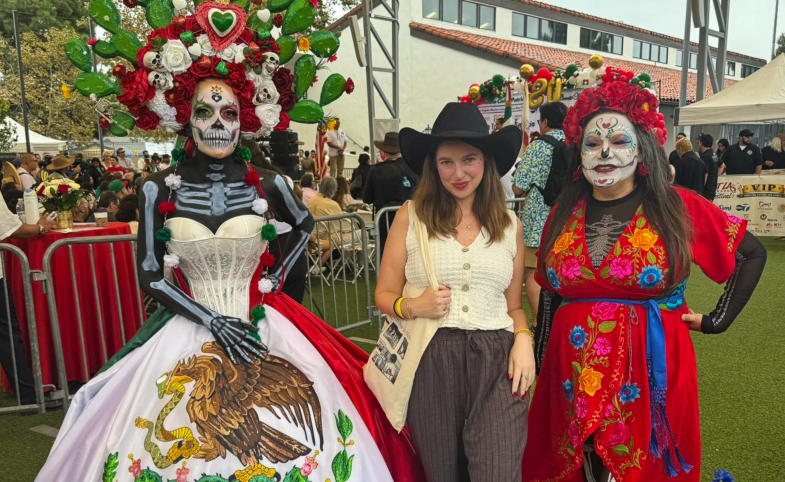
On September 13, 2026, I walked through East Los Angeles with colleagues from the Consulate General of Mexico in Los Angeles during the 80th annual East LA Mexican Independence Day Parade and Festival. I expected flags, music and celebration. What stayed with me, however, was something less ceremonial and more political in the broadest sense of the word: proximity.
People were not encountering Mexico through a press release, an embassy statement or a tourism campaign. They were encountering it in the street, with their families, in Spanish and English, through music, memory and the visible presence of institutions that are supposed to serve them. For someone who studies public diplomacy, the experience was a reminder that diplomacy does not always look diplomatic.
The parade is an unusually powerful place to see this. Los Angeles County lists the event as the 80th annual East LA Mexican Independence Day Parade and Festival, while local coverage describes it as the largest and longest-running celebration of its kind in the United States. The route along César E. Chávez Avenue is not simply a stage for national symbols. It is part of a region where Mexico is not a distant foreign country.

According to American Community Survey data compiled by Mexico’s consular network, the Los Angeles consular district is home to about 3.46 million people of Mexican origin, the largest Mexican-origin population of any Mexican consular jurisdiction in the United States. The Consulate General in Los Angeles is also Mexico’s largest consular representation abroad. Those numbers change the meaning of public diplomacy. Here, Mexico is speaking not only to a foreign public but also to a diaspora, binational families and generations whose relationship with Mexico may be legal, emotional, cultural or all three at once.
Scholars Elaine Ho and Fiona McConnell use the term “diaspora diplomacy” to describe precisely this space where the domestic and foreign cannot be neatly separated. Nicholas J. Cull similarly places listening, advocacy, cultural diplomacy and exchange among the central practices of public diplomacy. Both ideas were visible in East LA. The Mexican flag created attraction, but the relationship did not begin or end with attraction.
That distinction matters because this parade took place during a difficult period for many Mexican families in Southern California. Immigration enforcement, detention and deportation are not abstract policy debates here. In 2026, the Consulate General in Los Angeles expanded legal-assistance initiatives covering immigration status, family protection, labor rights and the prevention of detention and deportation. It has also emphasized that the consulate is a safe space for Mexican nationals regardless of immigration status. In 2025 alone, Mexico’s diplomatic and consular network handled 176,827 assistance and protection cases, 97% of them in the United States.
This is where I think the Mexican case complicates the conventional language of soft power.
Joseph Nye famously defined soft power as the ability to shape preferences through attraction rather than coercion or payment. That remains useful, but for a migrant-sending country such as Mexico, attraction is only part of the story. A consulate gains credibility not because people admire its logo or attend a cultural event, but because they believe someone will answer when they need legal orientation, documentation, protection or simply a place where their concerns are heard.
Mexico’s consular tradition has long understood this. Jorge Schiavon has described consular protection as a central pillar of Mexican foreign policy, while former Consul General Reyna Torres Mendivil has argued for “consular public diplomacy” that uses Mexico’s U.S. consular network not only to assist nationals but also to advance relationships and national interests at the local level.
"Nostalgia may bring a family to an Independence Day parade, but long-term connection requires something more: education, cultural exchange, university partnerships, entrepreneurship, civic networks and institutions willing to listen to identities that are both Mexican and American without demanding that people choose between them."
Walking in the parade made that argument tangible for me. There were moments of pure celebration: children waving small Mexican flags, families taking photographs and the familiar sound of music turning a public street into a shared cultural space. But there was also something deeper. Participation itself communicated that Mexican institutions were present inside the community rather than speaking to it from a distance.
That is why cultural diplomacy and the migrant agenda should not be treated as separate files.
In my recent CPD Blog piece on Mexico’s public diplomacy under President Claudia Sheinbaum, I argued that Mexico already possesses extraordinary cultural resources but needs to connect them through listening, institutional coordination and durable relationships. East Los Angeles shows what that can look like in practice. Cultural visibility opens the door, but service, protection and listening determine whether people trust what comes through it.
The challenge is especially important for second- and third-generation Mexican Americans. Their connection to Mexico cannot be assumed. Nostalgia may bring a family to an Independence Day parade, but long-term connection requires something more: education, cultural exchange, university partnerships, entrepreneurship, civic networks and institutions willing to listen to identities that are both Mexican and American without demanding that people choose between them.
The most effective public diplomacy is often the kind that does not feel like a campaign. It feels like presence.
For me, participating in East LA with the Mexican consular community transformed an academic concept into something physical. Public diplomacy was in the flags and the music, but it was also in the conversations on the sidewalk, the questions people brought with them and the simple fact that diplomatic representatives were there to hear them.
After 80 years, the East LA parade remains a celebration of Mexican identity. But it is also something more: a reminder that Mexico’s relationship with its people abroad is one of its most important international relationships.
The strongest message Mexico can send in Los Angeles may therefore be the simplest one: we are here, we are listening and this relationship continues beyond the border.
Disclosure: While the author participated in the parade alongside representatives of the Consulate General of Mexico in Los Angeles, the views expressed are her own.

Visit CPD's Online Library
Explore CPD's vast online database featuring the latest books, articles, speeches and information on international organizations dedicated to public diplomacy.
POPULAR ARTICLES
-
September 22
-
October 5
-
October 13
-
October 5
-
September 9
MORE FROM THIS AUTHOR
Join the Conversation
Interested in contributing to the CPD Blog? We welcome your posts. Read our guidelines and find out how you can submit blogs and photo essays >.