








evaluation
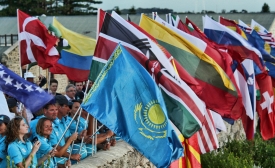
This article illustrates how states and state-sponsored actors are utilizing six pathways of connection to communicate and engage with foreign publics, with examples that include President Obama’s visit to Brazil, a Chinese cultural exhibition in the United States and the European Union’s Youth in Action program.
This is a time of rapid change — and immense opportunity — for the global landscape of development. Aid is no longer the primary source of development funds, as direct investment from the private sector and domestically mobilized resources continue to grow as sources of finance.
The 2014 CPD Annual Review demonstrates that although public diplomacy is present in every region of the world, it is predominantly in the northern hemisphere. North America is ranked the most active region in public diplomacy, with the United States contributing the most. Asia (Asia Pacific, Southeast Asia and Central Asia combined) comes in second, and Europe is third, with almost the same presence as Asia. As expected, China, Japan, and South Korea take the lead as the major actors in Asia Pacific. India is also very active in PD in South Asia.
As part of the CPD Annual Review process, in January we highlighted some of the year’s key public diplomacy moments in our Top 10 List of the most notable stories from 2014.
Launched in 2013, the CPD Annual Review was developed to serve as a guide to understanding the global landscape of public diplomacy, its ebbs and flows, its triumphs and its shortcomings.